- Understanding the Dynamics of Small Scale Production Processes Jan 7, 2025
- Is India Going to Make Semiconductors? Here’s What’s Really Happening Mar 17, 2026
- How Much Does It Cost to Start a Furniture Business in India? Nov 25, 2025
- Most Profitable Small Scale Manufacturing Business Ideas Apr 6, 2025
- Kiran Mazumdar‑Shaw: The Pharma Queen of India Explained Oct 13, 2025
ExxonMobil Plastic: What It Is, Where It’s Used, and How India Fits In
When you hear ExxonMobil plastic, a high-performance polymer produced by one of the world’s largest petrochemical companies. Also known as ExxonMobil polyolefins, it’s the backbone of everything from food containers to automotive parts. It’s not just plastic—it’s precision-engineered material designed for durability, heat resistance, and consistency at scale. Unlike generic plastics, ExxonMobil’s grades are tested under real-world conditions, making them the go-to choice for manufacturers who can’t afford failures.
ExxonMobil plastic mainly comes in two forms: polyethylene, a flexible, lightweight polymer used in bottles, films, and packaging, and polypropylene, a tougher, heat-resistant plastic common in car bumpers, medical devices, and industrial containers. These aren’t just raw materials—they’re building blocks for industries that demand reliability. In India, companies using these plastics range from auto parts makers in Pune to packaging firms in Surat. The demand isn’t just growing—it’s being reshaped by local production goals under Make in India.
Here’s the real connection: India doesn’t make ExxonMobil plastic itself—but it uses it everywhere. Factories across Gujarat, Tamil Nadu, and Maharashtra rely on imported ExxonMobil resins to produce everything from milk jugs to under-the-hood components. Why? Because local suppliers still struggle to match the consistency and purity these grades offer. But that’s changing. With new petrochemical hubs coming online and PLI schemes pushing for self-reliance, Indian firms are starting to develop their own high-grade polymers. Some are even partnering with ExxonMobil to co-develop materials tailored for Indian climate and usage patterns.
What does this mean for you? If you’re in manufacturing, knowing where ExxonMobil plastic fits in helps you choose better suppliers, avoid quality issues, and plan for future material shifts. You don’t need to be a chemist to understand this—just know that when a product needs to survive heat, pressure, or long-term outdoor exposure, ExxonMobil plastic is often the reason it holds up. And as India’s auto, pharma, and packaging sectors grow, so will the demand for these materials—whether imported or locally replicated.
Below, you’ll find posts that dig into how plastic shapes India’s manufacturing landscape—from which car brands use it, to how food packaging units rely on it, to the bigger picture of who leads global chemical production. This isn’t about marketing fluff. It’s about the real materials driving real products on Indian roads and shelves.
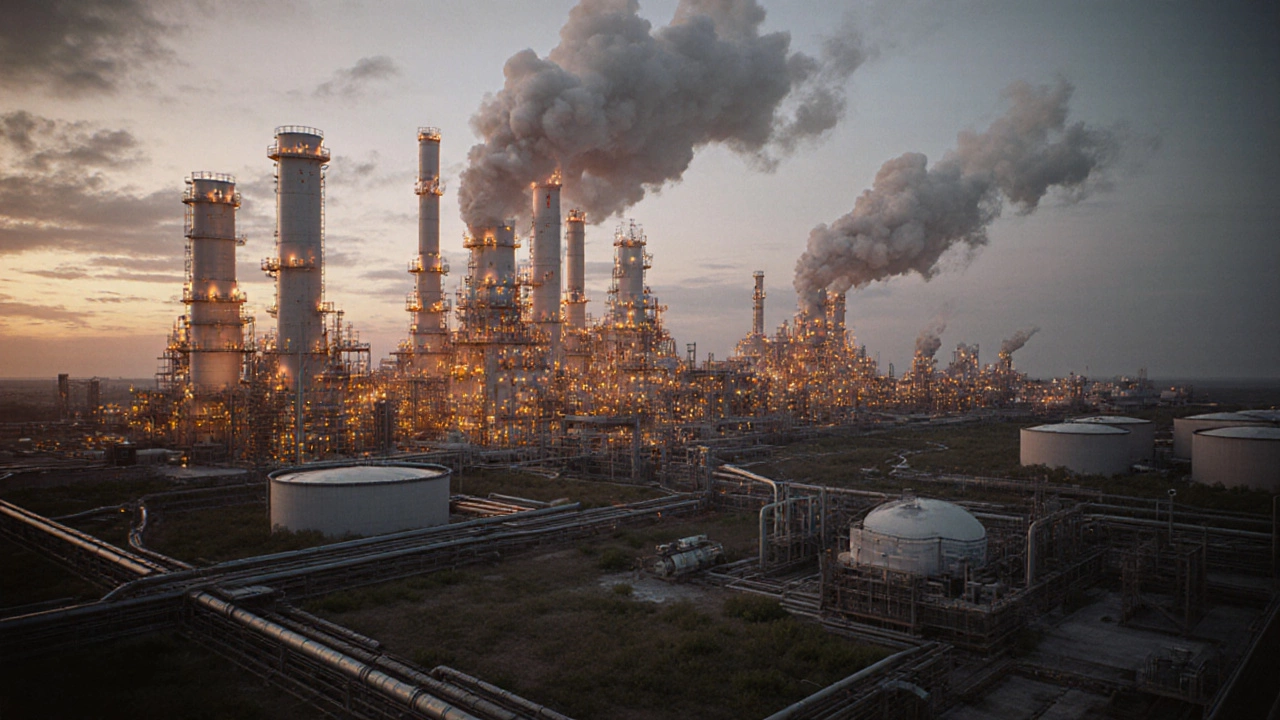
Plastic Manufacturing
What is the biggest plastic producer company in the world?
- Aarav Sekhar
- Oct 28, 2025
ExxonMobil is the world's largest plastic producer, making over 16 million tons of plastic annually. Learn why oil companies dominate plastic manufacturing, how they compare to rivals, and why recycling alone won't fix the problem.