Electronics Manufacturing Strength Calculator
Compare Electronics Manufacturing Capabilities
This tool evaluates country strength based on three key factors from the article: component production, assembly capacity, and supply chain integration.
Input Your Criteria
0 (No components)
10 (Full control)
China: 10
India: 2
S. Korea/Taiwan: 9
US: 4
0 (No assembly)
10 (Mass production)
China: 10
India: 7
S. Korea/Taiwan: 1
US: 3
0 (Disjointed)
10 (Complete ecosystem)
China: 10
India: 3
S. Korea/Taiwan: 8
US: 2
Results
Adjust criteria to see results
When people ask which country is most advanced in electronics, they’re usually not just curious about gadgets. They want to know who’s building the chips, assembling the phones, and designing the next wave of smart devices. The answer isn’t about who has the fanciest labs or the most patents-it’s about scale, speed, and supply chains that actually deliver millions of products every day.
China Still Leads by Volume and Integration
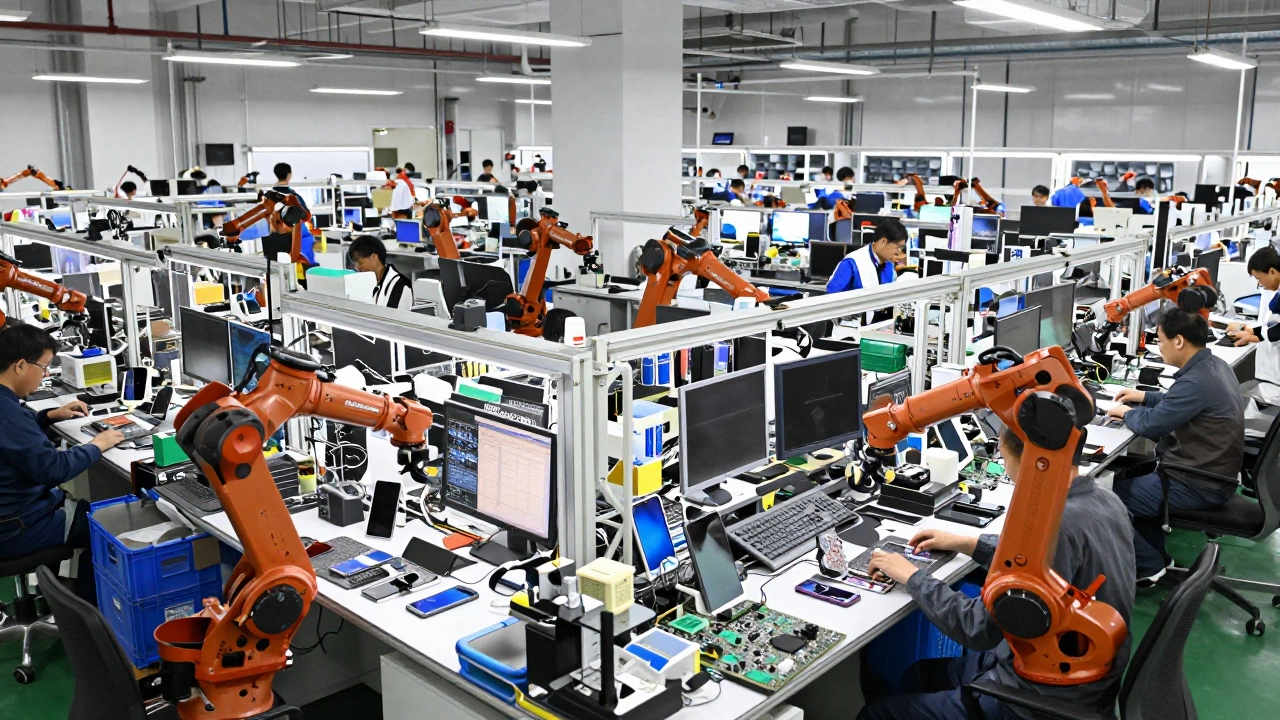
China produces over 70% of the world’s consumer electronics. That’s not a guess-it’s a figure from the United Nations Industrial Development Organization (UNIDO) for 2024. From the tiny capacitors inside your wireless earbuds to the full smartphones shipped from Shenzhen, China’s manufacturing ecosystem is unmatched. It’s not just factories. It’s the nearby suppliers of screens, batteries, printed circuit boards, and metal casings-all within a 50-kilometer radius. A company can design a new smartwatch in the morning and have 10,000 units assembled by the end of the week.
Companies like Foxconn, BYD, and Huawei don’t just assemble products. They design the tooling, train the workers, and manage logistics in-house. This vertical integration means fewer delays, lower costs, and faster innovation cycles. Even Apple, which designs its products in California, relies on over 80% of its hardware production in China. The infrastructure is so dense that if a factory needs a new screw supplier, they can find one within hours.
India Is Rising Fast-but Still Playing Catch-Up
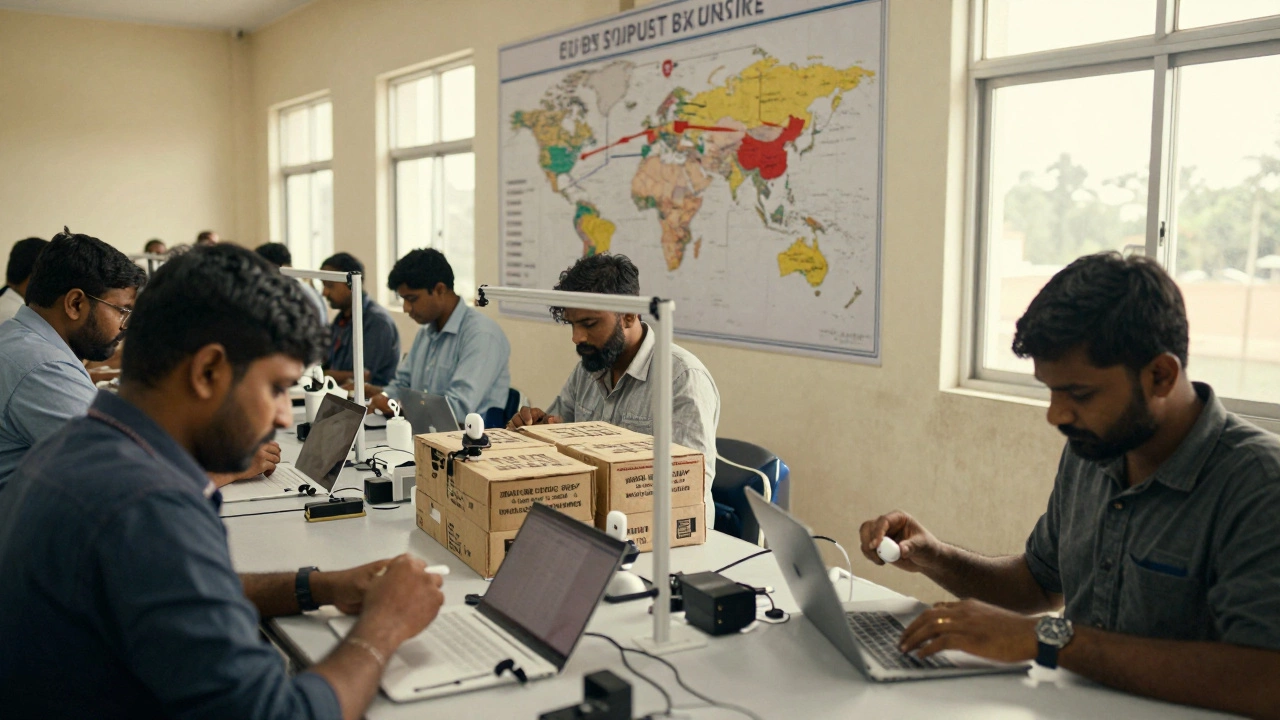
India has made bold moves. Since 2020, the government’s Production Linked Incentive (PLI) scheme has attracted over $12 billion in investments from Samsung, Apple, Xiaomi, and others. By 2025, India will produce over 500 million smartphones annually, up from just 50 million in 2018. That’s a tenfold jump in seven years.
But here’s the catch: most of those phones are still assembled, not made. The critical components-processors, memory chips, sensors, and displays-are still imported. India’s domestic semiconductor manufacturing capacity is near zero. The country lacks the specialized chemical suppliers, high-precision tooling, and automated assembly lines that define true electronics manufacturing.
There are exceptions. Tata Electronics recently opened a plant in Karnataka to make printed circuit boards for Apple AirPods. That’s a big step. But it’s one component in a device with over 1,200 parts. India is building the last 20% of the value chain, while China controls the first 80%.
South Korea and Taiwan: The Hidden Powerhouses
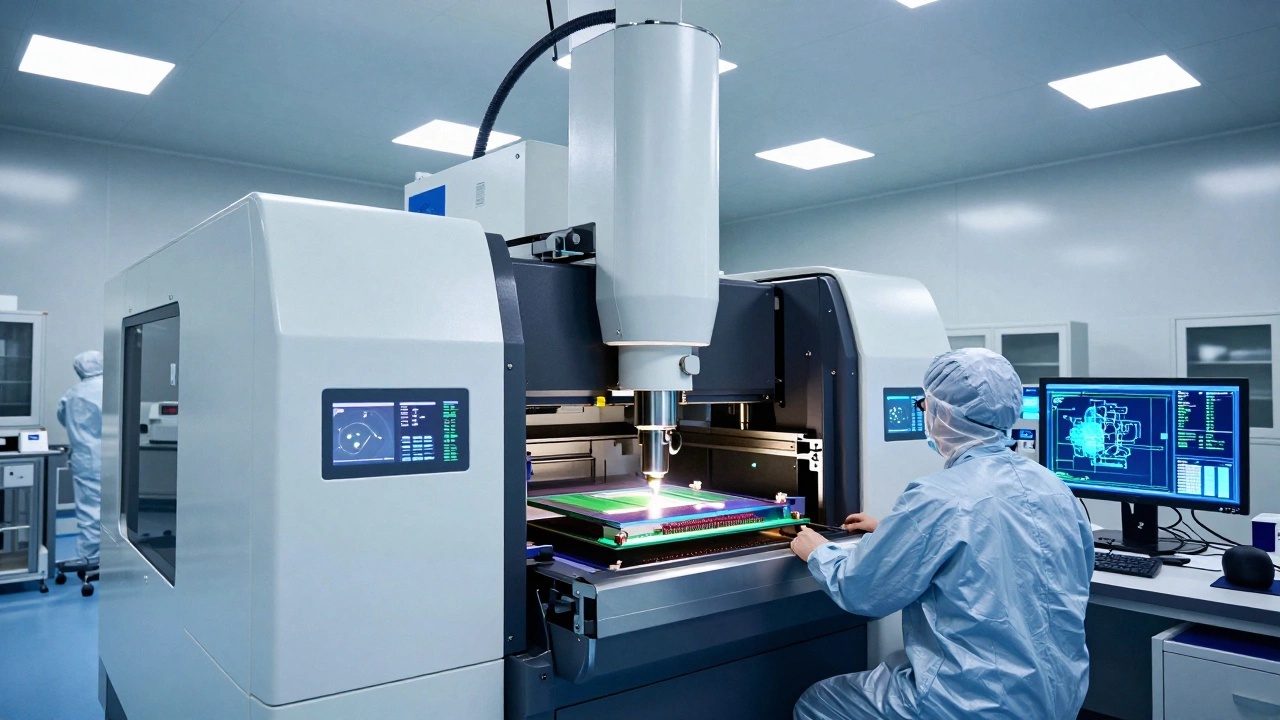
If China builds the devices, South Korea and Taiwan build the brains inside them. Samsung and SK Hynix control over 70% of the global memory chip market. Taiwan Semiconductor Manufacturing Company (TSMC) makes 92% of the world’s advanced logic chips-including every Apple A-series chip and most NVIDIA GPUs.
These countries don’t ship millions of phones. They ship the invisible parts that make phones work. TSMC’s factory in Hsinchu uses machines costing over $200 million each. One machine can etch patterns smaller than a virus onto silicon wafers. That’s the kind of precision you can’t replicate overnight.
South Korea and Taiwan have no interest in assembling your TV or laptop. They’re focused on the high-margin, high-tech core. That’s why they’re often called the “hidden architects” of global electronics.
United States: Innovation Without Mass Production
The U.S. still leads in R&D. Companies like Intel, Qualcomm, and AMD design chips that power everything from drones to data centers. The U.S. government poured $52 billion into the CHIPS Act in 2022 to bring semiconductor manufacturing home.
But building a single chip factory takes seven years and $20 billion. Intel’s new plant in Ohio won’t be fully operational until 2027. Even then, it will produce only a fraction of global output. The U.S. is betting on future leadership, not current volume. Right now, it imports over 90% of its electronics components.
Why ‘Most Advanced’ Isn’t Just About Output
Advanced doesn’t mean the most units made. It means control over the hardest parts of the chain: design, materials, automation, and supply chain resilience.
China wins because it does all of it-at scale. South Korea and Taiwan win because they own the most valuable pieces. India is trying to join the race, but it’s still in the early laps. The U.S. is investing heavily but lags in execution speed.
Think of electronics manufacturing like a marathon. China is in the lead, pulling ahead with steady, powerful strides. South Korea and Taiwan are the sprinters carrying the baton for the most critical legs. India is still warming up. The U.S. is building a new track.
What’s Next for Electronics Manufacturing?
The next five years will be defined by three trends:
- Decoupling-Countries are trying to reduce reliance on China, but replacing its ecosystem is nearly impossible.
- Automation-Factories in Vietnam and Mexico are adding robots to cut labor costs, but they still need Chinese components.
- Green manufacturing-New regulations in the EU and U.S. demand lower carbon footprints. China’s coal-powered factories are under pressure.
India’s biggest advantage? A young, growing workforce and strong domestic demand. If it can build local suppliers for components like lithium-ion batteries and copper wiring, it could become a major player by 2030. But that requires more than incentives-it needs decades of technical education, industrial policy, and consistent investment.
Final Answer: China Is Still the Most Advanced
Is India catching up? Yes. Is it the most advanced? Not yet. The title of “most advanced in electronics manufacturing” still belongs to China-not because it’s the most innovative, but because it’s the only country that can turn a design into a shipped product faster, cheaper, and at a larger scale than anyone else.
Other nations play critical roles. But when it comes to the full cycle-from raw materials to finished device-China remains the only system that works at global scale. Until another country can replicate that, the title stays.
Is India the future of electronics manufacturing?
India has huge potential and is growing fast, especially in smartphone assembly. But it still imports nearly all critical components like chips and displays. True manufacturing means making the core parts, not just putting them together. India is on the path, but it’s not there yet.
Why can’t the U.S. just build more electronics at home?
The U.S. has the technology and talent, but not the supply chain. Building a single chip factory costs billions and takes years. Even with government funding, it will take a decade to make a dent in global production. The cost of labor, land, and energy is also much higher than in Asia.
Does Taiwan make phones?
No. Taiwan doesn’t make phones. It makes the chips inside them. TSMC produces the processors for iPhones, iPads, and Android devices. The actual assembly happens in China, Vietnam, or India. Taiwan’s role is invisible but essential.
What’s the biggest barrier for India in electronics manufacturing?
The biggest barrier is the lack of domestic suppliers for high-tech components. India can assemble phones, but it can’t make the chips, sensors, or advanced circuit boards. Without these, it’s stuck in low-value assembly, not true manufacturing.
Are there any countries close to China in electronics?
No country comes close in total output. Vietnam and Mexico are growing in assembly, but they rely on Chinese components. South Korea and Taiwan lead in high-end components but don’t assemble final products. China remains the only full-stack player.