Manufacturing Method Selector
Answer the following questions to find the best fit for your project.
Comparison of Suitability
Subtractive (CNC)
Score: 0/10
Waiting for analysis...
Additive (3D Printing)
Score: 0/10
Waiting for analysis...
Forming (Stamping/Forging)
Score: 0/10
Waiting for analysis...
Most people think of manufacturing as just "making things," but the actual process involves three distinct families of techniques that determine cost, speed, and quality. Whether you are running a small workshop or overseeing a massive factory floor, understanding these core methods is the difference between efficient production and wasted resources. We are talking about subtractive, additive, and forming processes. Each one solves different problems, and choosing the wrong one can kill your margins.
Subtractive Manufacturing: Cutting Away to Reveal Shape
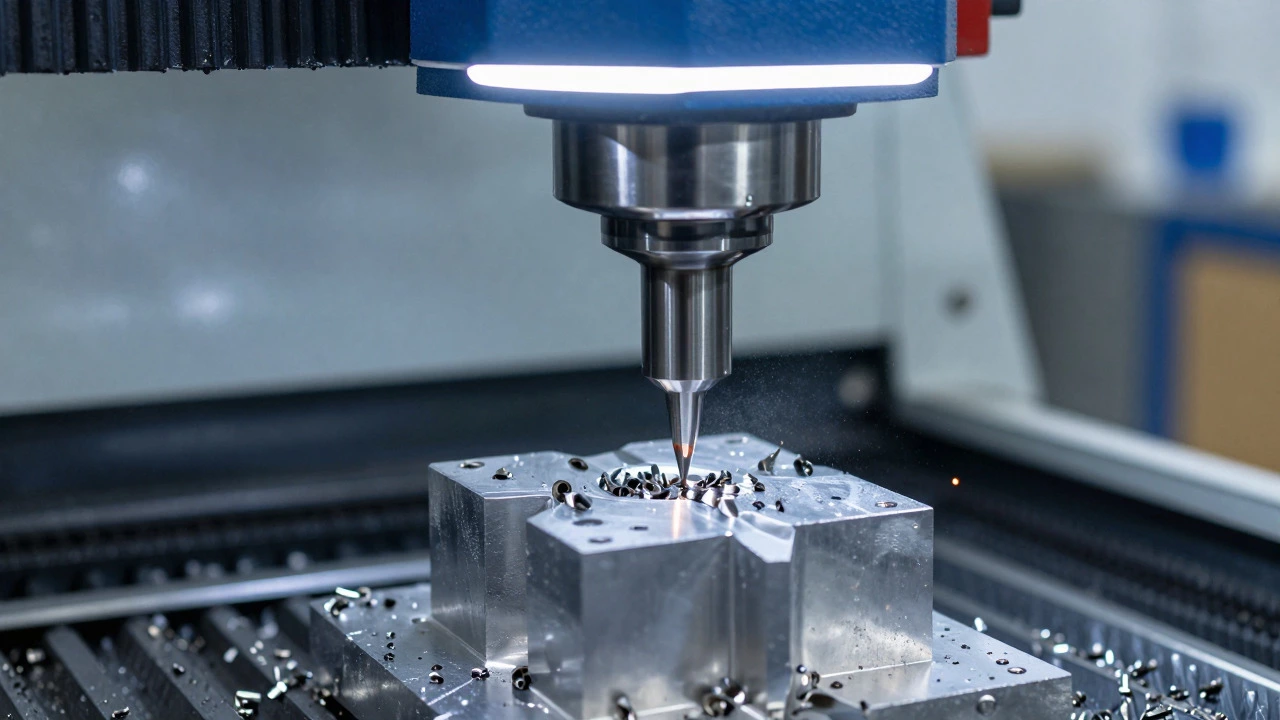
Subtractive manufacturing is a group of processes where material is removed from a solid block to create a part. Think of it like carving a statue out of marble. You start with a large chunk of metal, plastic, or wood, and you chip away everything that isn't part of the final design. The most common tool here is the CNC machine (Computer Numerical Control), which uses rotating cutters to mill, turn, or drill parts with high precision.
This method is incredibly versatile. If you need a complex bracket for an engine or a precise housing for an electronic device, subtractive manufacturing is often the go-to choice. It works well with almost any rigid material, including aluminum, steel, titanium, and engineering plastics. However, there is a catch: waste. Depending on the complexity of the part, you might throw away 30% to 50% of the raw material as chips or dust. This makes it less ideal for expensive materials or large-scale production where every gram counts.
Additive Manufacturing: Building Up Layer by Layer
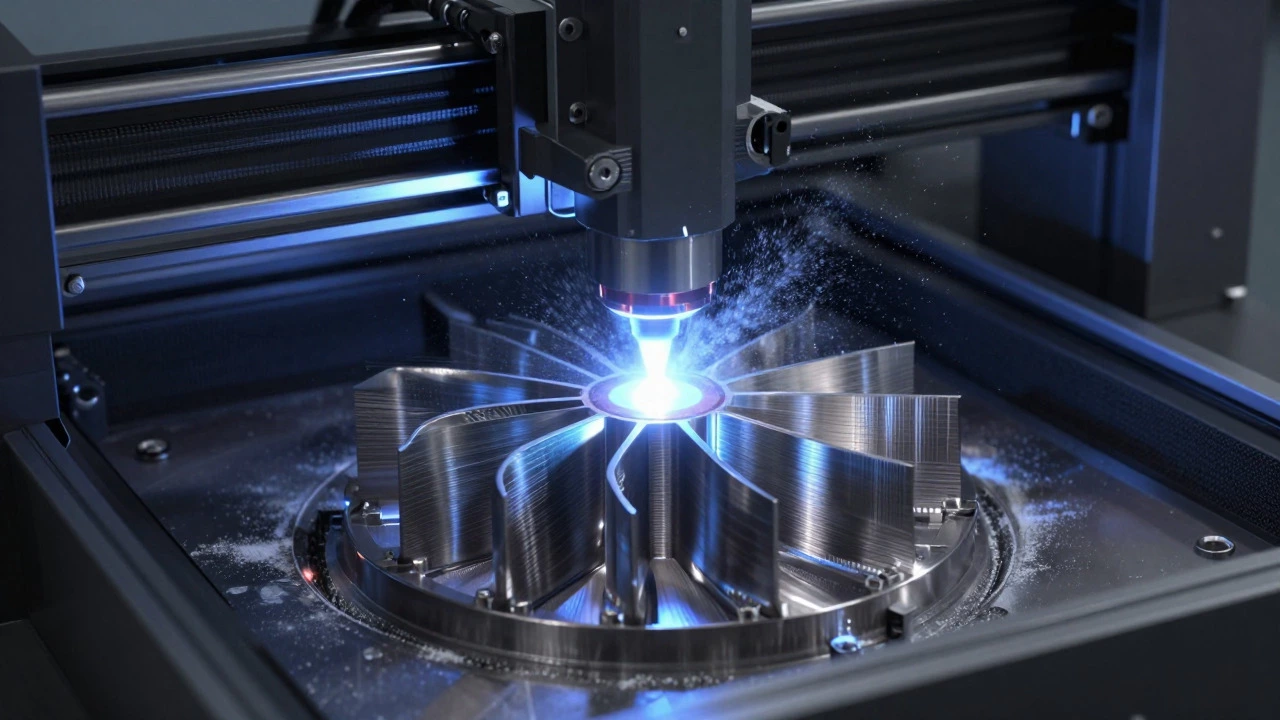
Additive manufacturing, commonly known as 3D printing, flips the script. Instead of removing material, you add it. A printer deposits thin layers of material-plastic, metal powder, or resin-until the object is complete. This technology has moved far beyond hobbyist desktop printers; industrial systems now print jet engine components and medical implants with tolerances measured in microns.
The biggest advantage here is freedom of design. You can create internal channels, lattice structures, and geometries that would be impossible to carve out of a solid block. It also drastically reduces waste since you only use the material needed for the part. But additive manufacturing isn't magic. It tends to be slower than traditional methods for mass production. If you need ten thousand identical screws, printing them one by one is inefficient. It shines in prototyping, low-volume custom runs, and repairing rare parts where tooling costs would be prohibitive.
Forming Processes: Shaping Without Removing Material
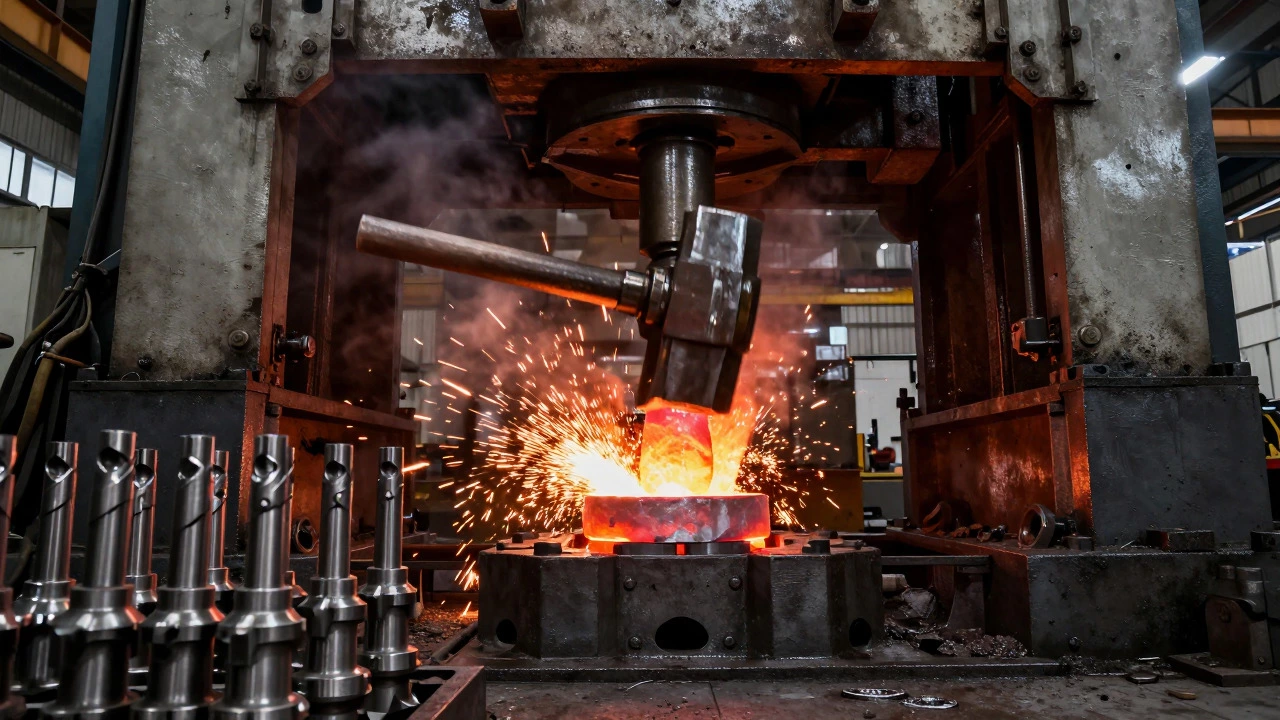
The third major category is Forming, which involves deforming material into a specific shape without cutting it away. Common examples include stamping, forging, and extrusion. In stamping, a press pushes a sheet of metal through a die to create car body panels or appliance casings. In forging, heavy hammers or presses compress hot metal into a mold, creating parts with superior strength because the grain structure aligns with the shape. Extrusion forces material through a die to create long profiles, like window frames or heat sinks.
Forming is the workhorse of mass production. It is fast, repeatable, and excellent for creating parts with consistent structural integrity. Automotive manufacturers rely heavily on stamped steel and forged axles because these methods produce strong, lightweight components at scale. The downside? High initial costs. Designing and building the dies or molds required for forming can be expensive, which means this method only makes sense when you have a high volume of parts to justify the setup fee.
Comparing the Three Methods: Cost, Speed, and Quality
Choosing between these methods usually comes down to volume, complexity, and budget. Let’s break down how they stack up against each other in real-world scenarios.
| Feature | Subtractive (CNC) | Additive (3D Printing) | Forming (Stamping/Forging) |
|---|---|---|---|
| Best For | Prototypes, mid-volume, complex shapes | Low volume, highly complex geometry, customization | High volume, simple to moderate shapes, structural parts |
| Material Waste | Moderate to High (30-50%) | Very Low (<10%) | Low (minimal trim waste) |
| Setup Cost | Low to Moderate | Low (digital file only) | High (custom dies/molds) |
| Production Speed | Moderate | Slow (for large batches) | Very Fast (high throughput) |
| Structural Strength | Good (isotropic if machined right) | Varies (can be weaker along layer lines) | Excellent (grain flow alignment) |
How Government Schemes Influence Method Selection
While the technical merits of each method are clear, economic factors play a huge role in what manufacturers actually choose. In many countries, government initiatives aim to boost local industry by subsidizing certain technologies. For instance, schemes promoting "Make in India" or similar local manufacturing drives often provide tax breaks or grants for setting up advanced CNC facilities or automated forming lines. These incentives can lower the barrier to entry for capital-intensive forming processes, making them more attractive for startups looking to enter the automotive or appliance sectors.
Conversely, policies focused on sustainability may encourage additive manufacturing due to its lower material waste profile. If a region offers rebates for recycling scrap metal, subtractive manufacturing becomes more viable. Understanding these local incentives is crucial. A business plan that ignores potential subsidies for green manufacturing or digital fabrication tools might miss out on significant cost savings.
Choosing the Right Method for Your Project
So, how do you decide? Start with your volume. If you need 100 units, look at subtractive or additive. If you need 100,000, look at forming. Next, consider the geometry. If the part has intricate internal features, additive wins. If it needs to withstand high stress loads, forming is often stronger. Finally, check your material constraints. Some metals are too hard to machine efficiently but perfect for forging.
Don’t be afraid to mix methods. Many modern products use a hybrid approach. A drone frame might be printed with additive manufacturing for its light weight, while its motor mounts are milled from aluminum for precision, and its battery casing is stamped from sheet metal for cost efficiency. The best manufacturing strategy isn't about picking one method and sticking to it-it's about matching the right technique to the specific requirements of each component.
Frequently Asked Questions
Which manufacturing method is the cheapest?
It depends on volume. For single pieces, additive manufacturing is often the cheapest because there are no tooling costs. For millions of pieces, forming (like stamping) is the cheapest per unit because the production speed is so high. Subtractive manufacturing sits in the middle, offering flexibility without the high upfront costs of forming.
Can I switch from one method to another easily?
Yes, but it requires redesigning the part. A part designed for stamping might need thicker walls to survive the forming process, whereas a part designed for 3D printing might need support structures removed. Always consult with an engineer before switching methods to ensure the part still functions correctly.
What is the main disadvantage of additive manufacturing?
Speed and consistency. While great for prototypes, printing thousands of identical parts takes time. Additionally, surface finish can be rougher than milled parts, often requiring post-processing. Mechanical properties can also vary depending on the orientation of the layers.
Is forming better than machining for strength?
Generally, yes. Forming processes like forging align the metal's grain structure with the shape of the part, resulting in higher tensile strength and fatigue resistance. Machining cuts across the grain, which can create weak points under extreme stress.
Do government schemes favor one method over others?
Schemes often favor automation and local sourcing. This can benefit forming (due to high automation potential) and subtractive (if using locally sourced raw materials). Additive manufacturing is increasingly supported under innovation and sustainability grants, but availability varies by region.