Food Processing Thermal Calculator
Calculate Processing Parameters
Input food type, desired preservation level, and initial temperature to determine safe processing conditions.
Food processing isn’t just about turning raw ingredients into packaged meals. It’s a series of precise, controlled steps designed to make food safe, shelf-stable, and appealing to consumers. Every can of beans, bag of frozen vegetables, or carton of pasteurized milk went through a sequence of operations that started with raw materials and ended with a product ready for your kitchen. These aren’t random steps-they’re standardized, science-backed processes that keep food from spoiling, prevent illness, and preserve nutrition.
Receiving and Inspection
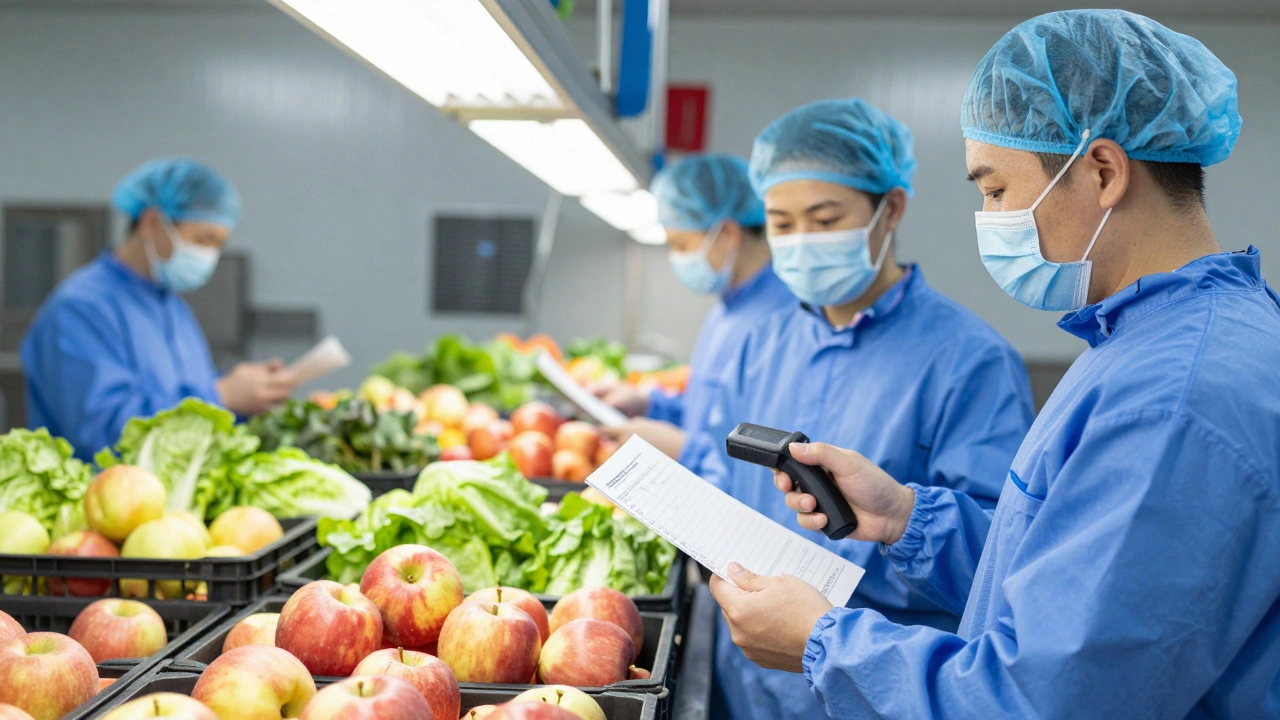
It all begins at the door. Raw materials-whether it’s milk from a dairy farm, apples from an orchard, or fish from a trawler-arrive at the processing unit. The first job is inspection. This isn’t a quick glance; it’s a full assessment. Workers check for signs of spoilage, contamination, or pests. Temperature logs are reviewed. Documentation like harvest dates, pesticide use, and transport conditions is verified. A single batch of contaminated lettuce can shut down a plant, so this stage is non-negotiable. Facilities use visual checks, lab tests for pathogens like E. coli or Salmonella, and even metal detectors to catch foreign objects. If anything doesn’t meet standards, the entire load gets rejected. There’s no room for guesswork here.
Cleaning and Washing
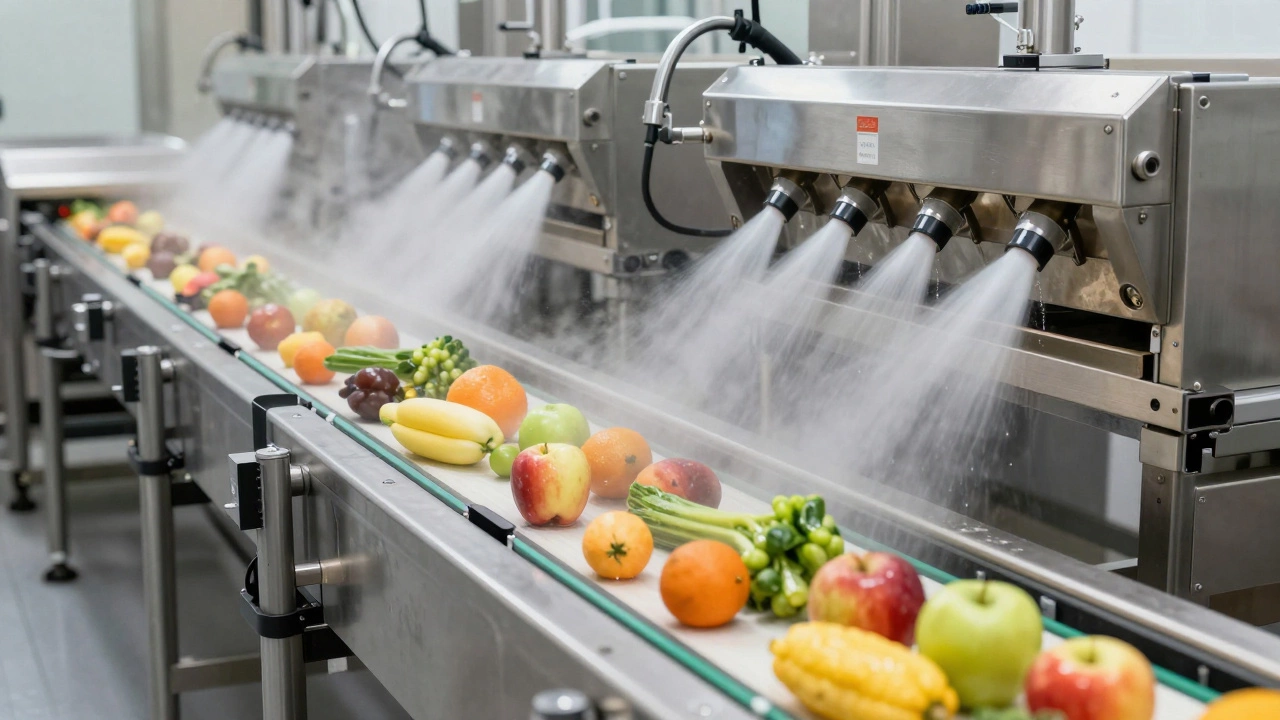
Once approved, the raw materials go through cleaning. This step removes dirt, dust, chemicals, and microorganisms clinging to the surface. For fruits and vegetables, this means high-pressure water sprays, sometimes with food-grade sanitizers like chlorine or ozone. Meat and poultry get rinsed with water at controlled temperatures to avoid spreading bacteria. Even grains like rice or wheat are washed to remove husks, stones, and debris. The water used isn’t just tap water-it’s filtered, treated, and monitored for pH and microbial levels. Some operations use ultrasonic cleaning or dry ice blasting for delicate items like berries. The goal? Reduce microbial load by as much as 99% before any further processing.
Sorting and Grading
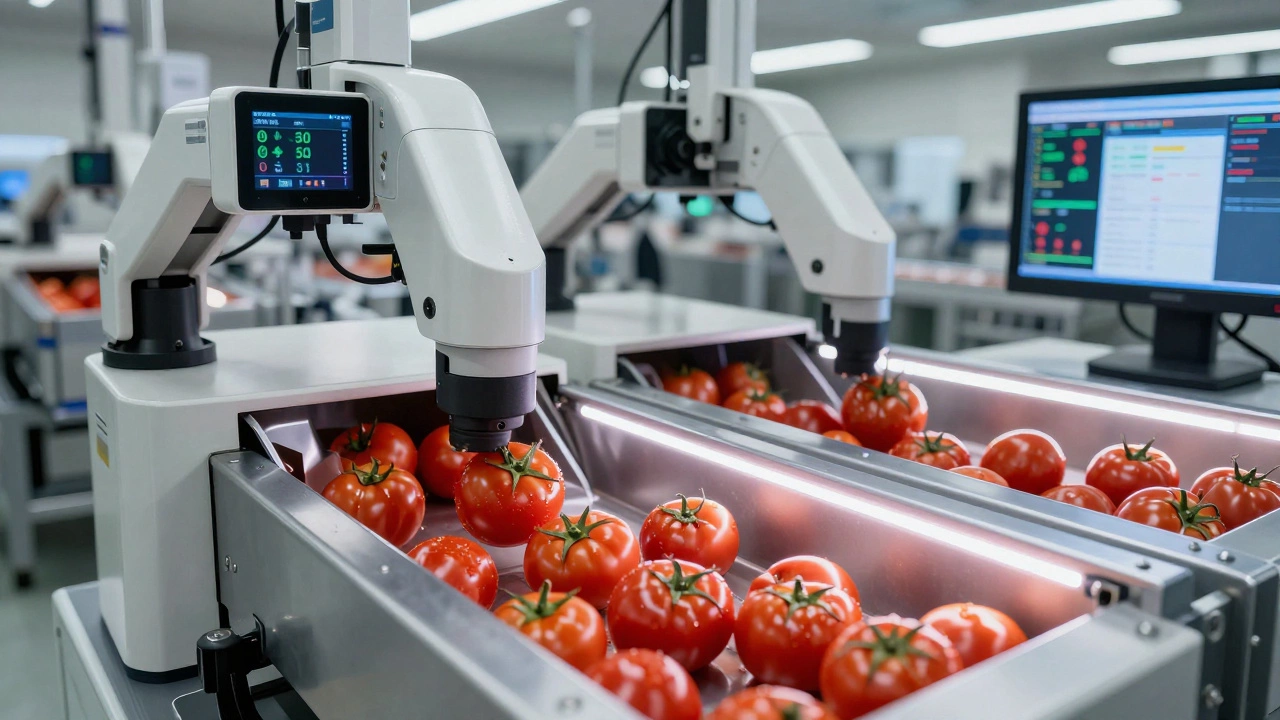
Not all tomatoes are created equal. Sorting ensures that only the right quality goes into the right product. Size, color, ripeness, and defects are evaluated. Modern plants use cameras and AI-powered imaging systems to scan produce in real time. A tomato with a bruise or discoloration gets diverted away from fresh packaging and into sauce production. Fish are sorted by species and size. Nuts are separated by shell integrity. This isn’t just about appearance-it affects shelf life and processing time. A mis-sorted batch can lead to inconsistent texture, spoilage, or even recalls. Grading also determines pricing and end-use. Premium-grade apples go to supermarkets; lower grades become juice or puree.
Preparation and Cutting
This is where the raw material starts to look like the final product. Vegetables are peeled, sliced, or diced. Meat is deboned and trimmed. Fruits are pitted and chopped. These tasks are often done with automated machinery-rotating blades, steam peelers, or laser-guided cutters. Precision matters. A slice of potato too thick won’t fry evenly; too thin, and it burns. In dairy, milk is standardized-fat content adjusted by separating cream and recombining it to meet label claims. In juice production, pulp is either removed or added back based on consumer preference. Even small variations here can change the taste, texture, or cooking time of the final product.
Thermal Processing
Heat is one of the oldest and most reliable tools in food processing. It kills harmful bacteria, deactivates enzymes that cause spoilage, and improves texture. Pasteurization heats liquids like milk or juice to 72°C for 15 seconds-enough to destroy pathogens without boiling off flavor. Sterilization, used for canned goods, heats food to 121°C under pressure to kill even the toughest spores like Clostridium botulinum. Blanching, a quick dip in boiling water, is used before freezing vegetables to stop enzyme activity that would otherwise turn them mushy over time. The timing and temperature are calculated down to the second. Too little heat? Risk of illness. Too much? Nutrients vanish, texture turns rubbery.
Preservation Techniques
After heat treatment, food needs to stay safe without refrigeration. That’s where preservation steps come in. Drying removes water, making it impossible for microbes to grow-think powdered milk or dried apricots. Freezing slows microbial growth and enzyme activity. Vacuum sealing removes oxygen, preventing mold and rancidity. Modified atmosphere packaging (MAP) swaps air inside a package with nitrogen or carbon dioxide. Salt, sugar, and vinegar are still used too-brining, pickling, and curing aren’t just traditional methods, they’re science-backed techniques. Each method has limits. For example, freezing doesn’t kill bacteria-it just puts them to sleep. That’s why frozen foods still have expiration dates.
Packaging and Labeling
It’s not just about putting food in a container. Packaging is the final barrier against contamination, moisture, light, and air. Materials are chosen based on the product: aluminum foil for fat-sensitive items, high-barrier plastic for oxygen-sensitive foods, or transparent PET for visibility. Machines fill, seal, and date-code packages at speeds of hundreds per minute. Labels aren’t just for branding-they’re legal documents. They must list ingredients, allergens, nutritional info, and storage instructions. In the UK, this follows EU and UK Food Information Regulations. A missing allergen warning can lead to lawsuits or bans. QR codes on packages now link to batch records, letting consumers trace where their food came from.
Storage and Distribution
Processed food doesn’t sit still. It moves quickly. Cold storage warehouses maintain temperatures between 0°C and 4°C for perishables, while dry goods are kept below 20°C with humidity control. Temperature monitoring is continuous-every warehouse has sensors linked to cloud systems that alert staff if a fridge goes out of range. Logistics are timed to minimize time between processing and store shelves. A batch of soup processed on Monday morning should be on shelves by Wednesday. Delays mean spoilage, waste, and lost revenue. Distribution networks are optimized using real-time data on traffic, weather, and inventory levels. The goal? Get safe, high-quality food to consumers before it loses freshness.
Why These Steps Matter
These operations aren’t just technical-they’re lifesavers. Before modern food processing, foodborne illness killed thousands every year. Spoilage meant hunger in winter. Now, we expect year-round access to safe, nutritious food. Each step in the process reduces risk. Cleaning cuts down on pathogens. Thermal processing kills them. Packaging keeps them out. The entire system is built on layers of defense. One failure doesn’t mean disaster because there are backups at every stage. That’s why your jar of jam lasts a year on the shelf, why your frozen peas don’t turn to mush, and why you can trust that your yogurt won’t make you sick. It’s not magic. It’s science, precision, and strict control.
What are the five basic operations in food processing?
The five core operations are: receiving and inspection, cleaning and washing, sorting and grading, preparation and cutting, and thermal processing. These steps ensure food safety, quality, and shelf stability. After these, preservation and packaging complete the process, but the first five form the essential foundation.
Is food processing the same as food manufacturing?
They’re closely related but not identical. Food processing refers to the physical and chemical changes made to raw ingredients-like pasteurizing milk or drying fruit. Food manufacturing includes processing but also adds large-scale production, packaging, branding, and distribution. Think of processing as the kitchen work and manufacturing as the entire factory operation.
What role does temperature play in food processing?
Temperature controls microbial growth and chemical reactions. Too cold, and enzymes remain active-causing spoilage. Too hot, and nutrients break down or flavors burn. Pasteurization uses precise heat to kill pathogens without cooking the food. Freezing preserves by halting microbial activity. Even storage temperatures matter-milk stored above 4°C can spoil in days. Temperature isn’t just a setting; it’s a safety parameter.
Can food processing remove nutrients?
Some processing can reduce certain nutrients, especially heat-sensitive ones like vitamin C or B vitamins. However, modern methods are designed to minimize loss. Flash pasteurization, for example, heats food quickly and cools it fast, preserving more nutrients than older methods. Fortification is also common-many processed foods like breakfast cereals or plant milks add back vitamins and minerals that were lost. So while some loss occurs, it’s often offset by enrichment.
How do food processing plants ensure safety?
They follow HACCP (Hazard Analysis and Critical Control Points), a science-based system that identifies risks at each step and sets limits to prevent them. Workers wear protective gear, surfaces are sanitized hourly, and air quality is monitored. Every batch is tested for pathogens, and records are kept for years. In the UK, the Food Standards Agency audits plants regularly. If a plant fails an inspection, it’s shut down until fixes are made.