- Most Profitable Manufacturing Businesses in the USA 2025 Oct 19, 2025
- Top Manufacturing Startup Ideas Thriving in 2024 Dec 31, 2024
- Surat: India's Top Textile City - Which City Leads the Industry? Oct 2, 2025
- Expensive Fabrics in India: What Makes Them Costly? Jun 8, 2025
- What Are the Basic Unit Operations in Food Processing? Feb 10, 2026
Government Manufacturing Support in India: How Policies Fuel Local Industry
When you hear government manufacturing support, financial incentives, tax breaks, and infrastructure programs designed to boost local production. Also known as industrial policy, it’s not just about handing out money—it’s about creating the conditions where small factories, family workshops, and startup makers can actually compete. In India, this isn’t theoretical. It’s happening in textile parks in Tamil Nadu, in tool rooms in Ludhiana, and in small engine factories near Greater Noida.
One of the biggest shifts came with the PM MITRA, a national scheme launching seven integrated textile manufacturing parks to attract investment and boost exports. These aren’t just buildings—they’re full ecosystems with power, water, waste treatment, and logistics built in. That’s the kind of support that lets a small garment exporter skip years of red tape and start shipping to the U.S. faster. Then there’s the textile subsidies India, direct cash incentives tied to export volume, helping makers afford better machinery without going into debt. These aren’t handouts. They’re leverage points—turning ₹5 lakh in government aid into ₹50 lakh in new sales.
It’s not just textiles. The small scale industries, local manufacturers with under ₹10 crore investment, often the backbone of regional economies. get faster approvals, lower compliance costs, and priority in government tenders. A furniture maker in Uttar Pradesh can now use a government scheme to buy CNC machines at half price. A plastic processor in Gujarat gets training on bioplastics because the state wants to cut single-use waste. These aren’t big corporate deals. They’re real tools for people running shops with five employees.
And it’s working. India’s auto sector didn’t grow because Toyota showed up with a big budget. It grew because local suppliers—many of them small—got support to meet global standards. Honda doesn’t import engines from Japan. They’re made in India because the system let local engineers build the capacity. The 15-year car rule? It didn’t just retire old vehicles—it created a whole new market for scrapping and recycling, backed by government incentives.
What you’ll find below isn’t a list of policies. It’s a collection of real stories—how a furniture startup used a subsidy to break even in 11 months, how a textile exporter landed a U.S. buyer after qualifying for export cashback, how a tiny engine maker became a supplier to a global brand. These aren’t exceptions. They’re the new normal. And if you’re building something in India’s manufacturing space, you’re not just competing with the world—you’re being helped to win.
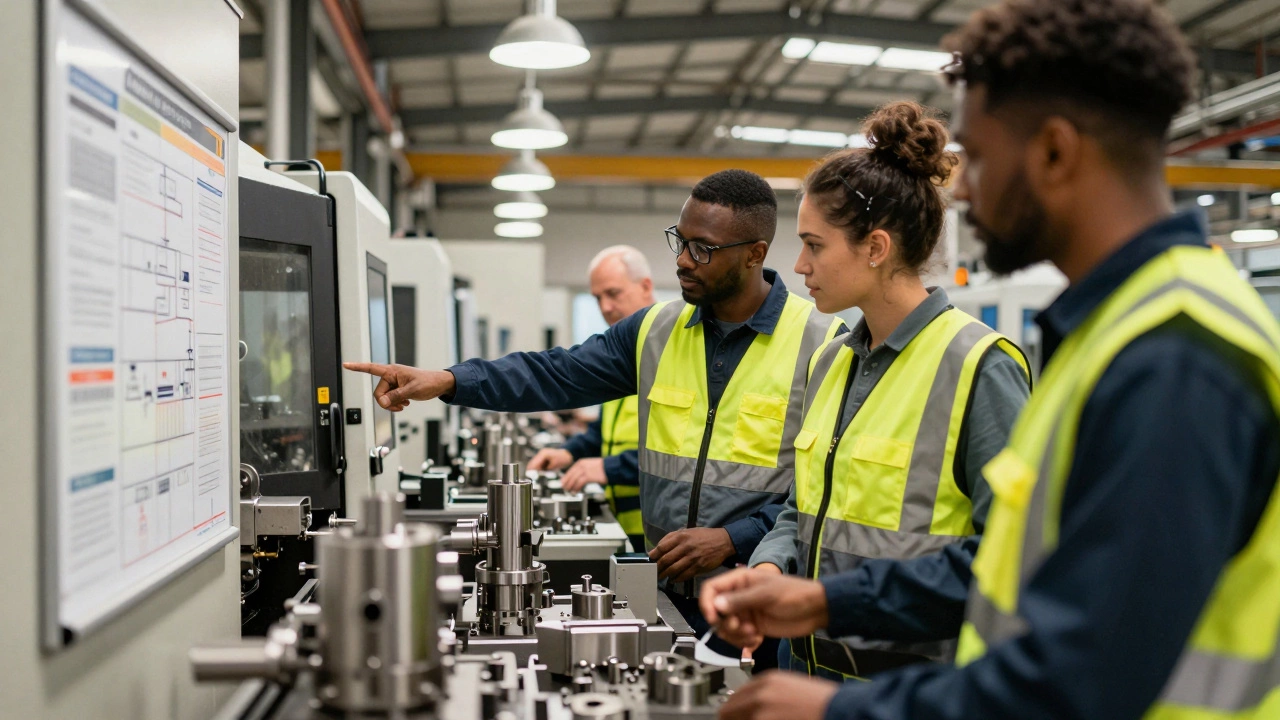
Manufacturing and Industry
What Are the Three Pillars of Manufacturing? Understanding the Foundation of Modern Production
- Aarav Sekhar
- Dec 1, 2025
The three pillars of manufacturing-People, Process, and Product-are the foundation of sustainable production. Learn how they work together, why government schemes prioritize them, and how small manufacturers can build resilience without big investments.