Indian Auto Industry Challenge Analyzer
Market Factors
Select the current status of key industry factors based on recent trends.
Stable Prices
Sharp Price Hikes (+₹50k)
Widespread Charging
Sparse / Range Anxiety
Local Sourcing Available
Import Dependency / Delays
High Disposable Income
Inflation / Tight Credit
Weak Secondary Market
Booming Certified Pre-Owned
Market Strain Index
Overall Industry Health Assessment
Calculating...
Current Status:
Loading analysis...
Loading analysis...
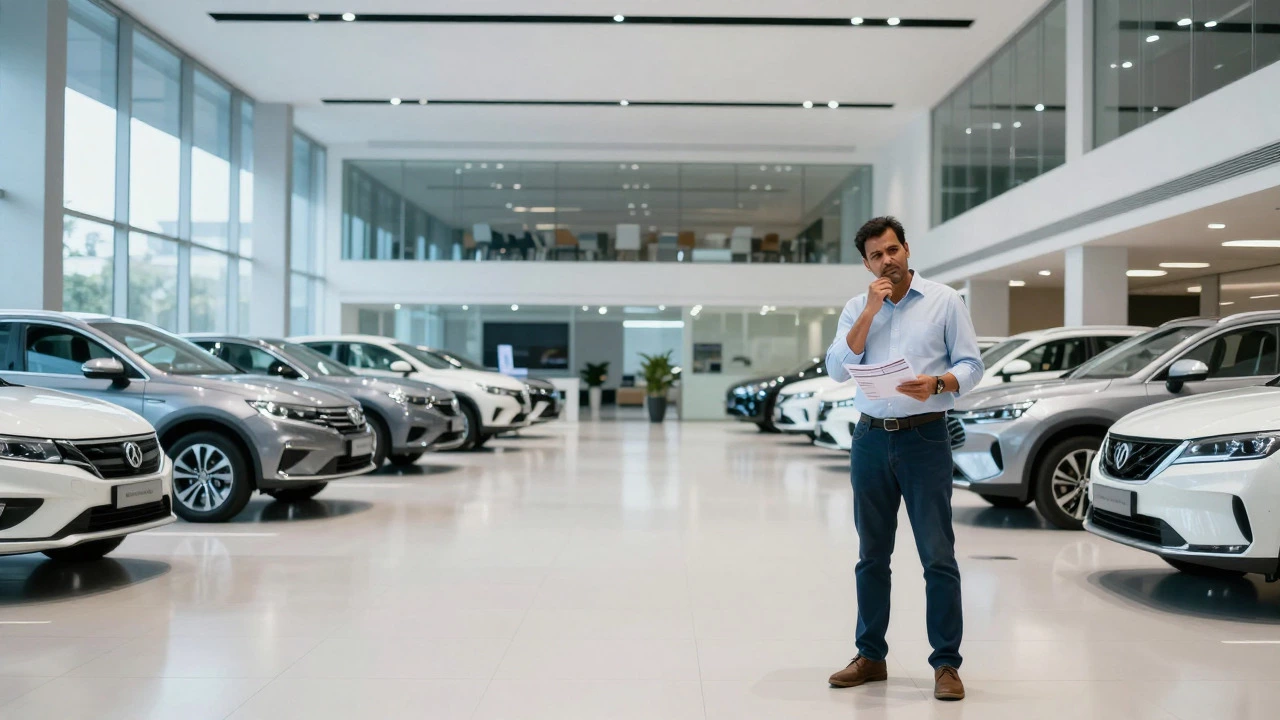
Walk into any car showroom in Mumbai or Delhi today, and you might notice something odd. The lines aren’t as long as they used to be. Sales numbers that once made headlines for their growth are now flatlining, or worse, dipping. If you’ve been watching the Indian automobile industry is one of the largest automotive sectors globally, known for two-wheelers, passenger vehicles, and commercial transport manufacturing., you’re probably asking the same question everyone else is: why is it falling?
It’s not just a bad month. It’s a structural shift. For decades, India was the world’s factory for affordable mobility. Now, it’s facing a perfect storm of rising costs, regulatory headaches, and a consumer base that has suddenly hit the brakes on spending. Let’s look at what’s actually happening under the hood.
The Cost of Compliance Is Crushing Margins
Remember when buying a car felt like a simple transaction? Those days are gone. The biggest invisible tax on your wallet right now isn’t fuel; it’s regulation. The implementation of BS-VI emission norms is India's stringent air quality standard for vehicles, equivalent to Euro-6 standards globally. was supposed to clean up our cities. And it did. But it came with a price tag that manufacturers couldn’t pass on entirely to consumers without killing demand.
To meet these standards, companies had to retrofit engines, add complex filtration systems, and re-engineer transmissions. This wasn’t a software update; it was a hardware overhaul. The result? A sharp increase in the ex-showroom price of almost every vehicle category. When a budget hatchback jumps by ₹50,000 overnight, the middle-class buyer pauses. They start looking at alternatives-used cars, public transport, or simply delaying the purchase. Manufacturers find themselves squeezed between higher production costs and stagnant pricing power.
The Electric Vehicle Transition Is Messy
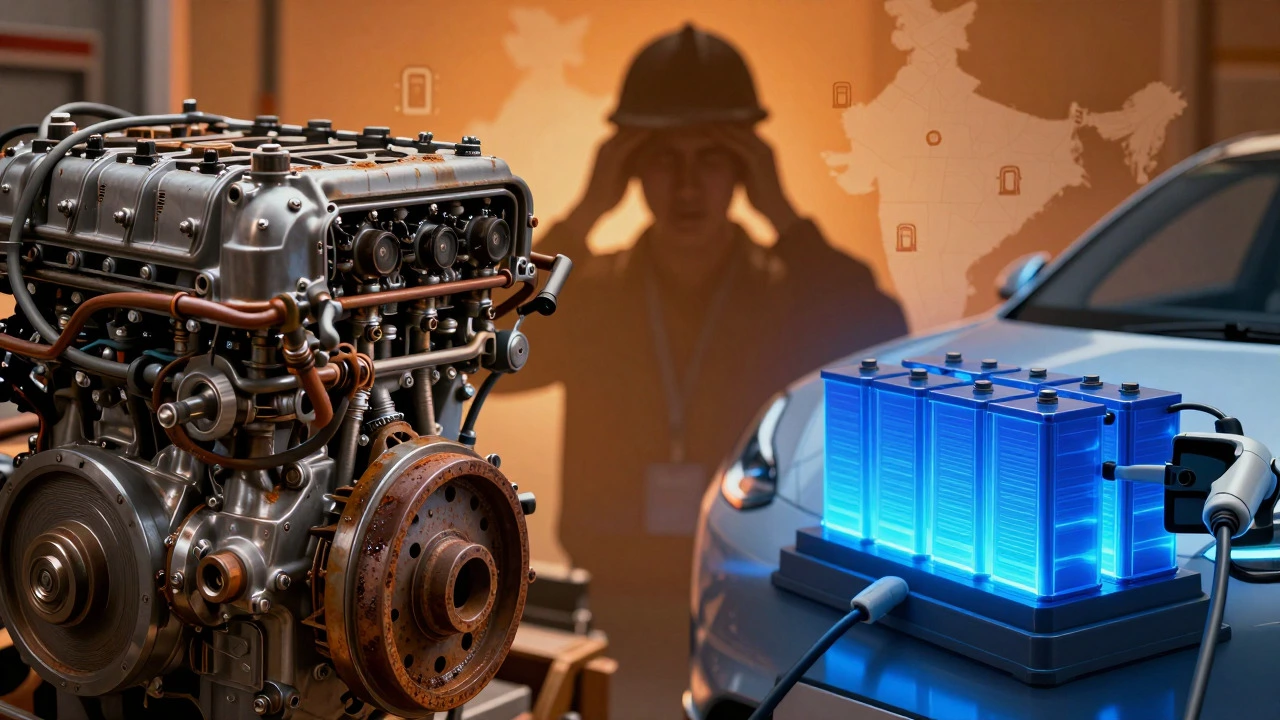
Everyone talks about the electric future. Politicians promise subsidies, and tech giants invest billions. But on the ground, the transition to Electric Vehicles (EVs) is battery-powered automobiles designed to reduce carbon emissions and dependence on fossil fuels. is far from smooth. While EVs make up a growing percentage of new registrations, they still represent a tiny fraction of the total fleet. Why? Because the infrastructure hasn’t kept pace with the ambition.
Charging stations are sparse outside major metros. Range anxiety is real because battery technology hasn’t quite solved the cost-to-capacity ratio for mass-market vehicles. Meanwhile, traditional internal combustion engine (ICE) manufacturers are stuck in limbo. Do they keep investing in petrol and diesel engines that will soon be obsolete? Or do they pivot to EVs where the profit margins are razor-thin due to expensive lithium-ion batteries? Most are trying to do both, which dilutes focus and increases capital expenditure. This hesitation creates a vacuum where neither side feels fully confident in making a big purchase.
Supply Chain Vulnerabilities Exposed
You can’t build a car if you don’t have the parts. The global supply chain crisis of the early 2020s taught us a hard lesson: just-in-time manufacturing is fragile. India relies heavily on imported semiconductors, specialized steel, and rare earth elements for magnets. Geopolitical tensions and trade wars have made these inputs unpredictable.
When a chip shortage hits, production lines stop. When steel prices spike due to international tariffs, margins vanish. Unlike countries with more diversified supplier bases, Indian automakers often have limited options for local substitution. This dependency means that any shock abroad ripples directly through domestic factories. In 2025 and 2026, we saw several instances where minor disruptions in Southeast Asian semiconductor hubs led to weeks of delayed deliveries in Pune and Chennai. Customers don’t wait forever. They go elsewhere.
Consumer Sentiment Has Shifted Drastically
Economics isn’t just about supply; it’s about demand. And right now, Indian consumers are cautious. High inflation rates on essentials like food and housing have eaten into disposable income. A car is no longer seen as an immediate necessity but as a luxury that can be deferred. Add to this the rise of ride-hailing services and improved urban metro networks in cities like Bangalore and Hyderabad, and the need for personal ownership diminishes further.
Moreover, the financing landscape has tightened. Banks are stricter with loans, requiring higher down payments and better credit scores. This filters out a significant portion of the aspirational buyer who previously drove volume growth. The demographic dividend that fueled the boom of the 2010s is now facing job market uncertainties, leading to conservative financial behavior. People are saving, not spending on depreciating assets.

Competition From Used Car Markets
Here’s a trend that surprises many executives: the used car market is booming. As new vehicle prices rise, savvy buyers turn to certified pre-owned options. Platforms offering transparent history reports and warranty packages have legitized this segment. A three-year-old SUV in excellent condition might cost 40% less than its brand-new counterpart while offering nearly identical utility.
This cannibalization hurts new car sales significantly. Manufacturers see their inventory sitting longer, forcing them to offer discounts that erode brand value. It’s a vicious cycle. To compete with the used market, new car makers must lower prices, but rising costs prevent that. So they cut features or delay launches, which makes their products less attractive compared to reliable used alternatives.
| Factor | Impact Level | Description |
|---|---|---|
| Regulatory Costs | High | BS-VI compliance increased R&D and production costs significantly. |
| EV Infrastructure | Medium-High | Lack of charging networks limits mass adoption of electric models. |
| Supply Chain | High | Dependency on imported chips and materials causes production delays. |
| Consumer Spending | High | Inflation and tight credit reduce willingness to buy new vehicles. |
| Used Car Market | Medium | Affordable alternatives divert buyers from new showrooms. |
What Needs to Change?
Fixing this isn’t about one silver bullet. It requires a multi-pronged approach. First, policymakers need to stabilize regulations. Constant changes in safety and emission standards create uncertainty. Second, investment in charging infrastructure must accelerate, not just in cities but along highways. Third, manufacturers must localize supply chains to reduce import dependency. Finally, there needs to be a push for affordable financing options to bring back the first-time buyer.
The Indian automobile industry isn’t dead. It’s transforming. But until the pain points of cost, infrastructure, and consumer confidence are addressed, the fall will continue. For now, buckle up. The ride ahead is bumpy.
Is the Indian automobile industry declining permanently?
Not necessarily. The current slump is largely cyclical and structural rather than permanent. Once EV infrastructure matures and supply chains stabilize, growth is expected to resume, albeit at a different pace focused on electrification and premium segments.
How do BS-VI norms affect car prices?
BS-VI norms require advanced emission control technologies, increasing manufacturing costs by 10-15%. These costs are partially passed to consumers, leading to higher ex-showroom prices across all vehicle categories.
Why are people buying used cars instead of new ones?
Rising new car prices due to regulatory costs and inflation make used cars a financially smarter choice. Certified pre-owned programs also provide trust and warranties, reducing the risk associated with second-hand purchases.
What is the role of supply chain issues in the auto slump?
India imports critical components like semiconductors and rare earth metals. Global disruptions cause production halts and delays, frustrating customers who then cancel orders or switch brands, impacting overall sales volumes.
Will Electric Vehicles save the Indian auto industry?
EVs offer long-term potential but currently face hurdles like high battery costs and inadequate charging infrastructure. They will likely drive future growth only after these foundational issues are resolved and prices become competitive with ICE vehicles.