Global Manufacturing Output Calculator
Enter a value to see how it compares to global manufacturing leaders
When you think of manufacturing, you probably picture factories, assembly lines, and robots. But who’s really running the show? Who holds the title of world leader in manufacturing? It’s not just about how many things are made-it’s about scale, innovation, supply chain control, and economic impact. The answer isn’t as simple as naming one country or one company. But if you look at the numbers, the trends, and the real-world impact, one player stands out above the rest.
The Real Measure of Manufacturing Leadership
Manufacturing leadership isn’t about who makes the most gadgets or cars. It’s about total value added. That means the total output of goods minus the cost of raw materials, energy, and other inputs. In 2025, China produced over $5.2 trillion in manufactured goods. That’s more than the next three countries combined. The United States came second at $2.3 trillion, followed by Germany at $1.1 trillion. But numbers alone don’t tell the whole story.
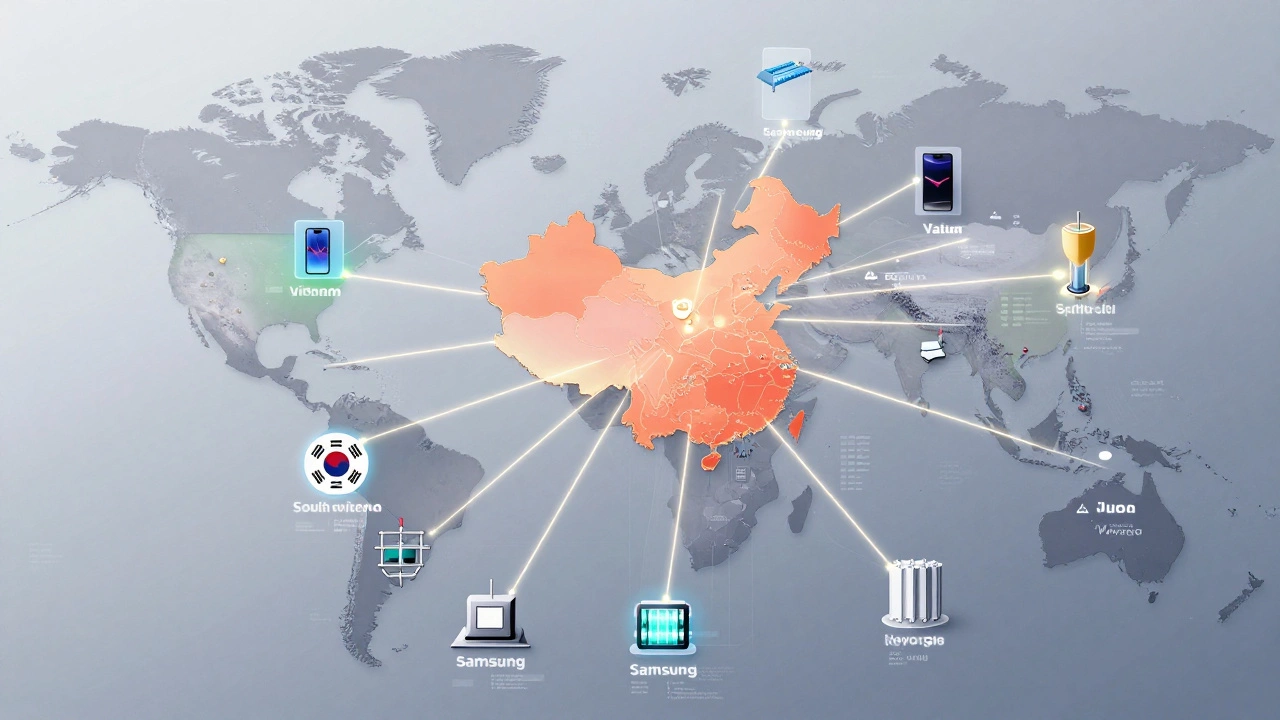
China’s dominance isn’t just about volume. It’s about the depth of its ecosystem. From rare earth minerals to microchips, from textiles to electric vehicles, China controls the full pipeline. It produces 95% of the world’s rare earth elements. It makes 70% of the world’s solar panels. It assembles over 40% of all electronics sold globally. And it doesn’t just make things-it makes the machines that make other things.
The Heavyweights: Who’s in the Top Tier?
While China leads by national output, the actual manufacturing powerhouses are corporations. These are the companies that move billions of dollars in goods every year, employ millions, and shape global supply chains. Here are the top five:
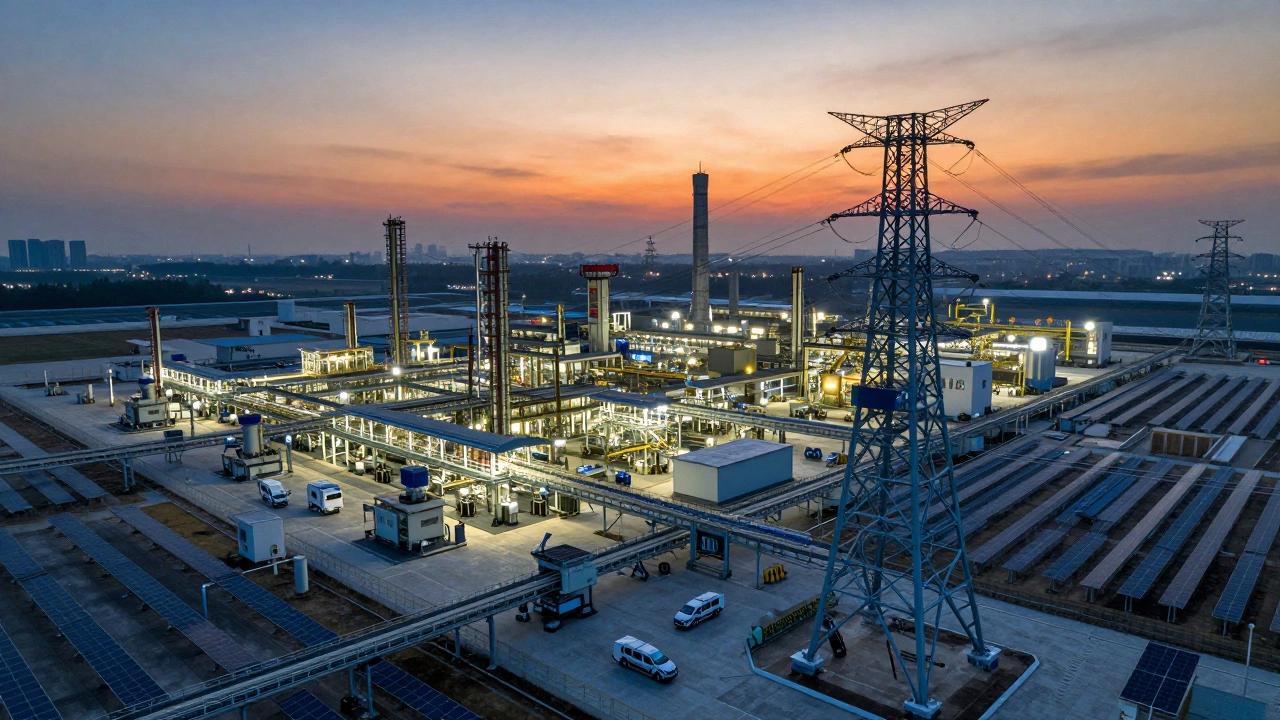
- State Grid Corporation of China - This isn’t a factory, but it’s the largest manufacturing entity in the world by revenue. It designs, builds, and maintains the power infrastructure that runs China’s entire industrial system. In 2025, its revenue hit $410 billion. Without its grids, factories wouldn’t run.
- Apple Inc. - Apple doesn’t own a single factory, but it directs the production of over 200 million iPhones, iPads, and Macs every year. Its supply chain involves more than 1,000 suppliers across 43 countries. It’s the world’s most valuable brand, and its manufacturing decisions ripple through global markets.
- Toyota Motor Corporation - Toyota made 10.7 million vehicles in 2025. It’s the largest automaker by volume and a leader in lean manufacturing. Its just-in-time system is studied in business schools worldwide. It also leads in hybrid and hydrogen tech.
- Samsung Electronics - Samsung makes more than half of the world’s smartphone displays, 30% of its memory chips, and 20% of its consumer electronics. It’s one of the few companies that designs, manufactures, and sells its own components at scale.
- General Electric (GE) - GE still makes jet engines, wind turbines, and medical imaging systems. Though it’s shrunk since its peak, its industrial footprint spans 120 countries. Its aviation division alone generates $30 billion in annual revenue.
Why China Wins - And How It Got There
China didn’t become the world’s manufacturing leader overnight. It started in the 1980s with low-cost labor and government incentives. But it didn’t stop there. By the 2000s, it began investing heavily in infrastructure: ports, high-speed rail, power grids, and industrial parks. Today, it has over 200 specialized manufacturing zones where suppliers, logistics, and factories are all within 10 kilometers of each other.
It also built its own tech stack. In 2020, China launched the Made in China 2025 initiative. The goal? To dominate high-tech manufacturing: robotics, AI, electric vehicles, 5G, and semiconductors. Five years later, it already leads in EV production - making 60% of the world’s electric cars. Its battery makers, like CATL, supply Tesla, BMW, and Ford. CATL alone produced 37% of the world’s lithium-ion batteries in 2025.
China’s advantage isn’t just cost. It’s speed. A product can go from design to mass production in under 90 days. In the U.S., that same process often takes 18 months. In Germany, it’s 12. China’s supply chain is a single, tightly coordinated machine.
The U.S. and Europe: Still Powerful, But Changing
The U.S. and Europe aren’t out of the game. They lead in high-value manufacturing. The U.S. still makes the most advanced semiconductors - companies like Intel and NVIDIA design chips that power AI servers and self-driving cars. The U.S. also leads in aerospace: Boeing and Lockheed Martin build the most advanced fighter jets and satellites.
Germany is the king of precision engineering. It makes the machines that make other machines. Companies like Siemens and Bosch produce industrial robots, CNC tools, and automation systems used worldwide. Germany’s Mittelstand - its network of small, family-owned manufacturers - is unmatched in quality and innovation.
But both regions face challenges. Labor costs are high. Supply chains are fragmented. And many companies have moved production overseas. The U.S. is trying to bring manufacturing back with the CHIPS Act and Inflation Reduction Act. But rebuilding supply chains takes time, money, and political will.
The Hidden Leaders: Who’s Rising?
While China, the U.S., and Germany dominate, other countries are making serious moves.
- South Korea - Samsung and LG control the global display market. SK Hynix makes memory chips that go into every major server and smartphone.
- Japan - Canon, Nikon, and Hitachi lead in industrial lasers and robotics. Japan still makes the most precise tools for semiconductor production.
- India - India is becoming a hub for electronics assembly. Apple now makes over 10% of its iPhones in India. Tata and Reliance are investing billions in semiconductor fabs and battery plants.
- Mexico - Near the U.S., Mexico is the fastest-growing manufacturing destination. It’s now the top exporter of automotive parts to North America.
What Does This Mean for the Future?
The world’s manufacturing landscape is shifting. Geopolitical tensions, trade wars, and climate policies are forcing companies to rethink where they make things. Nearshoring is growing. Automation is replacing labor. And AI is optimizing every step of production.
China will still lead for the next decade. But it’s no longer the only game in town. The future belongs to those who combine scale with agility - companies that can move fast, adapt quickly, and control their own supply chains.
If you’re looking for the world leader in manufacturing, the answer is clear: it’s not a single company. It’s a system. And that system is centered in China - powered by its factories, its supply chains, and its relentless focus on scale and speed. But the rest of the world isn’t standing still. They’re building their own systems. And that’s where the real competition begins.
Is China really the world leader in manufacturing?
Yes, by total value of goods produced. In 2025, China accounted for nearly 30% of global manufacturing output - more than the U.S., Germany, and Japan combined. It leads in electronics, EVs, solar panels, and industrial machinery. Its supply chain infrastructure is unmatched in scale and speed.
What company makes the most stuff in the world?
There’s no single company that makes the most physical products. But State Grid Corporation of China generates the highest revenue from manufacturing-related activities - over $410 billion in 2025 - because it builds and maintains the power infrastructure that enables all other manufacturing. Apple and Toyota lead in volume of consumer goods, but they rely on thousands of suppliers.
Does the U.S. still matter in manufacturing?
Absolutely. The U.S. leads in high-value, high-tech manufacturing: semiconductors (Intel, NVIDIA), aerospace (Boeing, Lockheed), and industrial automation (GE, Caterpillar). It produces more advanced machinery and cutting-edge tech than any other country. Its challenge is cost and scale, not capability.
Why is Germany important in manufacturing?
Germany doesn’t make the most products - but it makes the best tools to make them. Companies like Siemens and Bosch design the robots, CNC machines, and automation systems used in factories worldwide. German engineering sets the global standard for precision, reliability, and long-term performance.
Can any country challenge China’s manufacturing dominance?
Not in the short term. China’s advantage is systemic - from raw material access to logistics, labor, and government support. But in niche areas, others are catching up. India is growing fast in electronics assembly. Mexico is becoming the go-to for U.S.-bound manufacturing. And the U.S. is reasserting leadership in semiconductors and defense tech. The future won’t be one leader - it’ll be a network of regional powerhouses.