
USA to India Car Import Cost Calculator
Vehicle Import Cost Estimator (USA → India)
$
RoRo is approx $1,500-$3,000; Container is $3,000-$5,000+.
Determines customs duty exemptions.
₹
Cost Breakdown
Base Car Price:
-
Estimated Shipping:
-
Insurance (2%):
-
Landed Cost (Pre-Tax):
-
Taxes & Duties
Basic Customs Duty:
-
Social Welfare Surcharge (10% of Duty):
-
IGST (28% on Value + Duty):
-
Total Estimated Cost in India
₹0
($0 USD)
Value Check
With this amount (approx ₹0), you could likely purchase a brand-new premium SUV or luxury sedan in India with full warranty, rather than an imported used vehicle.
Exemption Applied: As a Returning Resident/PIO, Basic Customs Duty is waived. However, GST and other surcharges still apply to the assessable value. Final clearance depends on strict documentation proof.
Imagine standing in a dealership in Los Angeles, looking at a limited-edition muscle car or a high-tech electric vehicle that simply isn’t available in the Indian market. The dream is tempting: bring it home. But before you get too excited about driving your American ride on the streets of Mumbai or Bangalore, there is a harsh reality check waiting for you. The short answer to "can we transfer a car from USA to India?" is yes, but with massive caveats that make it financially impractical for most people.
Importing a vehicle into India is not like moving furniture. It involves navigating a complex web of customs duties, safety standards, and bureaucratic hurdles designed primarily to protect the domestic automobile industry. Unless you fall into a specific category of eligible individuals-like someone returning to India after living abroad-you will likely end up paying more than double the car's original value by the time it clears customs. Let’s break down exactly how this process works, who can actually do it, and why it might be better to leave that car in California.
Who is allowed to import a used car from the USA to India?
Only specific categories of people are permitted to import used vehicles without facing prohibitive penalties. These include:
- Returning Residents: Individuals who have lived outside India for at least two years and are bringing their personal vehicle back upon permanent return.
- Persons of Indian Origin (PIOs): Those who have been residing abroad for over three years and are importing the vehicle as part of their household goods.
- Diplomats and Government Officials: On official assignments.
The Eligibility Trap: Who Can Actually Import?
The biggest misconception among enthusiasts is that anyone can buy a car in the US and ship it to India. The Directorate General of Foreign Trade (DGFT) has strict rules. If you are an Indian resident buying a car in the US just because it’s cheaper or cooler, you are out of luck. The government views this as a commercial import unless you meet the "personal effects" criteria.
To qualify as a Returning Resident, you must prove you lived abroad for a minimum of two continuous years. This isn’t just about visiting family; it means maintaining residence, paying taxes, and having a life there. When you return, you can import one used vehicle free of basic customs duty, provided it was purchased before you left the foreign country or within six months of your departure. However, you still pay other charges like Social Welfare Surcharge and GST. For PIOs, the rule is similar but requires three years of residence. If you don’t meet these residency requirements, the car is treated as a commercial shipment, triggering a flat 100% to 125% customs duty on the assessable value (which includes the car price + shipping + insurance).
Let’s look at the numbers. Say you buy a used Toyota Camry for $20,000 in the US. Shipping costs around $2,500. Insurance adds another $500. Your total landed cost is $23,000. If you are not exempt, you pay roughly 100-125% duty on this amount. That’s an additional $23,000 to $28,750 in taxes alone. Then add GST (28%) on the total value including duty. Suddenly, your $20,000 car costs nearly $60,000 to bring home. In India, you could buy a brand-new luxury SUV for that price. This economic barrier is intentional, designed to keep imports low and support local manufacturing hubs like those in Chennai and Pune.
Safety Standards and Homologation: The Technical Hurdle
Even if you can afford the taxes, does the car legally run on Indian roads? This is where things get tricky. Vehicles sold in the USA are built to meet FMVSS (Federal Motor Vehicle Safety Standards), while India follows AIS (Automotive Industry Standard). While many modern cars share similar engineering, they are not identical.
For example, US cars often have different lighting configurations, speedometer units (mph vs km/h), and emission control systems tailored to US fuel grades. To register a car in India, it needs a Certificate of Conformity or a test certificate from an approved agency like the Automotive Research Association of India (ARAI). For mass-produced cars, manufacturers handle this. For single-unit imports, you may need to undergo individual type approval testing. This process can take months and cost thousands of dollars. If the car fails any safety or emission test, it gets stuck in customs indefinitely.
Electric vehicles (EVs) face a slightly different challenge. While India is pushing hard for EV adoption, charging infrastructure and voltage standards differ. A US-spec Tesla might need software updates and hardware modifications to work seamlessly with Indian charging stations. Without proper homologation, you risk voiding warranties and facing registration rejections.
The Shipping Process: How to Move the Metal
If you have cleared the eligibility and financial hurdles, the next step is physical transport. You have two main options: Roll-on/Roll-off (RoRo) and Container Shipping.
RoRo Shipping: This is the most common method for drivable vehicles. You drive the car onto the ship, and it’s secured on deck or below. It’s cheaper, typically costing between $1,500 and $3,000 depending on the port of origin (Los Angeles, New York, Miami) and destination (Mumbai, Chennai, Kolkata). However, RoRo exposes the car to salt air and potential minor scratches. You must ensure the car is clean, empty of fluids, and has less than 1/8 tank of fuel.
Container Shipping: Here, your car goes into a 20-foot or 40-foot container. It’s safer and protects against weather, but it’s more expensive ($3,000-$5,000+). You can also share a container with other goods (LCL - Less than Container Load), which might offset costs if you’re moving other household items. Since India allows some household goods to be imported tax-free under certain conditions, bundling your car with furniture might make sense logistically, though the car itself remains subject to vehicle-specific rules.
You’ll need to choose a freight forwarder experienced in auto imports. They handle the Bill of Lading, export clearance from the US, and coordinate with Indian customs brokers. Make sure they provide door-to-port or port-to-door services clearly defined in the contract. Hidden fees for storage or handling are common pitfalls.
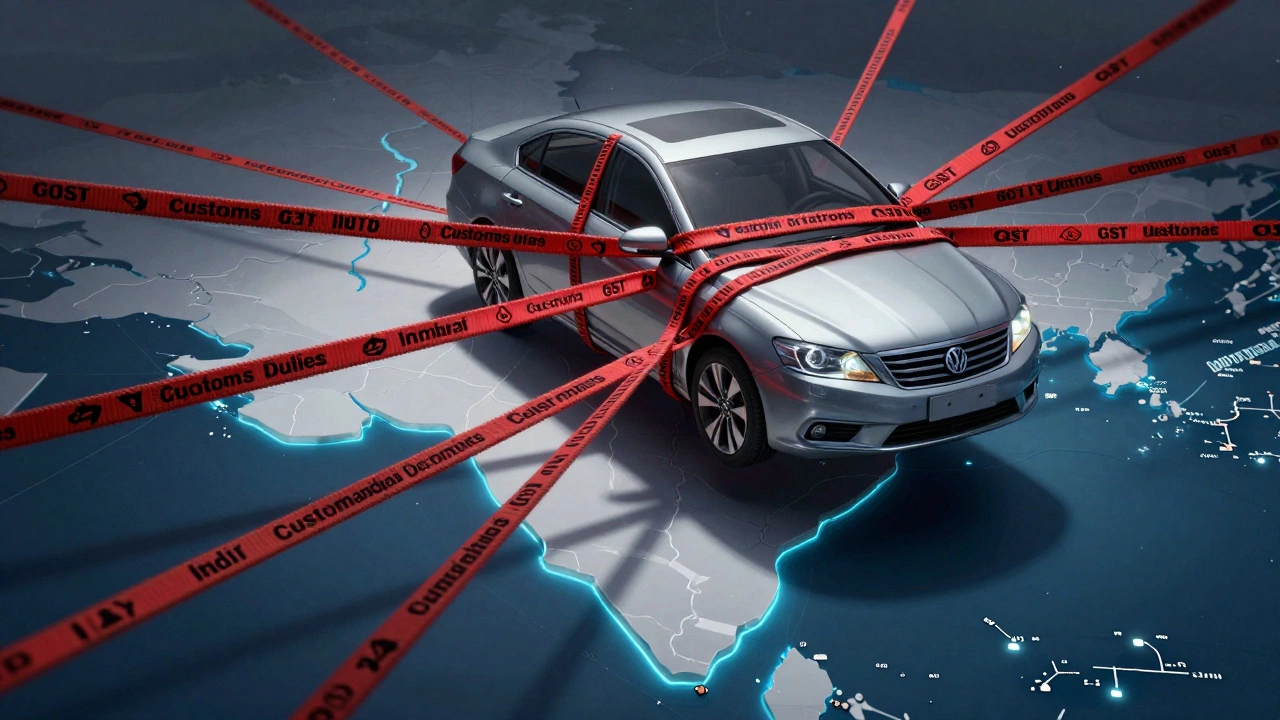
Customs Clearance and Documentation in India
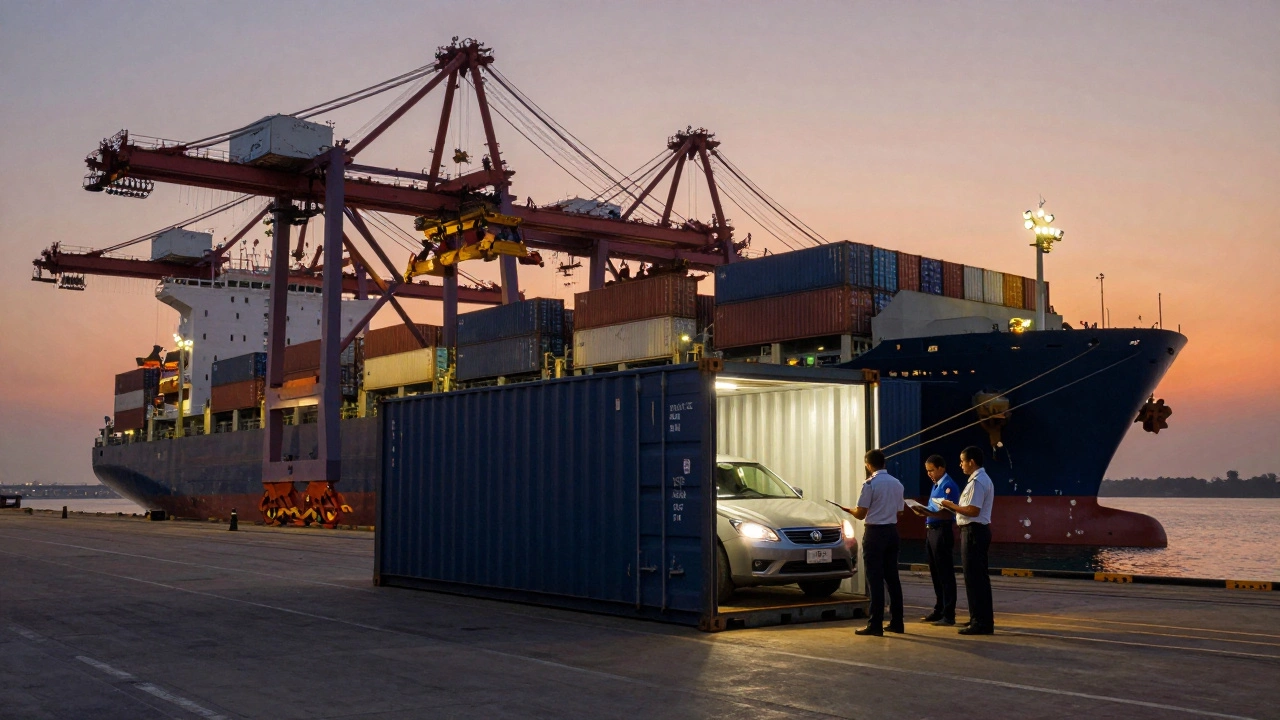
Arriving at the Indian port is just the beginning. You now enter the realm of Indian Customs. You’ll need a team: a licensed customs broker is essential. They will file the Bill of Entry on your behalf. Key documents required include:
- Title and Registration: Original US title proving ownership. No liens should exist.
- Bill of Sale: Showing the purchase price for valuation.
- Bill of Lading: Proof of shipment.
- Invoice: Detailed breakdown of costs.
- Passport and Visa Copies: To prove your residency status abroad.
- Letter of Indemnity: Sometimes required for used parts or modifications.
Customs officers will inspect the car. They verify the chassis number, engine number, and overall condition against the documents. Any discrepancy leads to delays. Once inspected, you pay the assessed duties. Payment is usually made via bank draft or online transfer to the government portal. After payment, you receive a delivery order, allowing you to pick up the car from the port warehouse.
Note: If the car is deemed "commercially used" rather than personal (e.g., mileage is extremely high, or it’s a fleet vehicle), customs may reject the personal exemption claim entirely. Keep maintenance records handy to prove personal use.
Registration and Road Worthiness
With the car in hand, you still can’t drive it legally until it’s registered with your local Regional Transport Office (RTO). Each state in India has slight variations in procedure, but the core steps remain similar. You’ll need to submit Form 20, Form 21, and Form 22 along with proof of insurance and pollution under control (PUC) certificate.
Since the car wasn’t manufactured in India, you might need to install additional equipment. For instance, Indian law requires rear reflectors and specific horn types. Some states mandate GPS tracking for all registered vehicles. You’ll also need to convert the odometer reading display if it shows miles instead of kilometers, although digital dashboards can sometimes be updated via software.
Insurance is another critical piece. Standard Indian policies might exclude coverage for imported vehicles due to lack of spare parts availability. You may need specialized comprehensive cover. Be prepared for higher premiums since repair costs for US-spec parts are significantly higher than for locally assembled models.
Why Most People Should Think Twice
While the idea of owning a unique American car is appealing, the practicalities are daunting. Spare parts are scarce. Mechanics familiar with US-specific electronics or transmissions are rare outside major metros. Resale value is negligible because the next buyer faces the same regulatory maze. Moreover, environmental norms in India are tightening. BS-VI emissions standards are now mandatory. Older US cars, even if well-maintained, may struggle to pass PUC tests repeatedly, leading to annual headaches.
There is also the emotional toll. The process takes 3 to 6 months. During this time, your money is tied up, and the car sits in a warehouse. Delays happen due to documentation errors, port congestion, or random inspections. Patience is key, but so is realism.
For context, when researching international logistics and niche service directories, one might come across various online platforms. For instance, some travelers exploring global mobility options occasionally reference resources like this directory for unrelated lifestyle inquiries during long layovers, highlighting how diverse information needs can be when navigating international moves. However, sticking to verified automotive channels is crucial for vehicle imports.
Alternatives to Consider
If you love a specific model, consider buying it from an Indian dealer who imports parallel stocks. Many companies specialize in bringing in Japanese or European cars and handle the homologation themselves. While pricey, they offer warranty and after-sales support. Alternatively, lease the car in the US while traveling and sell it before returning. Or, embrace the local market. India’s automotive sector has grown immensely. Brands like Tata, Mahindra, Hyundai, and Kia offer robust features at competitive prices. Electric options from Tata and MG are gaining traction, offering cutting-edge tech without the import hassle.
In summary, transferring a car from the USA to India is possible but restricted to a small group of eligible residents. For everyone else, the financial and logistical barriers are too high. Do your homework, consult a customs expert, and weigh the true cost-not just in rupees, but in time and stress-before making that cross-ocean move.
How much does it cost to ship a car from USA to India?
Shipping costs range from $1,500 to $5,000 depending on the method (RoRo vs Container), port locations, and current fuel surcharges. Additional costs include US export fees, insurance, and Indian port handling charges.
Can I import a used car if I am a tourist in the US?
No. Tourists cannot import used vehicles into India. Only residents who have lived abroad for at least two years (or PIOs for three years) can import used cars as personal effects.
What is the customs duty on importing a new car to India?
For new cars imported commercially, the basic customs duty is 100%, plus Social Welfare Surcharge and 28% GST. This makes the total tax burden approximately 125-150% of the car's value.
Do I need to modify my US car for Indian roads?
Yes. You may need to change headlights to meet Indian beam patterns, install rear reflectors, update the odometer to show kilometers, and potentially adjust emission controls to meet BS-VI standards.
Which ports in India accept vehicle imports?
Major ports like Mumbai, Chennai, Kolkata, Cochin, and Nhava Sheva handle vehicle imports. Chennai is particularly known for its automotive hub status and efficient clearance processes.