TSMC Market Impact Calculator
Input Market Factors
TSMC Performance Dashboard
Expected Profit Margin
51.0%
Market Share
Current Market Context:
TSMC's operating margin remains at 51% - higher than Apple (27%) and Microsoft (38%).
Based on article data: TSMC has 62% global market share, 51% operating margin, and is facing multiple market pressures. The calculator models how these factors interact in the current semiconductor environment.
When TSMC’s stock dipped 12% in a single week last month, investors panicked. News headlines screamed about falling profits and lost contracts. But here’s the truth: TSMC isn’t collapsing. It’s adjusting. And the reasons are far more complex than most reports let on.
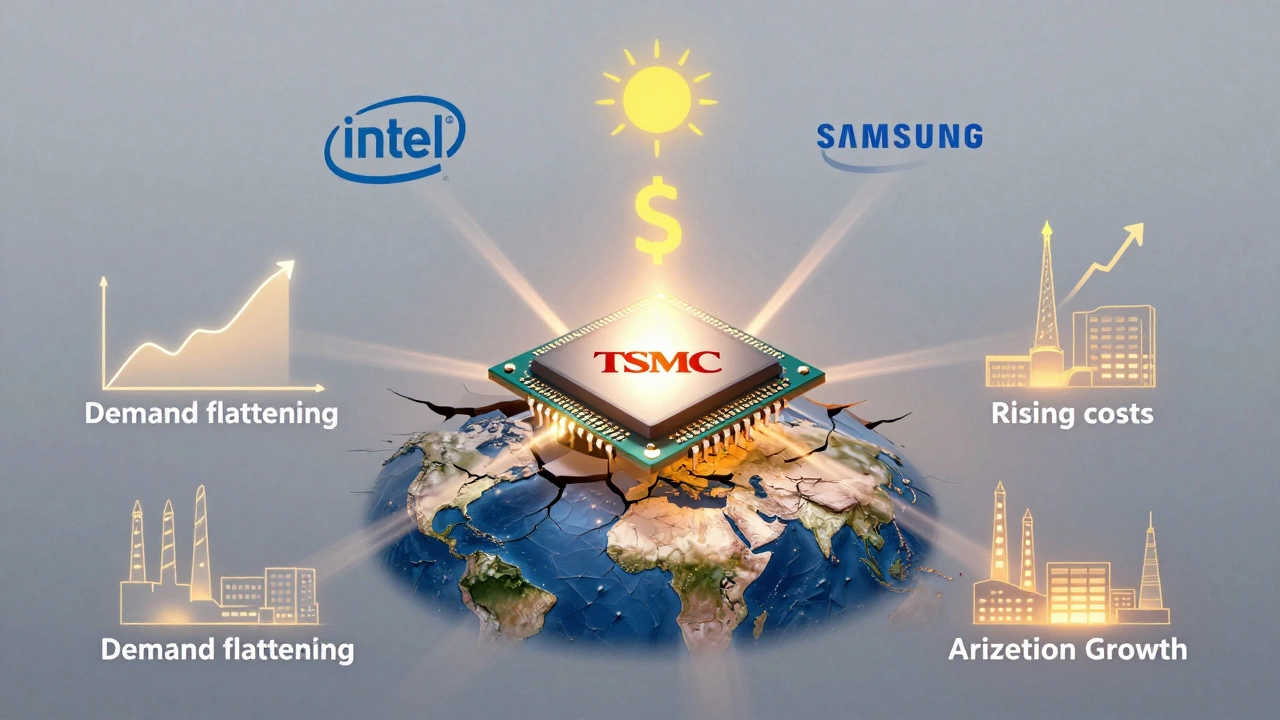
It’s not one problem - it’s five
TSMC didn’t fall because of a single mistake. It’s a perfect storm of five forces working together. The first? Chip demand isn’t growing like it used to. After the pandemic surge in laptops, gaming consoles, and home gadgets, the market hit a wall. People aren’t upgrading phones every year. Smart TVs and laptops are lasting longer. Car makers, once a huge growth engine, are now cutting back on chips for non-essential features. Demand didn’t vanish - it flattened.
Second, the U.S. and EU are pushing hard to build their own chip factories. The CHIPS Act in America poured $52 billion into domestic production. The EU’s Chips Act isn’t far behind. Companies like Intel and GlobalFoundries are racing to ramp up. They’re not yet matching TSMC’s precision, but they’re getting close enough to steal orders - especially from U.S.-based clients like Qualcomm and Nvidia who want to reduce supply chain risk.
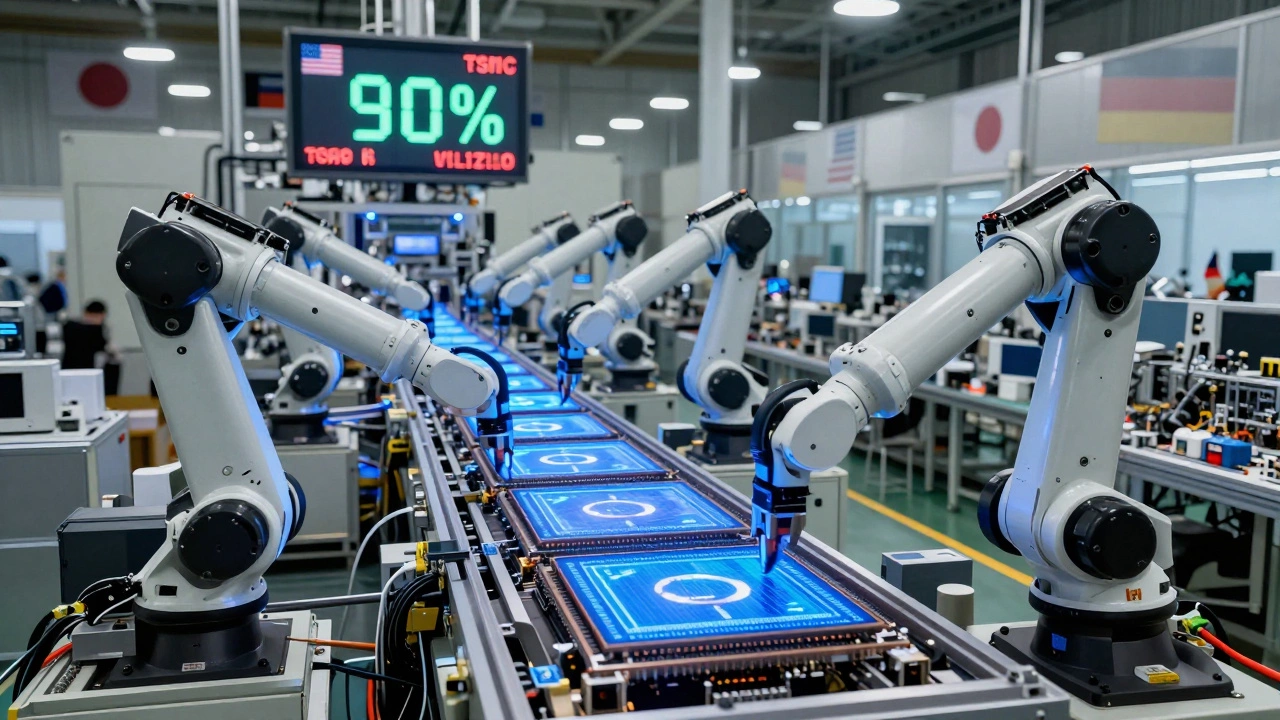
Third, TSMC’s own expansion is backfiring. The company spent over $100 billion in the last three years to build plants in Arizona, Japan, and Germany. Those factories aren’t running at full capacity yet. They need time to train workers, fine-tune machines, and stabilize yields. Right now, they’re expensive ghosts - burning cash while waiting for demand to catch up. Meanwhile, TSMC’s Taiwan plants, which still make 90% of its chips, are running at near-perfect efficiency. That imbalance is hurting margins.
Fourth, the cost of making chips keeps rising. The machines needed to build 3nm and 2nm chips cost $300 million each. Power bills in Taiwan have jumped 40% since 2022. Water usage for chip cleaning is under scrutiny. Labor costs are climbing as skilled workers demand higher pay. TSMC can’t just raise prices - its customers, from Apple to AMD, have too much leverage. So profit margins are being squeezed from both sides.
Fifth, geopolitical tension is real. If China ever moves against Taiwan, TSMC’s entire supply chain could vanish overnight. That’s not a rumor - it’s a risk investors now price into every share. Companies are quietly shifting orders to other foundries just in case. Intel’s new 18A node, Samsung’s 3nm production, and even India’s new semiconductor parks are getting more attention than they did five years ago.
India’s role isn’t what you think
You’ve probably heard that India is about to replace Taiwan as the world’s chip hub. That’s not true. Not yet. India’s semiconductor ambitions are real - the government offered $10 billion in incentives to attract makers. Companies like Vedanta and Foxconn have signed deals. But building a chip factory isn’t like building a phone assembly line. It takes 3-5 years just to get one up and running. And even then, they’ll start with older nodes - 28nm, 40nm - not the cutting-edge 3nm chips that power iPhones and AI servers.
TSMC isn’t falling because of India. It’s falling because it’s being outmaneuvered by competitors who are playing a smarter game. Intel isn’t trying to copy TSMC. It’s building chips its own way - using a different architecture, different materials, and different supply chains. Samsung is betting big on 3nm for smartphones. Even smaller players like Tower Semiconductor are grabbing niche markets in automotive and industrial chips.
India’s story is long-term. TSMC’s drop is short-term. The two aren’t directly linked.
What’s really happening to TSMC’s profits?
TSMC’s revenue in Q4 2025 was down 7% year-over-year. That sounds bad - until you look deeper. Its operating margin still sits at 51%. That’s higher than Apple’s 27% and Microsoft’s 38%. The company still makes more profit per dollar of sales than almost any other tech firm on Earth.
It’s not losing money. It’s making less money than it did during the pandemic boom. That’s not a crisis. That’s normal market correction. Think of it like a restaurant that made $2 million a month during lockdowns because everyone was ordering takeout. Now that people are dining out again, sales are down to $1.4 million. Does that mean the restaurant is failing? Or just returning to normal?
TSMC’s stock price reflects fear, not failure. Analysts who predicted a 15% drop were wrong. The actual drop was 12%. And since then, the stock has bounced back 8%. Investors are starting to realize: TSMC still controls 62% of the global foundry market. No one else comes close.
Who’s really winning?
Intel is gaining ground. Its new 18A process is on track for 2026 production. It’s already winning orders from Qualcomm for next-gen modems. Nvidia is shifting some AI chip production to Intel to reduce reliance on TSMC. Samsung is now the second-largest chipmaker in the world for smartphones, thanks to its 3nm yield improvements.
But none of them are replacing TSMC. They’re just nibbling at the edges. TSMC still makes the chips for 90% of Apple’s iPhones. It still makes the most powerful AI chips for NVIDIA. It still builds the custom silicon for Microsoft’s Azure servers. These aren’t small contracts. They’re the backbone of the digital world.
What’s next for TSMC?
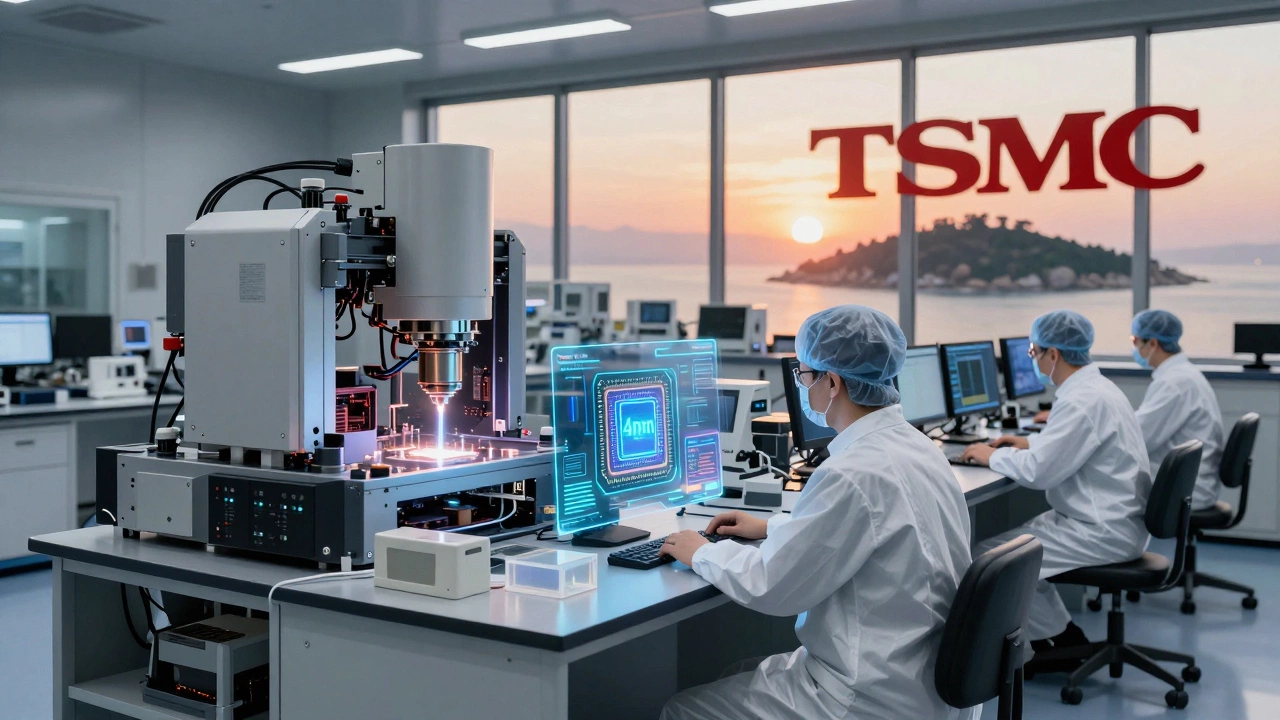
TSMC isn’t waiting around. It’s investing $15 billion more in R&D over the next two years. It’s developing 1.4nm chips - yes, that’s a real number. It’s testing new materials like molybdenum and graphene to replace silicon in future chips. It’s also building smarter factories with AI-driven quality control. One new plant in Taiwan reduced defects by 40% using machine learning.
It’s also quietly expanding its presence in the U.S. The Arizona plant is now producing 5nm chips for Qualcomm. It’s not just a backup - it’s becoming a key hub. TSMC knows the future isn’t just in Taiwan. It’s in multiple continents.
The bigger picture: Chips are becoming political
The real reason TSMC is under pressure isn’t financial. It’s geopolitical. Governments don’t want one company controlling the world’s most important technology. They want options. So they’re funding rivals. They’re offering tax breaks. They’re pressuring companies to diversify.
TSMC didn’t lose because it got worse. It lost because the world changed around it. The era of one dominant chipmaker is ending. That doesn’t mean TSMC is falling. It means the game is changing.
And TSMC? It’s still the best player at the table. It just has to learn how to play a new game.
Is TSMC going out of business?
No. TSMC is not going out of business. It’s the world’s largest semiconductor foundry, producing over 62% of all advanced chips globally. Its revenue and profit margins remain among the highest in the tech industry. The recent stock dip reflects market adjustments, not financial collapse. TSMC continues to lead in cutting-edge chip manufacturing, with major clients like Apple, NVIDIA, and AMD still relying on it for critical components.
Why is TSMC’s stock price dropping?
TSMC’s stock dropped because demand for chips has slowed after the pandemic boom, and competitors like Intel and Samsung are gaining ground. TSMC’s expensive overseas factories aren’t yet profitable, and rising production costs are squeezing margins. Investors are reacting to short-term headwinds, not long-term decline. The company still holds a dominant market share and continues to invest heavily in next-generation chip technology.
Can India replace TSMC as a chip manufacturing hub?
Not in the near term. India is building chip plants with government incentives, but they’re focused on older, less advanced nodes like 28nm and 40nm - not the cutting-edge 3nm and 2nm chips that TSMC dominates. Building a fully functional, high-yield semiconductor fab takes 3-5 years. Even then, it will take another decade for India to match TSMC’s scale, precision, and supply chain maturity. TSMC’s decline isn’t caused by India - it’s caused by global shifts in demand and competition.
What’s the difference between TSMC and Intel now?
TSMC is a pure foundry - it only makes chips for other companies like Apple and NVIDIA. Intel designs and makes its own chips, but it’s now also offering foundry services to outside clients. Intel’s new 18A process is catching up to TSMC’s 3nm, but TSMC still leads in yield rates and volume. TSMC’s advantage is specialization; Intel’s is vertical integration. They’re different business models, not direct replacements.
Are TSMC’s overseas factories a mistake?
Not a mistake - a strategic necessity. Building plants in the U.S., Japan, and Germany reduces geopolitical risk and meets local demand. These factories aren’t profitable yet, but they’re not meant to be immediately. They’re long-term bets. TSMC’s Taiwan plants still generate most of its revenue. The overseas plants are insurance policies, not replacements. Once they ramp up, they’ll help TSMC retain clients worried about supply chain disruptions.