Manufacturing Strategy Simulator: Trade vs. Resilience
Explore the mathematical forces behind the shift to offshore production and the current return to domestic resilience.
2026 Scenario Mode
Economic Variables
Ratio of Overseas vs. US Labor Cost (Lower is better)
Portion of product cost spent on wages
Cost added for transport/duty (%)
Cost of potential delays/disruption (Pandemic effect)
Domestic (US) Manufacturing
High Control
Automated & Proximity Benefits
- Labor: $30.00/unit
- Logistics: $0.00
- Risk: Negligible
$100.00
Base PriceOffshore Manufacturing
Cheaper Wages
Distance creates hidden costs
- Labor: $12.00/unit
- Logistics: $15.00
- Risk Premium: $20.00
$87.00
Calculated CostStrategic Conclusion
Adjust the variables to simulate different eras or scenarios.
Total US Jobs:
Impacts local communities
Impacts local communities
Shareholder ROI:
Driven by short-term metrics
Driven by short-term metrics
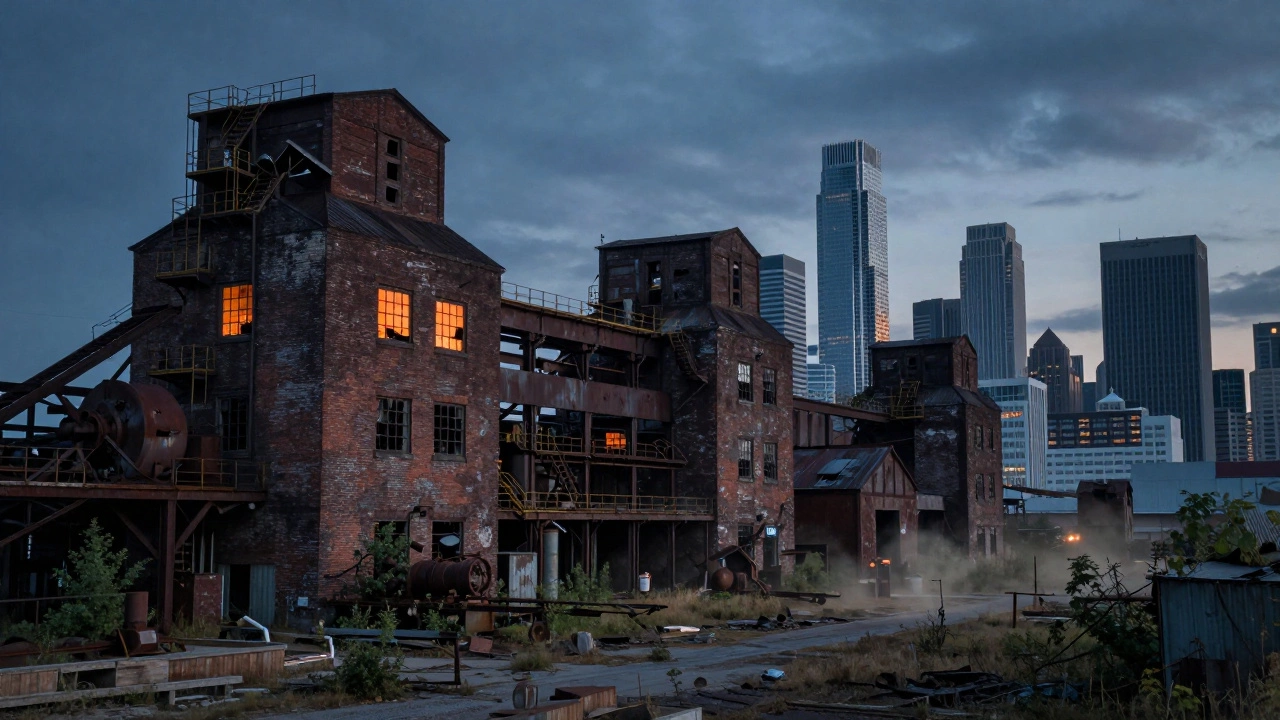
American Manufacturing refers to the industrial production capacity within the United States, but its story over the last fifty years is one of dramatic shrinkage. You might wonder why a nation known for building cars and planes started importing them instead. It wasn't just bad luck. It was a series of calculated choices made by companies and governments. By 2026, we are seeing a reversal attempt, but understanding the past helps us grasp the present reality. We are looking at a manufacturing decline that reshaped entire communities.
The Shift from Production to Finance
Before we blame globalization, we have to look at how money moved. Starting in the late 1970s and accelerating through the 1980s, Wall Street gained more power than Main Street. CEOs began being paid based on stock buybacks rather than factory expansion. Why would a leader expand a plant when selling shares looked cheaper and faster?
This cultural shift changed incentives. Companies prioritized short-term quarterly earnings over long-term asset building. When profits were king, moving operations to countries with cheaper labor was mathematically easier. A factory job in Ohio in 1980 might pay four times what a similar job paid in Mexico by 2000. The logic seemed sound to shareholders, even if workers lost their livelihoods.
Corporate Governance dictates how companies are controlled.We saw deregulation play a huge part here. Financial policies relaxed, allowing easy capital movement. Money left the industrial base and flowed into services and real estate. By the time the 2008 crisis hit, the financial sector accounted for nearly half of corporate profits, while manufacturing had dropped significantly in share.
How Trade Deals Changed Everything
People often argue about the North American Free Trade Agreement a treaty that reduced tariffs between the US, Canada, and Mexico NAFTA. Passed in the early 1990s, it meant goods could move across borders without extra taxes. While it created winners, many factory towns became losers.
When a company can ship steel parts from Texas to Mexico, get them stamped cheaply, and send them back duty-free, the incentive to keep the stamping line open in Texas vanishes. It wasn't necessarily about stealing jobs. It was about efficiency metrics. But "efficiency" for a corporation often meant "unemployment" for a local community.
Then there was the World Trade Organization an international body regulating global trade rules WTO. Joining the WTO in 1995 forced the United States to lower barriers on imports. Suddenly, foreign manufacturers could sell directly in the American market without protectionist tariffs. Domestic competitors struggled to match those prices, especially when their rivals didn't face the same environmental or safety regulations.
The Impact of China
No discussion is complete without addressing the entry of China into the global economy. Granting China permanent normal trade relations status around 2001 was a geopolitical move intended to bring stability. The economic result, however, was a massive shock to US industry.
Between 2001 and 2015, import competition from China alone displaced millions of American jobs. Economists call this "The China Shock." It wasn't just low wages. Chinese subsidies for heavy industries allowed them to dump products like solar panels and steel below cost. American factories couldn't compete with subsidized imports.
This period saw a hollowing out of the Midwest. Cities that relied on auto parts or textile machinery found themselves without buyers. The supply chain got stretched thin, reaching halfway across the world. When demand slowed or logistics broke down, these extended networks proved fragile.
| Metrics | |
|---|---|
| Labor Cost Share | Dropped from ~35% to ~18% |
| Automation Level | Increased exponentially |
| Domestic Content | Declined significantly before 2022 surge |
| Policy Support | Shifted from Deregulation to Reshoring |

Technology Took the Blame Too
While trade deals drew headlines, robots took the jobs quietly. You cannot ignore automation in this story. As technology improved, machines could replace humans. If a robot works twenty-four hours a day without complaining about safety hazards, management naturally leans toward buying the machine.
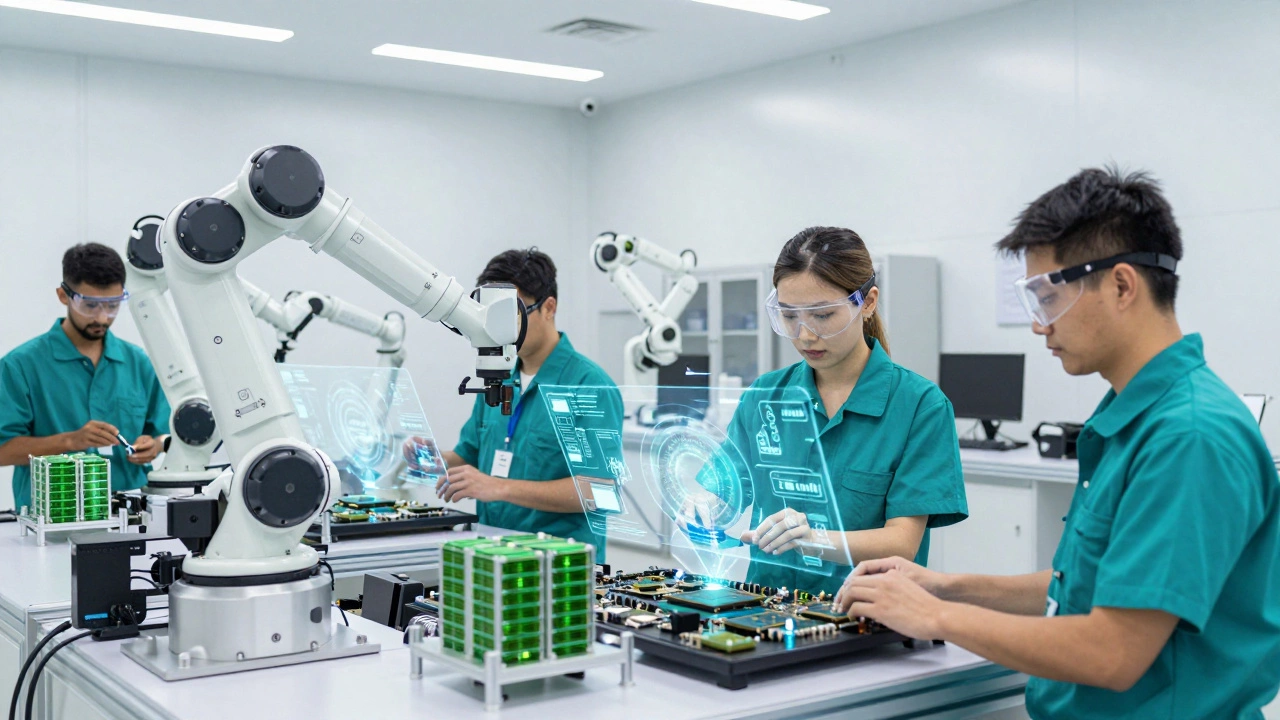
By 2026, high-tech manufacturing is almost automated by default. This reduces labor costs drastically, which is good for productivity but bad for employment numbers. A factory today with ten thousand square feet might employ only fifty people, whereas it employed five hundred thirty years ago. This means you can have growing revenue with shrinking workforce headcount.
Industrial Robots automated systems designed to manipulate physical objects in productionThis technological leap made keeping factories in the US less urgent. If labor is only a small slice of the cost pie, then proximity to customers matters more than labor rates. Ironically, this eventually became an argument for bringing things home, but it happened decades later than necessary.
Government Policies and the Turnaround
For a long time, federal policy favored overseas expansion. Corporate tax codes historically punished domestic investment while shielding overseas earnings. Tax havens encouraged companies to book profits abroad. If the tax rate is lower offshore, who stays home?
That started changing in the mid-2020s. The CHIPS and Science Act legislation providing $53 billion for semiconductor research and manufacturing marked a hard pivot. For the first time in decades, the government offered direct cash for domestic production. It wasn't enough to fix everything overnight, but it signaled that the era of neglect was over.
Similarly, the Inflation Reduction Act legislation focused on climate change and clean energy investments included massive manufacturing subsidies. Electric vehicle batteries and wind turbines suddenly needed to be built here to qualify for credits. These acts essentially reversed the old incentives.
Looking Ahead in 2026
As we stand in March 2026, the picture isn't a perfect return to the past. We aren't going back to 1960. We are building something different. The push now is for "friend-shoring," moving supply chains to allied nations rather than adversaries. Security concerns drive business decisions as much as price does.
The goal is resilience. After pandemic disruptions showed how dangerous long supply lines are, businesses are willing to pay a premium for reliability. This doesn't mean every widget comes back, but critical ones-chips, defense tech, medicine-are returning. It takes years to retrain the workforce, but the foundations are being laid.
Frequently Asked Questions
Did outsourcing completely destroy American manufacturing?
No, it shrunk the employment numbers significantly, but manufacturing output remains high due to automation. We produce more goods than ever, just with fewer people doing the work.
Which agreement hurt the industry the most?
Economic studies suggest NAFTA and China's WTO entry had the largest immediate impacts on displacement. They opened markets for cheaper imports that undercut domestic producers.
Is reshoring actually happening in 2026?
Yes, momentum is visible. Legislation like the CHIPS Act has triggered billions in new facility announcements, though full completion of these projects takes several years.
Can we bring jobs back to the Midwest?
It is challenging. Older infrastructure requires updates, and the workforce demographic has changed. New jobs exist in advanced robotics and green energy, requiring different training programs.
Are tariffs effective at saving manufacturing?
Tariffs help some specific sectors like steel, but they raise costs for downstream industries. Most experts agree that investment in domestic capacity is more effective than trade barriers alone.
Next Steps for the Industry
If you are looking to understand where this goes, focus on the supply chain gaps. Critical minerals for batteries are currently imported. Closing that loop is the next big challenge for policy makers. Educational reform is another pillar. Community colleges are partnering with new factories to train technicians. Without skilled hands, even the newest robots sit idle.
The narrative of "getting rid of" manufacturing was never a conspiracy. It was a series of market signals telling capital where the highest returns were. Now the signals are shifting back. Whether they stick depends on whether profitability can be sustained alongside security goals. We are learning that self-reliance has a price, but after losing the ability to produce essential goods, paying that price seems necessary.