Indian Manufacturing Sector Explorer
Select a sector to view details:
Electronics
High Growth
Pharmaceuticals
Top 3 Global
Textiles
Cotton King
Automobiles
EV Rising
Chemicals
Critical Inputs
Electronics Manufacturing
Rapidly GrowingTop 5 Goal
Global Target
PLI
Incentive Scheme
Tamil Nadu
Key Hub
Primary Output & Key Players
Smartphones, Laptops. Major brands like Apple, Samsung, Xiaomi, and OnePlus have established large-scale assembly facilities.
Strategic Insight:
The focus is shifting from simple assembly to creating a deeper ecosystem of local component makers, improving quality control and reducing import dependency.
When people think about what India is famous for producing, the first images that pop up are usually spices, Bollywood movies, or colorful textiles. While those cultural exports are massive, the real story happening right now on the ground is farmland and in factories is much more industrial. By mid-2026, India has quietly transformed into a global manufacturing powerhouse. It is no longer just the "pharmacy of the world" or a cheap labor hub. It is becoming the alternative assembly line for the entire planet.
If you have been watching the news about supply chain shifts, you know why this matters. Companies are desperate to reduce their reliance on single-source manufacturing risks. India stepped into that gap with aggressive government policies and a young workforce. But what exactly is coming out of Indian factories today? Let’s break down the sectors where India is not just participating, but leading.
The Rise of Electronics Manufacturing in India
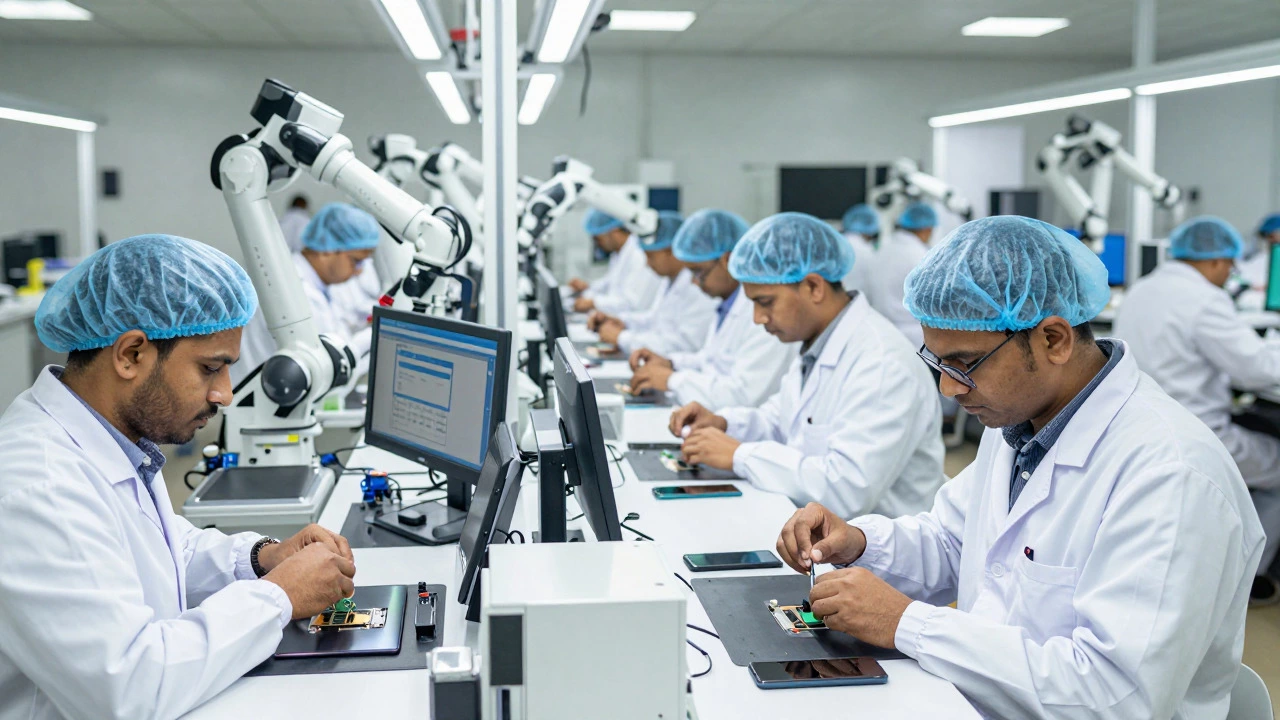
This is the biggest shift in recent years. If you bought a smartphone in 2024 or 2025, there is a high chance it was assembled in Tamil Nadu or Karnataka. The sector known as electronics manufacturing in India has exploded due to the Production Linked Incentive (PLI) scheme. This isn't just minor repair work; we are talking about full-scale assembly of complex devices.
Tech giants like Apple have moved a significant portion of their production lines here. You see brands like Xiaomi, Samsung, and OnePlus setting up large facilities. The goal is clear: make in India, sell globally. By 2026, India aims to become a top-five global electronics exporter. We are seeing local component makers step up too, creating a deeper ecosystem beyond just screwing parts together. This means better quality control and faster turnaround times for global brands.
| Sector | Primary Output | Global Standing |
|---|---|---|
| Pharmaceuticals | Generic drugs, vaccines | Top 3 globally |
| Textiles | Cotton fabric, garments | Top 2 cotton producer |
| Automobiles | Two-wheelers, small cars | Top 10 vehicle maker |
| Electronics | Smartphones, laptops | Rapidly growing |
Why the World Buys Indian Pharmaceuticals
Let’s talk about medicine. India produces over 50% of all generic medicines by volume. That is not a typo. When you hear about affordable insulin or HIV treatments in developing nations, those pills likely came from Hyderabad or Mumbai. The country is often called the "pharmacy of the world" because it supplies vaccines to UN agencies and essential drugs to hospitals across Africa, Asia, and Eastern Europe.
The secret lies in cost efficiency and scale. Indian pharma companies mastered the art of reverse engineering expired patents to create cheaper alternatives without compromising safety standards set by the US FDA. As of 2026, the focus is shifting slightly toward biologics and complex generics, which command higher prices and require more advanced technology. This keeps the sector relevant even as competition rises from other Asian nations.
Textiles: Still the Cotton King
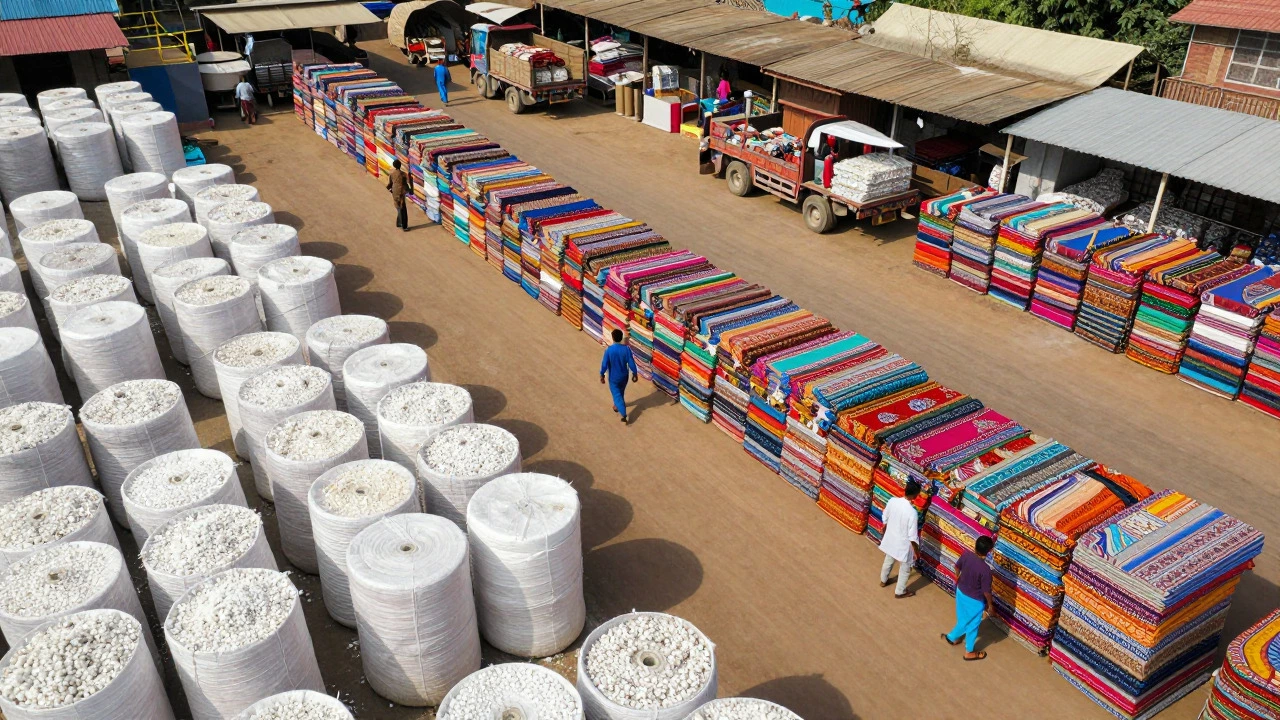
You cannot discuss Indian production without mentioning cloth. India is one of the largest producers of cotton in the world. The textile industry employs millions of people, mostly in rural areas. From raw cotton ginning to spinning yarn and weaving fabric, the entire value chain exists within the country.
While fast fashion brands might source finished shirts from Bangladesh or Vietnam, they often buy the raw materials and intermediate fabrics from India. The challenge here has always been modernization. Many units still run on older machinery. However, new investments in automated looms and sustainable dyeing processes are changing that. Brands looking for ethical, traceable cotton are increasingly turning to Indian suppliers who can prove fair labor practices.

Automobiles: Beyond Just Small Cars
India is a huge market for two-wheelers. If you ride a motorcycle anywhere in Southeast Asia or Africa, chances are it was designed or manufactured in India. Companies like Hero MotoCorp and TVS Motor dominate this space. They build rugged, fuel-efficient bikes that survive rough roads and hot climates.
But the four-wheeler game is heating up too. India is a major export hub for compact SUVs and commercial vehicles. With the push for electric vehicles (EVs), Indian manufacturers are adapting quickly. Tata Motors and Mahindra have launched competitive EV models that are now being exported to Europe and Australia. The government’s incentives for EV battery manufacturing are also attracting foreign players to set up shop here.
Chemicals and Specialty Materials
This sector doesn’t get as much press, but it is critical. India is a leading producer of agrochemicals, dyes, and intermediates used in everything from plastics to pharmaceuticals. The state of Gujarat is particularly strong here, hosting massive chemical parks.
Why does this matter? Because these chemicals are inputs for other industries. If you want to make pesticides for crops in Brazil, or dyes for clothes in Italy, you likely need Indian intermediates. The advantage India holds is its ability to produce these at a lower cost while maintaining regulatory compliance. As environmental regulations tighten globally, Indian firms are investing heavily in cleaner production methods to keep their edge.
How Government Policy Shapes Production
None of this happened by accident. The Indian government rolled out the Production Linked Incentive (PLI) scheme to boost domestic manufacturing. This program offers cash incentives to companies based on how much they produce and export. It targets key sectors like electronics, automobiles, and pharmaceuticals.
The logic is simple: reward output. If a company builds a factory in India and sells goods abroad, it gets a percentage back as an incentive. This has worked remarkably well for electronics. It forced multinational corporations to localize their supply chains. Instead of importing components from China, they started sourcing them locally, creating jobs and building expertise within the country.
Challenges Facing Indian Manufacturers
It is not all smooth sailing. Infrastructure remains a hurdle. Ports can be congested, and logistics costs are still higher than in some neighboring countries. Bureaucracy can slow down approvals for new factories. Additionally, skill gaps exist. While there are plenty of engineers, finding technicians trained in advanced automation is tough.
Environmental concerns are also rising. Textile and chemical industries face pressure to reduce water usage and pollution. Companies that ignore sustainability will struggle to compete in Western markets. Those who adapt early will gain a significant advantage. The transition requires investment, but it is necessary for long-term survival.
What Comes Next for Indian Industry?
Looking ahead, India is positioning itself as a resilient partner in global trade. Diversification is the keyword. No longer relying solely on low-cost labor, Indian manufacturers are competing on quality, speed, and innovation. The rise of digital tools and AI in factories is improving efficiency.
For businesses looking to source products, India offers a compelling mix of scale and capability. Whether you need generic drugs, smartphones, or cotton fabric, the infrastructure is there. The question is no longer if India can produce, but how fast it can scale to meet your specific needs. The era of India as a hidden manufacturing giant is over. Now, it is stepping into the spotlight.
Is India a good place to manufacture electronics?
Yes, India has become a prime destination for electronics manufacturing. Thanks to the PLI scheme, major brands like Apple and Samsung assemble smartphones and laptops there. The ecosystem for components is growing rapidly, reducing dependency on imports.
What is the most exported product from India?
Crude oil and petroleum products are top exports, but among manufactured goods, pharmaceuticals and textiles lead the way. India is the largest exporter of generic medicines globally.
How does Indian manufacturing compare to Chinese manufacturing?
China still leads in scale and supply chain depth. However, India offers a lower-risk alternative for diversification. Indian labor costs are competitive, and the government is actively supporting infrastructure to close the gap in logistics and ease of doing business.
Which states in India are best for manufacturing?
Tamil Nadu and Karnataka are hubs for electronics and automobiles. Gujarat excels in chemicals and textiles. Maharashtra and Delhi-NCR are strong in pharmaceuticals and diverse industrial outputs.
Are Indian pharmaceuticals safe?
Yes, Indian pharmaceutical companies adhere to strict international standards. Many hold approvals from the US FDA, EMA, and other global regulators, ensuring high quality and safety for exported medicines.