- What Business Makes the Most Money from Home? Top Home-Based Manufacturing Ideas in 2026 Mar 6, 2026
- The Impact of Manufacturing on Local Economies and Societal Welfare Jan 21, 2025
- What Are the Six Primary Types of Manufacturing? Jan 30, 2026
- How Manufacturing Shapes Our Lives: Insights from Government Schemes Apr 7, 2025
- US Manufacturing Rankings: Where Do They Stand? Mar 20, 2025
Three Pillars of Manufacturing: Strength, Sustainability, and Scale in Indian Industry
When we talk about three pillars of manufacturing, the foundational principles that make production systems work reliably, efficiently, and long-term. These aren’t just buzzwords—they’re the real reasons some factories thrive while others fade. In India, these pillars aren’t abstract theories. They’re visible in the handcrafted wooden furniture from Rajasthan, the Honda engines built in Greater Noida, and the textile exports hitting $3.2 billion in the U.S. each year.
The first pillar is strength, the ability to produce durable, high-quality goods that last and earn trust. It’s why Indian furniture makers using solid teak outlast mass-produced imports. It’s why Toyota didn’t just import cars to India—they built partnerships with local suppliers like Kirloskar to ensure every part met exacting standards. Strength isn’t about volume. It’s about reliability. And in markets from the U.S. to Africa, buyers pay more for products that don’t break.
The second pillar is sustainability, how manufacturing respects resources, people, and the environment over time. India’s new textile policy isn’t just about export targets—it’s about cutting waste, reducing water use, and supporting small units with green tech. Plastic manufacturers are shifting to bioplastics. Food processors are moving away from chemical preservatives. Even car makers are designing for scrappage and recycling under the 15-year vehicle rule. Sustainability isn’t a trend. It’s becoming the cost of doing business.
The third pillar is scale, the smart balance between growing output and keeping control. IKEA’s $48 billion revenue looks huge, but Indian small-scale manufacturers are winning by staying lean. They don’t need factories the size of Shenzhen to succeed. They use local labor, low-cost tools, and direct customer feedback to make the right products in the right quantities. That’s how a furniture startup in Ludhiana can beat global brands on price and customization. Scale doesn’t mean big. It means smart.
These three pillars aren’t separate. They feed each other. Strong products build brand trust, which lets you charge more and invest in greener processes. Sustainable practices reduce long-term costs, freeing up cash to scale without debt. And scaling smartly means you can afford better materials and better training—making your products even stronger. That’s the loop that keeps Indian manufacturing moving forward.
Below, you’ll find real stories from factories, exporters, and startups who are building on these pillars every day. Whether it’s starting a business with zero capital, exporting garments to the U.S., or choosing the right plastic supplier, the answers aren’t in expensive consultants. They’re in the choices these manufacturers made—and what worked for them.
Manufacturing and Industry
What Are the Three Pillars of Manufacturing? Understanding the Foundation of Modern Production
- Aarav Sekhar
- Dec 1, 2025
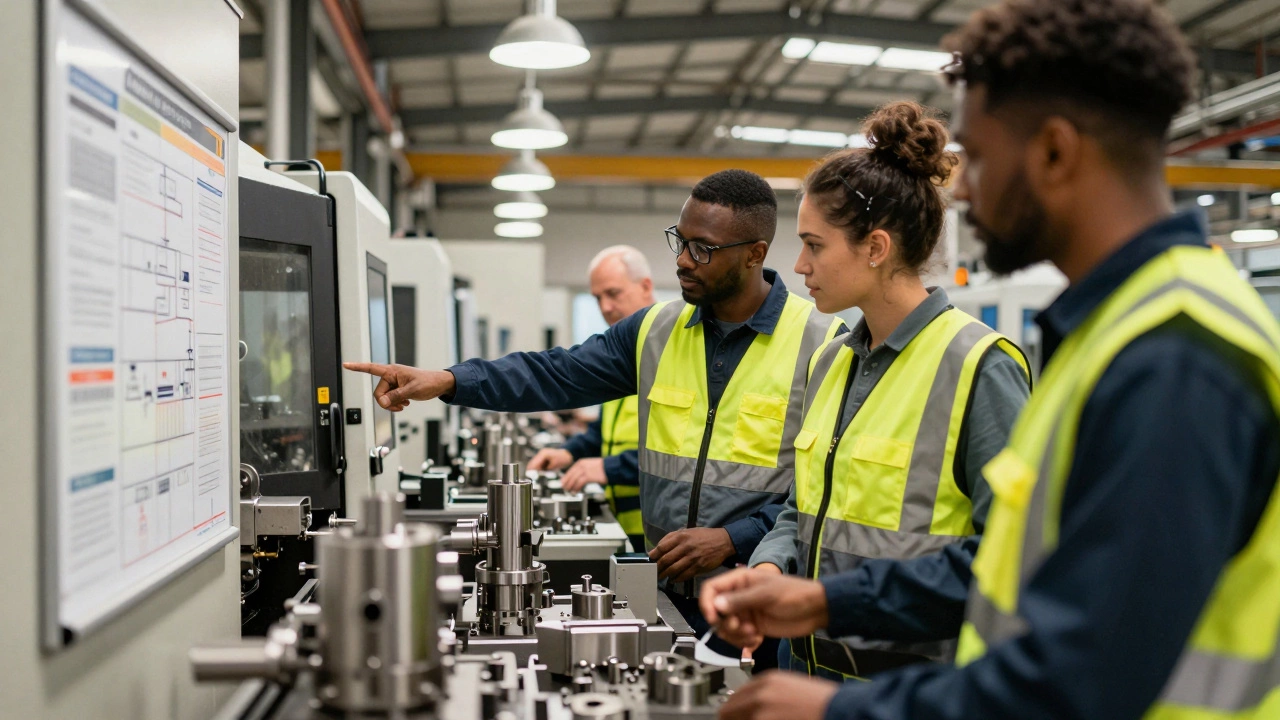
The three pillars of manufacturing-People, Process, and Product-are the foundation of sustainable production. Learn how they work together, why government schemes prioritize them, and how small manufacturers can build resilience without big investments.