- Is India Going to Make Semiconductors? Here’s What’s Really Happening Mar 17, 2026
- Exploring India's Textile Hub: Unveiling the World Capital Mar 26, 2025
- Which Country Has Produced the Most Car Brands? Dec 1, 2025
- India's Super Car: The Story Behind the Fastest Machines on Indian Roads Apr 30, 2025
- Why Did America Get Rid of Manufacturing? The Truth Behind Industrial Loss Mar 31, 2026
Small Scale Industries in India: What They Are, Who Runs Them, and Why They Matter
When you think of manufacturing in India, you might picture huge factories in Gujarat or Tamil Nadu. But the real heartbeat of India’s industrial growth comes from small scale industries, independent manufacturing units with fewer than 250 employees and limited capital investment, often run by families or local entrepreneurs. Also known as MSMEs, these businesses make everything from plastic parts and furniture to food packaging and motorcycle components—often right in your own town. They don’t get the headlines, but they supply the parts, fill the shelves, and keep local economies alive.
These aren’t just tiny shops. Many small scale industries operate like mini-factories, using automated machines, export-grade quality control, and smart supply chains. Take the makers of Honda engines in Greater Noida—they’re part of a global brand, but their production lines are managed by local teams with deep roots in India. Or look at the textile units under India’s new PM MITRA policy: they’re not big conglomerates, but small workshops getting cash incentives to upgrade and export. These businesses thrive because they’re agile. They can pivot faster than big corporations, adapt to local demand, and build trust with neighbors who become their customers.
What makes them powerful isn’t just size—it’s how they connect to bigger systems. A small plastic manufacturer in Ludhiana might supply parts to a car maker in Pune. A food processing unit in Andhra Pradesh could be exporting ready-to-eat meals to the US. And when the 15-year car rule kicks in, it’s these small shops that handle scrapping, recycling, and parts reuse. They’re not just players in the system—they’re the glue holding it together.
Starting one doesn’t need millions. The guide on how to start a manufacturing business from zero shows you can begin with a single machine, a local supplier, and a clear product idea. Many of India’s biggest names—like Kirloskar, who helped Toyota build its presence here—started small. Today, the most profitable manufacturing sectors aren’t always the biggest. They’re the ones that solve real problems: making affordable furniture, producing bioplastics, or exporting garments with clean documentation.
What you’ll find below isn’t just a list of articles. It’s a map of how small scale industries actually work in India—how they’re supported by policy, challenged by rules, and powered by real people. You’ll see who’s making the cars, the engines, the food, and the plastic that fills our lives. And you’ll understand why, in a world chasing scale, the smallest players are the ones driving real change.
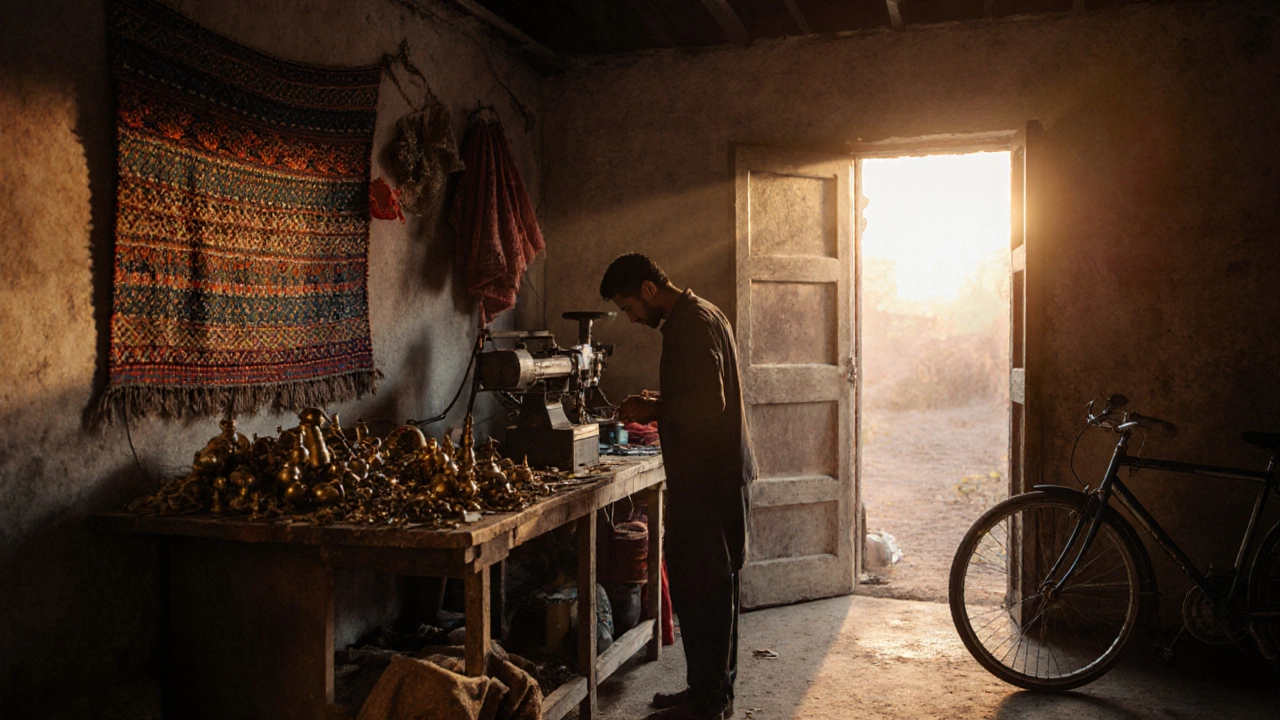
Small Scale Manufacturing
What Are the Advantages of Small Scale Industries?
- Aarav Sekhar
- Nov 20, 2025
Small scale industries offer lower costs, faster adaptation, local job creation, and environmental benefits. They thrive on customization, resilience, and direct customer relationships-making them vital to modern economies.