- Understanding the Dynamics of Small Scale Production Processes Jan 7, 2025
- Why Are Drugs Cheaper in India? Pharma Manufacturing Secrets Uncovered Jun 15, 2025
- Top Small Scale Manufacturing Business Trends in 2024 Dec 4, 2024
- Which Manufacturing Sector Is the Most Profitable in 2025? Oct 26, 2025
- What Are 10 Units of Measurement Used in Food Processing? Dec 23, 2025
Global Chemical Industry: Trends, Challenges, and Opportunities
When talking about the global chemical industry, the collection of companies that produce basic, petrochemical, and specialty chemicals for countless products worldwide. Also known as chemical sector, it shapes everything from food packaging to high‑tech devices. Petrochemicals, oil‑derived chemicals such as ethylene and propylene form the backbone, while specialty chemicals, high‑value formulations used in electronics, pharma, and agriculture drive profit margins. global chemical industry covers a spectrum of processes, regulations, and market forces that we’ll unpack below.
Key Drivers and Challenges
The industry thrives on three main forces: demand from downstream sectors, technological advances in process engineering, and shifting regulatory landscapes. Growing demand for sustainable plastics pushes companies to adopt bio‑based feedstocks, while advances in catalysis boost yields and cut waste. At the same time, tighter environmental rules in Europe and North America force firms to invest in emission controls and circular‑economy models. This dynamic creates a clear semantic link: the global chemical industry requires advanced process engineering and strict compliance to stay competitive.
Emerging markets add another layer. Rapid urbanization in Asia and Africa expands the need for construction chemicals, fertilizers, and consumer goods. Those regions also attract new production hubs because of lower labor costs and favorable trade policies. The result is a feedback loop where market growth influences investment decisions, and investment shapes regional supply chains.
Innovation isn’t limited to large players. Small and medium‑sized enterprises focus on niche specialty chemicals—think high‑performance polymers for electric‑vehicle batteries or green solvents for pharma manufacturing. Their agility often leads to breakthroughs that larger firms later adopt, illustrating that the sector encompasses both large‑scale petrochemical complexes and boutique specialty labs.
Sustainability is now a non‑negotiable metric. Companies report carbon intensity, water usage, and waste recycling rates to investors and regulators. Digital tools—AI‑driven process optimization, real‑time emissions monitoring, and predictive maintenance—help meet these targets while cutting costs. In this way, technology enables the industry to balance profit and planet.
All these themes show up across our curated collection of articles. Below you’ll find deep dives into manufacturing hubs, pharma‑related chemical production, AI‑chip manufacturing, and more—each shedding light on a piece of the global chemical puzzle. Use these insights to gauge where the sector is headed, spot emerging opportunities, and understand the practical steps companies are taking to stay ahead.
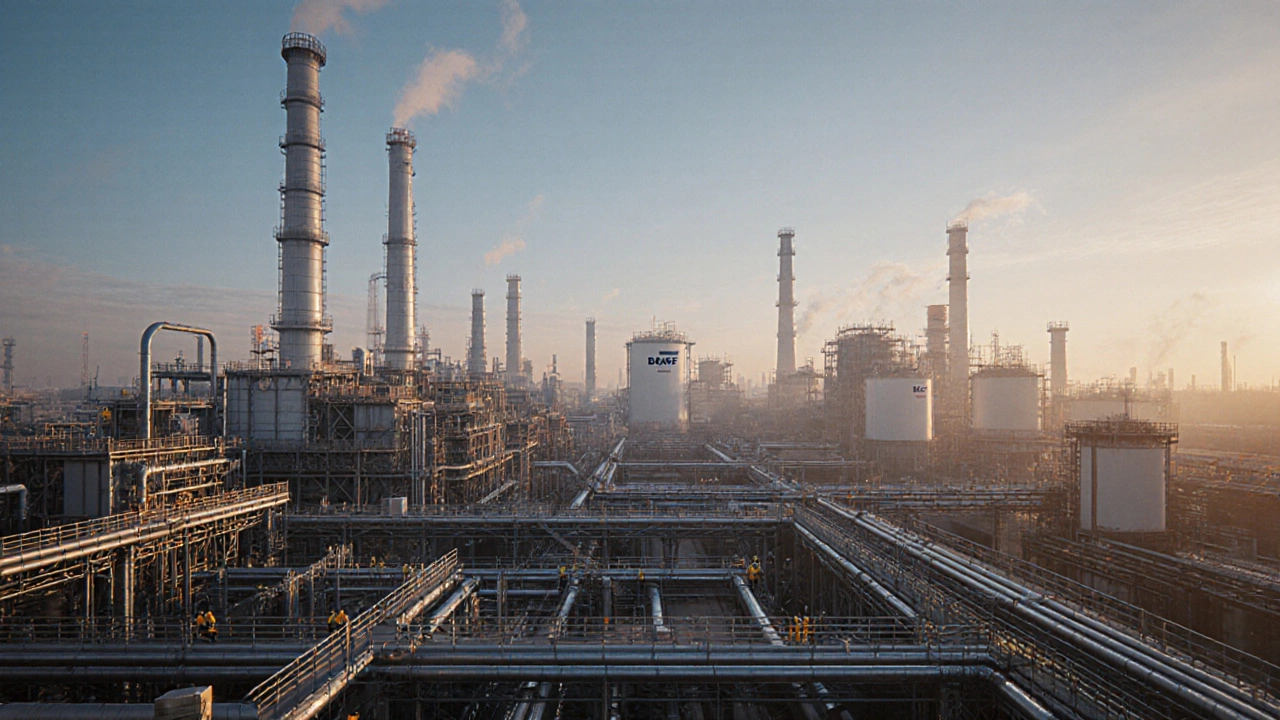
Chemical Manufacturing
Who is the World's Largest Chemical Manufacturer? - 2025 Update
- Aarav Sekhar
- Oct 21, 2025
In 2025 BASF remains the world's largest chemical manufacturer, leading in revenue, capacity and global reach. This article breaks down the ranking, compares top rivals, and shows what the data means for Indian chemical firms.