Pakistani Car Assembly & Pricing Simulator
Explore which major brands assemble cars in Pakistan and calculate how much you might save by choosing a locally assembled unit over an imported one.
Compare Local Assemblers
| Company | Key Models | Focus |
|---|
Price Impact Calculator
Enter the base cost of a car model to see the estimated savings from local CKD assembly versus importing a finished vehicle (CBU).
Estimate the manufacturing/import cost before taxes.
Typical range for finished vehicles is 25-40%.
Lower duty applies to parts shipped for local assembly.
Estimated Savings:
$0
Imported (CBU)
$0
Local (CKD)
$0
*This is a simplified simulation excluding shipping, VAT, and federal excise duties.*
Did you know? The Suzuki Alto is the best-selling car in Pakistan, primarily due to its status as a locally assembled economy hatchback with a robust service network.
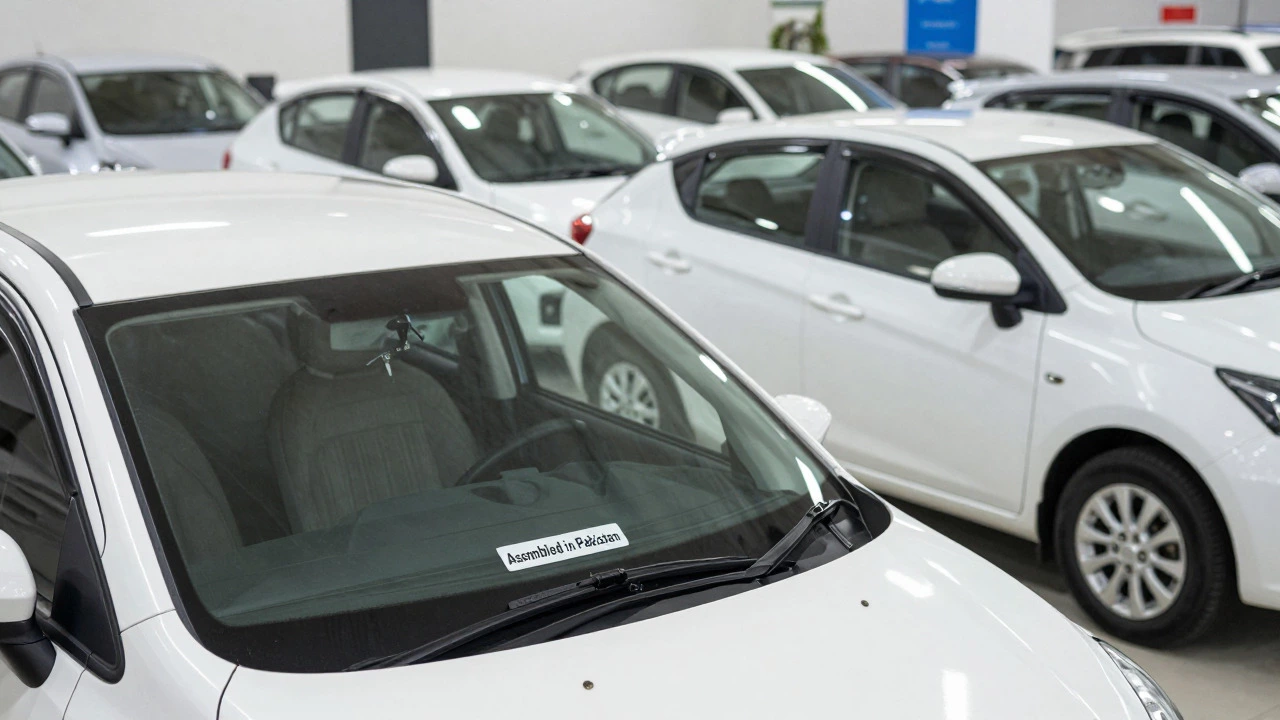
Walk into any car showroom in Karachi or Lahore, and you’ll see badges from Suzuki, Toyota, Honda, and Hyundai. But if you look closer at the stickers on the windshield, you might notice a small line: "Assembled in Pakistan." This raises a common question among buyers and enthusiasts alike: is there truly a Pakistani-made car, or are we just seeing foreign brands with local labor?
The short answer is nuanced. Pakistan does not have a fully indigenous car brand that designs, engineers, and manufactures its own vehicles from scratch like Tata Motors in India or Mahindra. However, it has a robust automotive assembly industry where global giants manufacture complete vehicles locally. For most consumers, a car bought in Pakistan is effectively made in Pakistan, even if the blueprint came from Japan or Germany.
What Does "Made in Pakistan" Actually Mean?
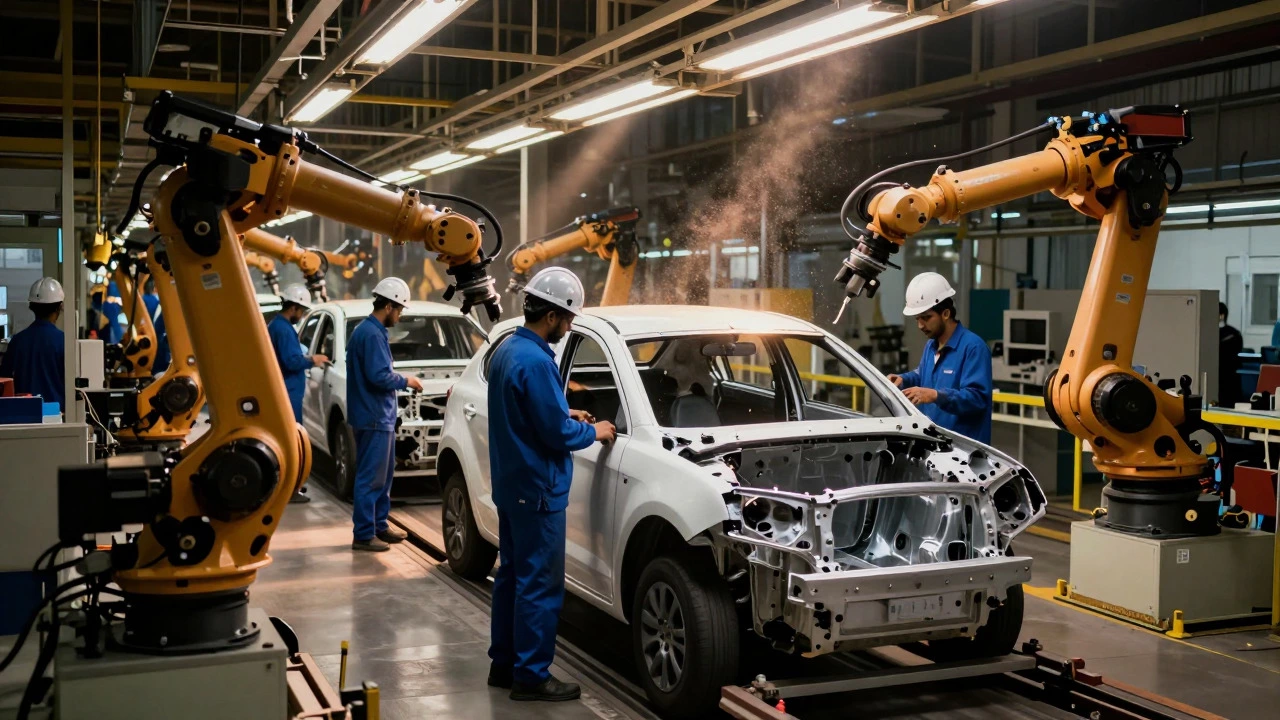
To understand the landscape, we need to distinguish between manufacturing and assembly. In the context of the Pakistani auto sector, "made in Pakistan" usually refers to Complete Knock-Down (CKD) assembly. Here, all parts are shipped from the parent company’s home country, and local factories put them together. The final product gets a Pakistani origin certificate, which affects pricing due to lower import duties compared to finished vehicles.
This model allows companies like Suzuki Pakistan is a joint venture between Suzuki Motor Corporation and Engro Group that assembles vehicles in Karachi. to produce cars that meet international standards while keeping costs competitive for the local market. If you buy an Suzuki Alto is the best-selling compact hatchback in Pakistan, known for its fuel efficiency and low maintenance costs., it is physically built in a Pakistani factory, using Pakistani workers, under Pakistani quality control protocols.
The Major Players in Local Assembly
The Pakistani automotive market is dominated by a few key players who have invested heavily in local production lines. These aren't just small workshops; they are large-scale industrial operations.
- Suzuki Pakistan: The market leader. They assemble the Alto, Ciaz, WagonR, and Swift. Their plant in Karachi is one of the largest in the region.
- Toyota Pakistan: A partnership between Toyota Motor Corporation and Indus Motor Company. They produce the Corolla, Yaris, Fortuner, and Hilux. The Corolla is iconic in Pakistan, often seen as the default sedan choice.
- Honda Atlas: A joint venture between Honda Motor Co., Ltd. and Atlas Group. They assemble the Civic, City, and CR-V. Honda entered the market later but has gained significant share due to reliability.
- Hyundai Motor Company: Through its subsidiary, Hyundai Motor Pakistan, they assemble the i10, Elantra, Tucson, and Santa Fe. Hyundai has been aggressive in marketing and after-sales service.
- Mercedes-Benz: While luxury, Mercedes-Benz has a dedicated assembly line in Karachi for models like the E-Class and S-Class, catering to the high-end segment.
Each of these entities operates with specific attributes that define their market position. For instance, Indus Motor Company is one of the oldest automobile manufacturers in Pakistan, established in 1958, primarily associated with Toyota. Its long history gives it a distinct advantage in supply chain management and workforce expertise.
Comparison of Local Assemblers
To help you decide what counts as a "Pakistani" car in terms of availability and variety, here is a breakdown of the major assemblers and their key offerings.
| Company | Parent Brand | Key Models Assembled | Market Focus |
|---|---|---|---|
| Suzuki Pakistan | Suzuki Motor Corp. | Alto, Ciaz, WagonR, Swift | Economy & Compact |
| Toyota Pakistan | Toyota Motor Corp. | Corolla, Yaris, Fortuner, Hilux | Sedans & SUVs |
| Honda Atlas | Honda Motor Co. | Civic, City, CR-V | Reliability & Tech |
| Hyundai Pakistan | Hyundai Motor Co. | i10, Elantra, Tucson | Modern Design & Features |
Notice that none of these companies claim to be the sole inventor of the vehicle. Instead, they act as the local production hub. This distinction is crucial for understanding why prices in Pakistan differ from those in Europe or North America. Local assembly avoids the heavy shipping costs and customs duties associated with importing finished cars, making these vehicles more accessible to the average consumer.
Why Doesn’t Pakistan Have an Indigenous Brand?
You might wonder why, despite having the infrastructure to assemble millions of cars, Pakistan hasn’t launched its own national car brand. Several factors contribute to this situation.
- R&D Costs: Developing a new car platform requires billions of dollars in research and development. Global brands amortize these costs over millions of units sold worldwide. A single-country manufacturer would struggle to compete on price without massive government subsidies.
- Supply Chain Depth: While assembly is easy, sourcing specialized components like advanced engine blocks, transmission systems, and electronic control units requires a deep domestic supplier network. Pakistan is still developing this tier-one and tier-two supplier ecosystem.
- Consumer Preference: Historically, Pakistani buyers have shown a strong preference for established Japanese and Korean brands due to perceived reliability and resale value. An unknown local brand would face significant trust barriers.
However, the situation is changing. With the rise of electric vehicles (EVs), the playing field is leveling. EVs have fewer moving parts than internal combustion engines, reducing the complexity of manufacturing. This opens the door for potential local startups or partnerships to develop EV-specific platforms tailored to the regional climate and road conditions.
The Future: Electric Vehicles and Localization
As of 2026, the conversation around Pakistani-made cars is shifting toward electrification. Companies like Princess Auto is a Pakistani company that has begun exploring electric two-wheelers and is eyeing the four-wheeler EV segment. are testing the waters. Additionally, global brands are announcing plans to localize EV production in South Asia to tap into growing markets.
If you are looking to buy a car in Pakistan today, you are essentially choosing between different levels of localization. All major brands offer locally assembled options. The "Pakistani-made" label is less about the nationality of the engineer who designed the chassis and more about the hands that built your specific unit. For the vast majority of drivers, this means better availability, faster spare parts delivery, and lower upfront costs.
Frequently Asked Questions
Is the Suzuki Alto really made in Pakistan?
Yes, the Suzuki Alto is assembled in Karachi, Pakistan. While the design and engineering originate from Japan, the physical construction happens in a Pakistani facility, making it a locally produced vehicle for the domestic market.
Are there any 100% Pakistani car brands?
Currently, there are no mass-market passenger car brands that are 100% designed and engineered by Pakistan. The market relies on joint ventures with global brands like Suzuki, Toyota, and Honda for local assembly.
Why are locally assembled cars cheaper than imported ones?
Locally assembled cars avoid the high shipping costs and full import duties charged on finished vehicles. Since only parts are imported, the tax burden is lower, allowing manufacturers to offer more competitive prices to consumers.
Which car is the best seller in Pakistan?
The Suzuki Alto has consistently been the best-selling car in Pakistan for several years due to its affordability, fuel efficiency, and widespread service network. The Toyota Corolla follows closely in the sedan segment.
Will Pakistan launch its own electric car soon?
It is possible. With the simplification of EV manufacturing and government incentives for green energy, local companies may introduce EV-specific models. However, for now, the focus remains on assembling existing global EV platforms locally.