IKEA India Adaptation Simulator
Configure Strategy
Choose between the European model or the 2026 Indian adaptation.
0% Import
85%
100% Local
Strategy Analysis
Current Configuration: Loading...
Logistics Cost Efficiency
High efficiency due to local sourcing.
Customer Acquisition Ease
Located in high-traffic commercial hubs.
Verdict
Analysis will appear here based on your selections.
Walk into any major shopping mall in Mumbai, Delhi, or Bangalore today, and you’ll likely see a massive blue-and-yellow box. IKEA is a Swedish multinational conglomerate that designs and sells ready-to-assemble furniture, kitchen appliances, and home accessories. It entered the Indian market in 2018 with high hopes but faced immediate headwinds. Now, as we navigate through 2026, the question isn't just whether they are open-it’s whether they have truly cracked the code to long-term profitability in one of the world’s most complex retail landscapes.
The short answer? Yes, but not in the way it succeeded in Europe or North America. IKEA’s journey in India has been a masterclass in adaptation rather than domination. They haven’t conquered the market by forcing their European model onto Indian consumers; they’ve survived by bending until they almost broke, then finding a new shape entirely.
The Real Estate Hurdle: Why Location Matters More Than Price
If you think opening a store is just about signing a lease, you haven’t looked at Indian land laws. For years, foreign direct investment (FDI) rules prevented single-brand retailers like IKEA from owning more than 51% of their stores unless they sourced 30% of their products locally. This was a catch-22. To get the license, they needed local suppliers. To find reliable local suppliers, they needed scale. But without stores, they had no scale.
By 2024, this regulatory maze began to clear up, allowing IKEA to accelerate its expansion. However, the physical challenge remains: space. Indian cities are dense, chaotic, and expensive. The traditional IKEA model relies on sprawling suburban locations with vast parking lots-a luxury that doesn’t exist in the heart of Chennai or Kolkata.
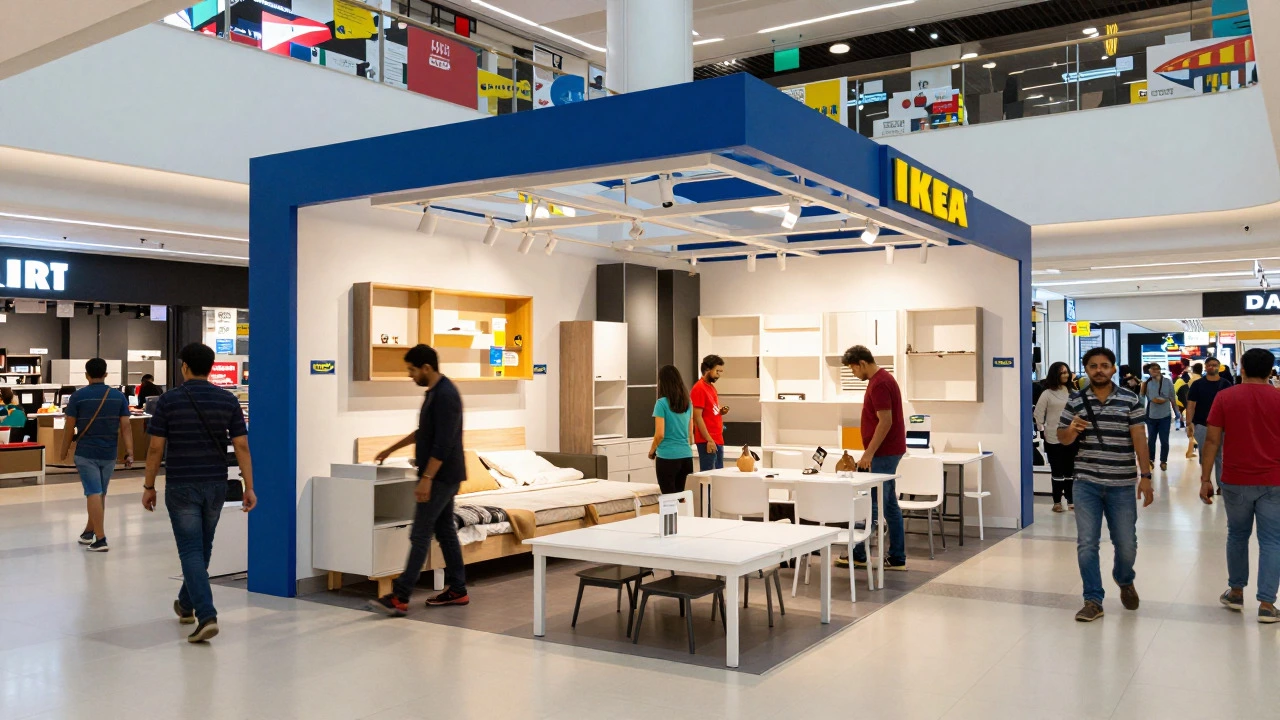
So, what did they do? They shrank. In 2026, IKEA is aggressively pursuing smaller format stores. These aren’t the full-blown experience centers with restaurants and kids' play areas. They are compact showrooms tucked into existing malls. This shift acknowledges a hard truth: the Indian middle class shops in mixed-use commercial hubs, not isolated industrial parks. By embedding themselves in places where people already go for movies and groceries, IKEA reduces customer acquisition costs significantly.
Supply Chain Localization: The 30% Rule and Beyond
Let’s talk numbers. When IKEA first arrived, critics argued that importing flat-pack furniture from Sweden would be prohibitively expensive due to shipping and tariffs. To combat this, IKEA committed to sourcing 70% of its products locally within five years. As of mid-2026, they are reportedly hitting closer to 85%.
This isn’t just a compliance checkbox; it’s a survival strategy. Local sourcing cuts logistics costs by nearly 40%. But it also introduces quality control nightmares. Indian manufacturing is fragmented. You have large players who can meet ISO standards, and thousands of small workshops that operate on trust and handshakes. IKEA had to build an entire ecosystem of training programs for these small vendors.
Consider the bamboo sector in Tamil Nadu. Bamboo is abundant, sustainable, and culturally relevant. IKEA partnered with local cooperatives to standardize bamboo processing. The result? A line of durable, affordable outdoor furniture that resonates with Indian aesthetics while keeping prices low. This vertical integration allows them to undercut competitors who rely on imported teak or synthetic materials.
| Feature | Traditional IKEA Model | IKEA India (2026 Adaptation) |
|---|---|---|
| Store Size | Large suburban warehouses (25,000+ sq ft) | Compact mall units (5,000-10,000 sq ft) |
| Sourcing | Global centralized supply chain | Hyper-local sourcing (85%+ domestic) |
| Product Design | Minimalist Scandinavian | Fusion styles (modular + traditional motifs) |
| Pricing Strategy | Low-cost via economies of scale | Tiered pricing with entry-level budget lines |
| Digital Integration | App for catalog browsing | WhatsApp commerce + AR visualization |
Cultural Fit: Designing for the Indian Home
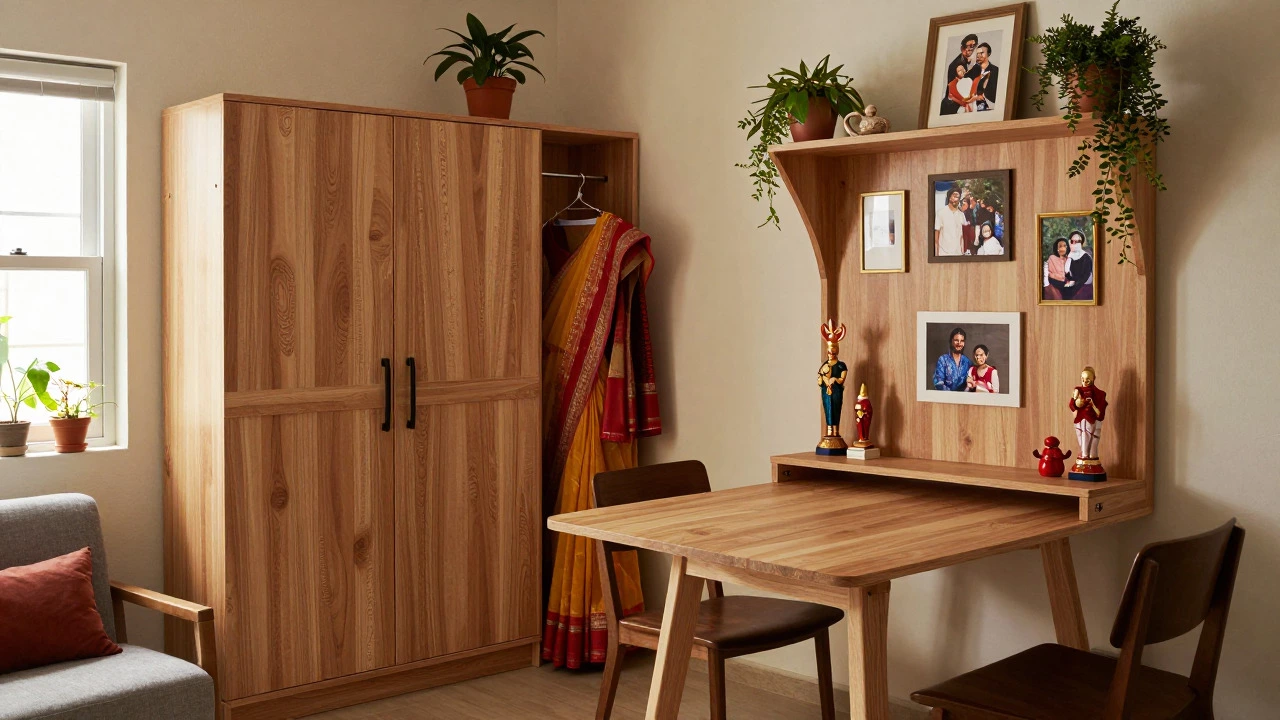
You can’t sell minimalist white boxes to a culture that loves color, clutter, and multi-generational living. Early IKEA catalogs failed because they showed empty rooms. Indian homes are rarely empty. They are filled with idols, plants, family photos, and storage needs that defy Western logic.
In 2026, IKEA’s design team in Hyderabad is heavily focused on modularity. Why? Because Indian housing sizes are shrinking. An average apartment in Mumbai might be 600 square feet. You need furniture that transforms. A sofa that becomes a bed. A dining table that folds into a wall unit. IKEA’s PAX wardrobe system has been tweaked to accommodate larger wardrobes for sarees and heavier fabrics, which require different hanging mechanisms than Western suits.
They’ve also embraced the "jugaad" spirit-the art of frugal innovation. Instead of selling complete room sets, they offer components. This appeals to the DIY mindset prevalent in India, where homeowners often customize purchases. By providing the skeleton, IKEA lets the customer add the flesh and blood, creating a sense of ownership and personalization that big-box retailers usually lack.
The Digital Battlefield: WhatsApp and Beyond
If you’re doing business in India without WhatsApp, you’re invisible. IKEA recognized this early. While Western markets focus on app downloads and email newsletters, IKEA India built a robust commerce layer directly on WhatsApp Business API.
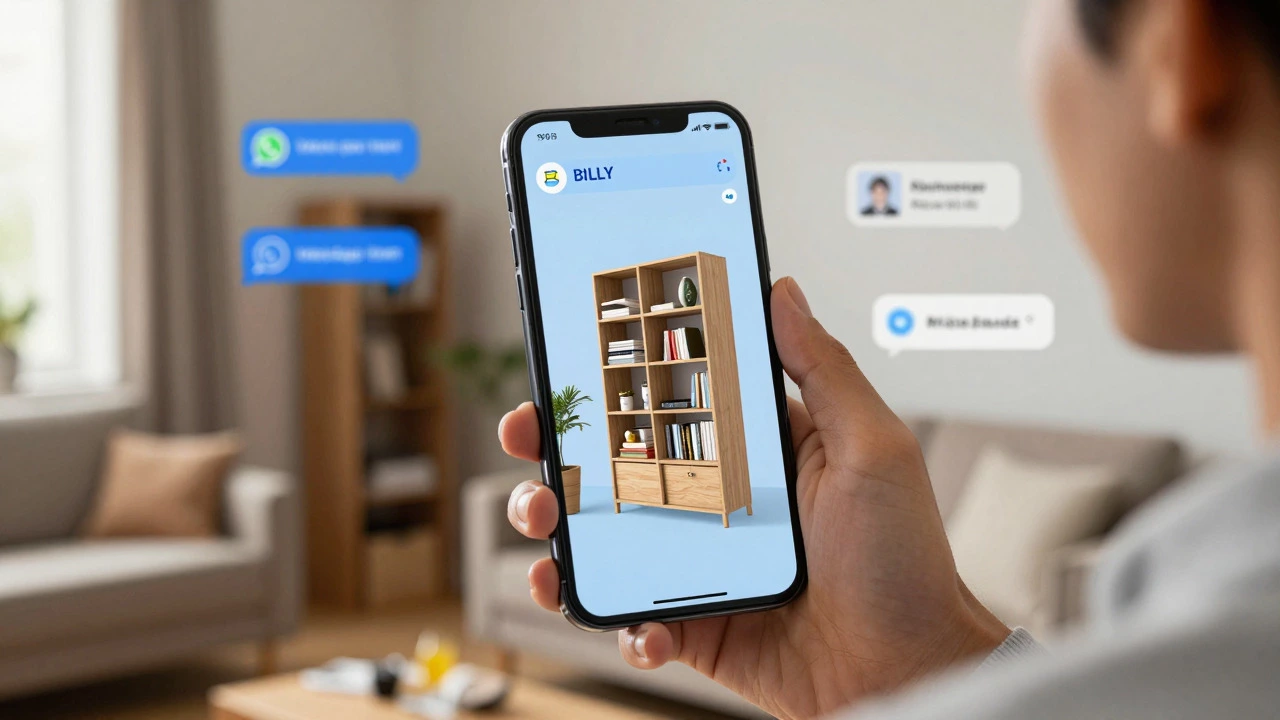
Here’s how it works: A user sends a photo of their awkward corner space. An AI-driven bot suggests three product combinations. If the user wants human help, a chat agent takes over. This hybrid approach bridges the gap between digital convenience and the high-touch service Indians expect. According to internal data leaked in late 2025, WhatsApp channels account for nearly 20% of their online sales volume. That’s significant when you consider that pure e-commerce penetration in furniture is still below 15% nationwide.
Augmented Reality (AR) is another key player. With smartphone penetration soaring, IKEA’s AR app allows users to visualize how a BILLY bookshelf looks in their actual living room before buying. This reduces return rates, which are notoriously high in online furniture sales due to mismatched expectations.
Competition: It’s Not Just Other Retailers
Many analysts look at Pepperfry, Urban Ladder, or Amazon Home as IKEA’s main rivals. They are wrong. IKEA’s biggest competitor is the unorganized sector. Walk down any street in Delhi’s Karol Bagh or Mumbai’s Lamington Road, and you’ll find countless local carpenters and wholesalers offering custom-made furniture at prices that make mass-produced goods look expensive.
To compete here, IKEA can’t just be cheaper; it has to be better. And by "better," I mean consistent quality and after-sales service. Local carpenters rarely offer warranties. IKEA’s standardized assembly services and guarantee policies provide peace of mind that justifies a slight price premium. They are selling reliability, not just wood and screws.
Furthermore, the rise of rental housing among young professionals creates a specific niche. Renters don’t want to invest in heavy, permanent fixtures. They want lightweight, movable, and aesthetically pleasing items that won’t lose value if they move out. IKEA’s flat-pack model is perfectly suited for this transient demographic.
Environmental Pressures and Sustainability
India is increasingly conscious of environmental impact, driven both by government regulations and consumer awareness. IKEA’s commitment to becoming climate positive by 2030 aligns well with this trend. Their use of recycled plastics and sustainably sourced wood is marketed heavily.
However, greenwashing accusations are rampant. Consumers are skeptical. To counter this, IKEA India has started labeling products with detailed lifecycle information-showing carbon footprint per item. This transparency builds trust. Additionally, their take-back schemes for old furniture address the waste management crisis in urban areas, positioning the brand as a responsible corporate citizen.
Conclusion: A Cautious Optimism
Will IKEA succeed in India? Success is relative. If success means dominating the market share like it does in Scandinavia, probably not. The market is too diverse, too fragmented, and too competitive. But if success means achieving sustainable profitability, building a loyal customer base, and establishing itself as a category leader in modern home furnishing, then yes, the trajectory is positive.
The key lies in continued adaptation. As long as IKEA respects local nuances-from store size to design preferences to digital habits-they will thrive. The next five years will determine if they can scale this adapted model across tier-2 and tier-3 cities, where the next wave of middle-class growth is happening. That’s the real test.
How many IKEA stores are there in India as of 2026?
As of mid-2026, IKEA operates approximately 12-15 stores across major metropolitan areas including Delhi-NCR, Mumbai, Bangalore, Hyderabad, and Pune. They plan to expand to 25+ stores by 2028, focusing on smaller formats in emerging cities.
Is IKEA furniture expensive in India compared to local options?
It depends on the segment. For basic, functional furniture, IKEA is competitively priced due to local sourcing. However, for premium or custom wooden furniture, local carpenters may offer lower upfront costs, though IKEA provides better warranty and consistency.
Does IKEA offer delivery and assembly services in India?
Yes, IKEA offers both delivery and professional assembly services across all its operational cities. Assembly fees vary by product complexity but are generally considered reasonable given the time saved.
Can I buy IKEA products online in India?
Absolutely. IKEA has a robust e-commerce platform accessible via website and mobile app. Additionally, they integrate with WhatsApp for personalized shopping assistance and order tracking.
What is the biggest challenge IKEA faces in India?
The primary challenges include navigating complex real estate laws, competing with the vast unorganized sector of local artisans, and adapting product designs to fit smaller Indian living spaces and cultural preferences.