Steel Industry History Explorer
Test your knowledge on the "Father of the Steel Industry" and the complex web of inventors and industrialists who built modern civilization.
Knowledge Check
Score: 0/5
Quiz Complete!
You scored 0 out of 5.
Key Milestones
-
1856: The Bessemer Process
Henry Bessemer patents the first economical method for mass-producing steel by blowing air through molten iron. -
1856: Mushet's Alloy
Robert Mushet demonstrates spiegeleisen (iron-manganese) to fix brittleness, though initially ignored. -
1878: Phosphorus Removal
Sidney Gilchrist Thomas introduces basic lining, allowing the use of cheaper phosphorus-rich ores. -
1870s-1900: Carnegie's Empire
Andrew Carnegie adopts vertical integration, making steel a global commodity and dominating the market. -
1950s+: Modern Era
Basic Oxygen Furnaces (BOF) replace Bessemer converters, offering better control and efficiency.
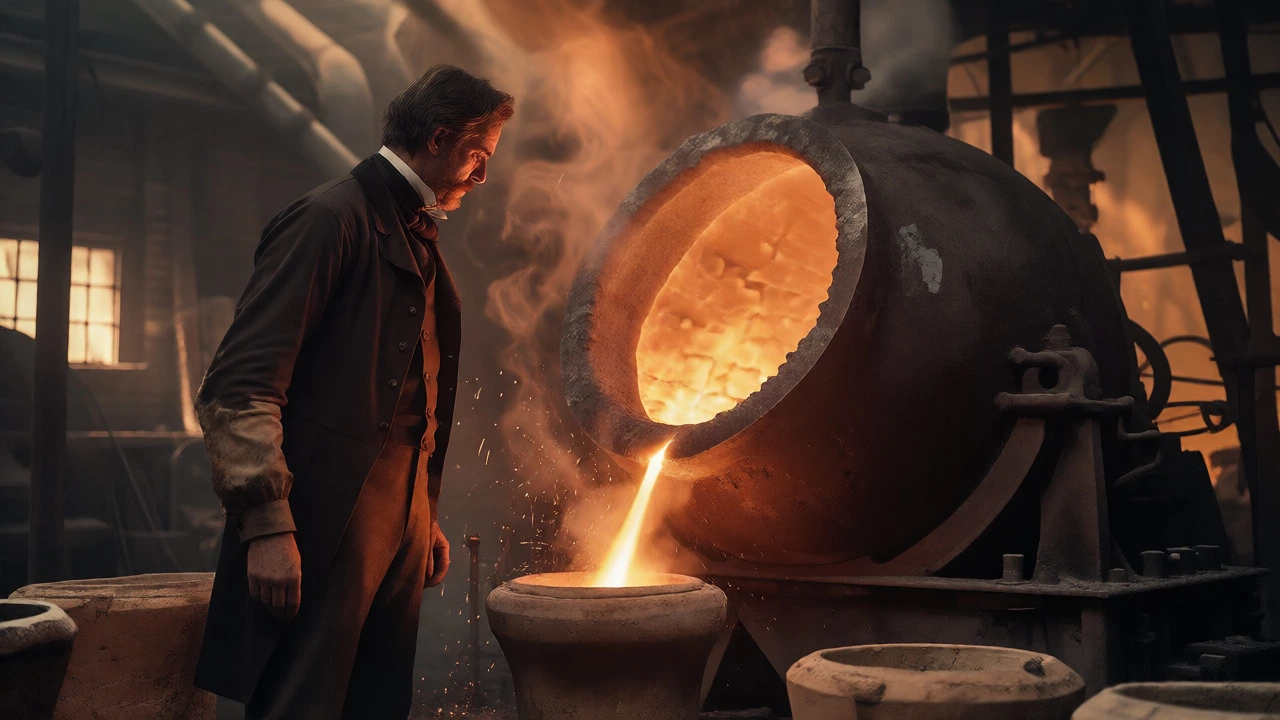
You might think Henry Bessemer invented steel. He didn't. People have been making small amounts of it for centuries, using labor-intensive methods that made it too expensive for anything other than fancy cutlery or swords. But in 1856, a British engineer changed everything. He figured out how to strip carbon out of molten iron cheaply and quickly. That single breakthrough turned steel from a luxury item into the backbone of modern civilization. If you are asking who deserves the title "Father of the Steel Industry," the answer isn't just one name-it's a story about an inventor, a businessman, and a chemical reaction.
Henry Bessemer is a British engineer and inventor who developed the Bessemer process in 1856, the first inexpensive industrial method for mass-producing steel from molten pig iron. Before his invention, producing a ton of steel could take weeks and cost a fortune. After his patent, factories could churn out tons in minutes. This speed drop slashed prices by up to 90% within a decade, making steel affordable enough for railroads, skyscrapers, and ships.
The Problem with Iron and Early Steel
To understand why Bessemer matters, you have to look at what came before. Iron is everywhere. It's strong enough for bridges but brittle if you try to bend it too much. Steel is iron with a little less carbon. That tiny difference makes it tougher, more flexible, and resistant to rust. But removing that excess carbon was a nightmare.
In the early 1800s, manufacturers used the crucible process. They melted iron in clay pots, added specific ingredients, and waited days for the mix to settle. One skilled worker could make maybe five pounds of high-quality steel a day. Imagine trying to build the Brooklyn Bridge with five-pound batches. You couldn't. The world needed bulk production, not artisanal crafts. Enter Henry Bessemer, who wasn't even a metallurgist by trade. He was looking for a way to make cannon barrels stronger after seeing soldiers' rifles fail in the Crimean War. He realized he could blow air through molten iron to burn off the impurities. No extra fuel needed. The heat from the burning carbon kept the metal liquid. It was elegant, dangerous, and revolutionary.
How the Bessemer Process Actually Worked
Bessemer didn't just guess. He tested thousands of variations. His big insight was using a pear-shaped vessel called a converter. You pour molten pig iron into the top. Then, you blast compressed air through nozzles at the bottom. The oxygen in the air reacts with the carbon, silicon, and manganese in the iron. These elements oxidize, turning into slag (waste material) that floats to the top. The reaction generates so much heat that the iron stays liquid without any external furnace. Once the impurities are gone, you tilt the converter and pour the pure steel into molds. The whole cycle took about 20 minutes. Compare that to the days required for the crucible method, and you see why this sparked an industrial revolution.
Why Henry Bessemer Gets the Credit (Mostly)
Bessemer patented his process in 1856. He marketed it aggressively across Europe and America. By 1860, there were dozens of Bessemer plants operating. He became wealthy and famous, earning a knighthood in 1879. But here is the twist: his original process had a flaw. It couldn't remove phosphorus, a common impurity in many iron ores. If you used the wrong ore, your steel would crack under pressure. This limitation meant Bessemer couldn't claim total victory alone. Other inventors stepped in to fix the gaps, which leads us to the next key figure.
The Rival Inventors Who Completed the Picture
While Bessemer gets the headline, two other men deserve serious credit for making the industry viable globally. First, there is Sidney Gilchrist Thomas, a cousin of poet Dylan Thomas. In 1878, he developed the Basic Oxygen Process variant known as the Gilchrist-Thomas process. He lined the Bessemer converter with basic materials like dolomite instead of acidic silica. This allowed the removal of phosphorus. Suddenly, steelmakers could use cheaper, phosphorus-rich ores found in places like Lorraine, France, and the Midlands of England. Without Thomas, Bessemer's process would have remained limited to specific high-quality ores.
Then there is Robert Mushet. He actually discovered the principle of adding spiegeleisen (an iron-manganese alloy) to deoxidize the steel and prevent brittleness. He demonstrated it to Bessemer, who initially ignored him. Later, when Bessemer struggled with brittle steel, he quietly incorporated Mushet's idea. Mushet sued for recognition and eventually won a pension, but his contribution was often buried in history books. These three-Bessemer, Thomas, and Mushet-form the technical trinity of mass-produced steel.
The Business Side: Andrew Carnegie and the Scale of Production
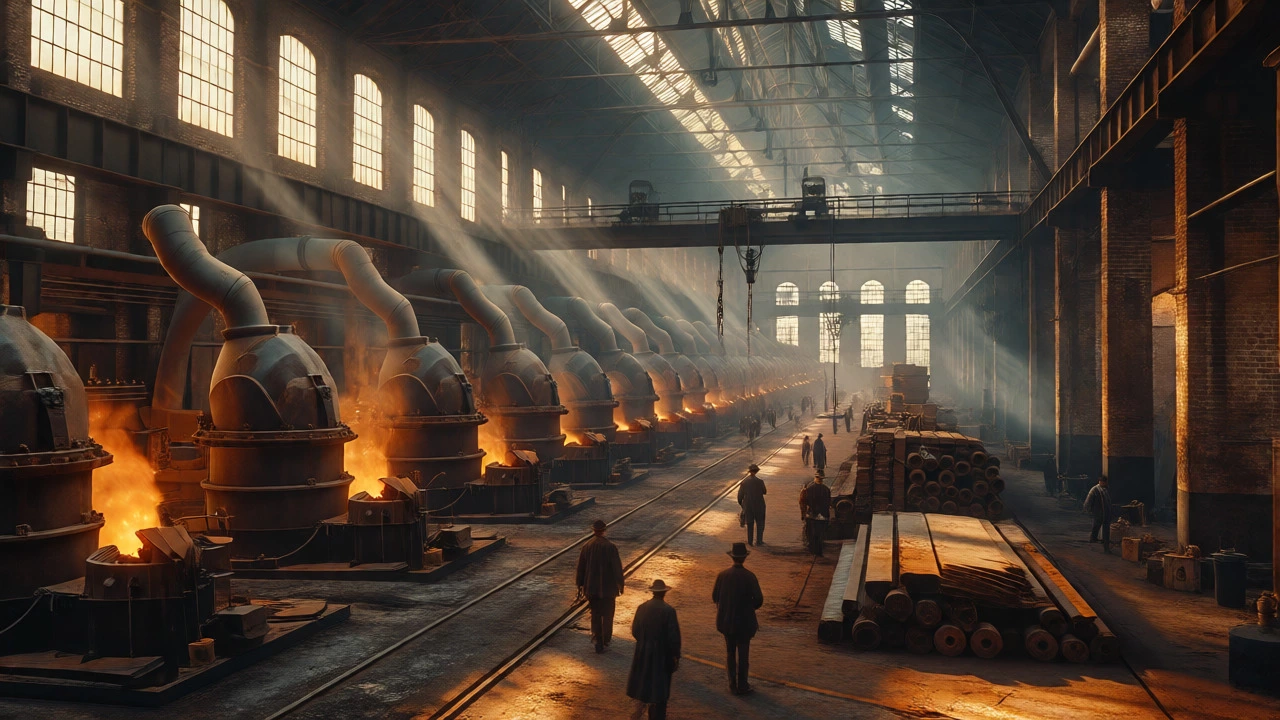
Invention is one thing. Industrialization is another. While Bessemer provided the technology, Andrew Carnegie built the empire. Carnegie, a Scottish-American industrialist, saw the potential of the Bessemer process immediately. In the 1870s, he invested heavily in American steel mills, adopting vertical integration. He owned the coal mines, the coke ovens, the iron ore fields, the railroads, and the steamships. This control lowered costs further than any competitor could match.
Carnegie didn't invent the steelmaking process, but he invented the business model that made steel ubiquitous. His Homestead Steel Works in Pennsylvania became the largest plant in the world. By 1900, Carnegie Steel produced more steel than all of Great Britain combined. When people ask about the "father" of the industry in terms of economic impact, many point to Carnegie. He proved that steel wasn't just a material; it was a commodity that could drive national power. His rivalry with John D. Rockefeller defined the Gilded Age, but it was his adoption of Bessemer's tech that changed the physical landscape of cities.
From Bessemer to Modern Steelmaking
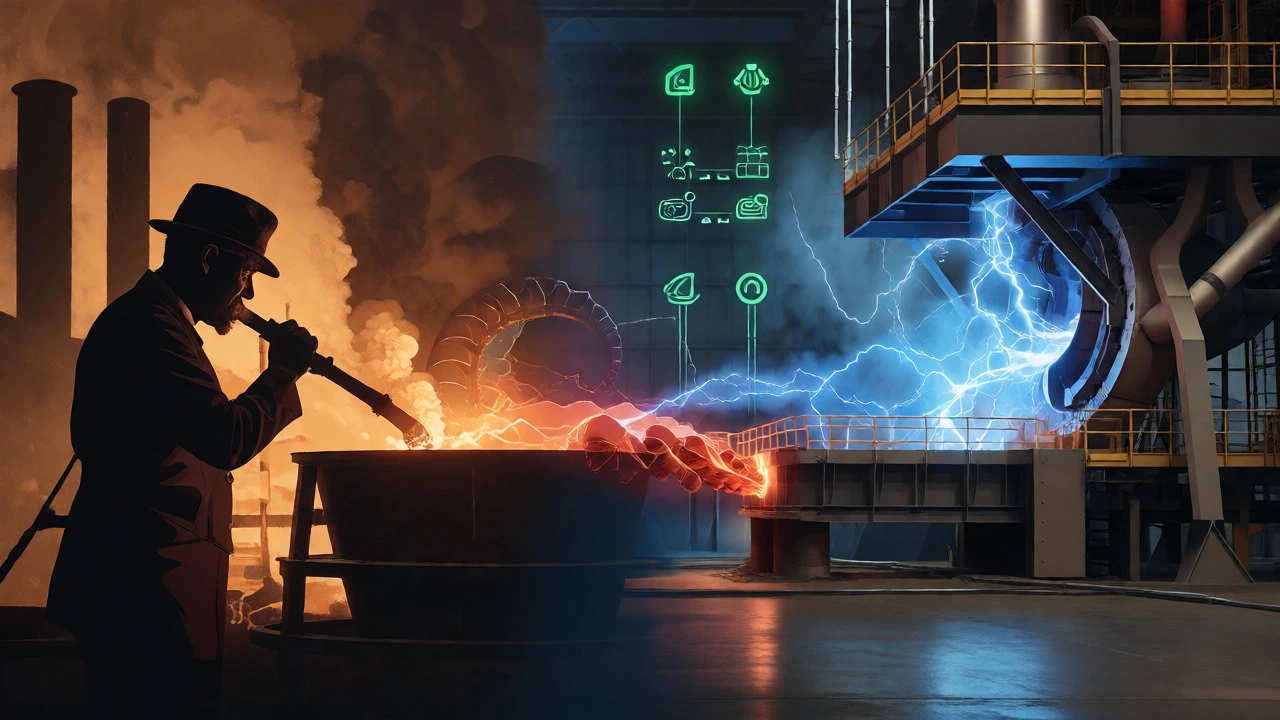
The Bessemer process dominated for about 80 years. But it had drawbacks. It couldn't handle scrap steel well, and controlling the final chemistry was tricky. In the mid-20th century, new technologies emerged. The Open Hearth process allowed for better quality control and used more scrap. Then, in the 1950s, the Basic Oxygen Furnace (BOF) arrived. It used pure oxygen instead of air, making the process faster and cleaner. Today, most primary steel comes from BOFs or Electric Arc Furnaces (EAF), which melt recycled scrap using electricity.
So, is Bessemer still relevant? Absolutely. Every modern steel plant owes its existence to his initial proof that mass production was possible. The fundamental chemistry hasn't changed-remove carbon, add alloys, cast the shape. We just do it with computers and lasers now. If you walk into a modern mill, you'll see descendants of Bessemer's converter, refined over a century of engineering tweaks.
Comparing the Key Figures
It helps to see these figures side-by-side to understand their distinct roles. One provided the spark, another fixed the engine, and the third drove the car.
| Figure | Role | Major Contribution | Impact Year |
|---|---|---|---|
| Henry Bessemer | Inventor | Developed the first economical mass-production method (Bessemer Process). | 1856 |
| Robert Mushet | Metallurgist | Discovered spiegeleisen addition to improve steel quality and reduce brittleness. | 1856 |
| Sidney Gilchrist Thomas | Chemist | Created the Basic Liner process to remove phosphorus, expanding usable ore sources. | 1878 |
| Andrew Carnegie | Industrialist | Scaled production via vertical integration, making steel a global commodity. | 1870s-1900s |
Common Misconceptions About Steel History
Many people confuse steel with iron. Or they think stainless steel existed back then. It didn't. Stainless steel, with its chromium content, wasn't invented until 1913 by Harry Brearley. Another myth is that Bessemer worked alone. He had assistants, investors, and competitors watching his every move. His patent battles were fierce. For instance, Kelly in the US claimed similar rights around the same time. The courts eventually settled it, but the race to market was intense. Also, don't assume all steel today is made the same way. Specialty steels for aerospace or medical devices often use vacuum induction melting, a far cry from blowing air through molten rock.
Why This Matters Today
Understanding who started the steel industry helps you appreciate current trends. Green steel is the next big shift. Traditional blast furnaces emit massive amounts of CO2 because they use coal/coke. New hydrogen-based direct reduction methods aim to replace carbon with hydrogen, producing water vapor instead of smoke. Just as Bessemer solved the cost problem, modern engineers are solving the environmental problem. Knowing the roots gives context to the future. The "Father" label is less about worship and more about recognizing pivotal moments where technology shifted from craft to industry.
Frequently Asked Questions
Who is universally recognized as the father of the steel industry?
Henry Bessemer is widely credited as the father of the modern steel industry because he invented the first economical method for mass-producing steel in 1856. However, historians often acknowledge that Sidney Gilchrist Thomas and Robert Mushet made critical improvements that made the process globally viable.
Did Henry Bessemer invent steel itself?
No. Humans have known about steel for thousands of years. Ancient civilizations made small quantities of steel using bloomery furnaces and crucibles. Bessemer did not discover the material; he invented the industrial process to produce it cheaply and in large volumes.
What was the main flaw in the original Bessemer process?
The original Bessemer process could not remove phosphorus from the iron ore. Phosphorus makes steel brittle and weak. This limitation meant the process only worked with low-phosphorus ores, which restricted where steel mills could be built until Sidney Gilchrist Thomas introduced the basic lining solution in 1878.
Was Andrew Carnegie an inventor?
Andrew Carnegie was primarily an industrialist and businessman, not a technical inventor. He did not create the steelmaking process. Instead, he adopted existing technologies like the Bessemer process and optimized them through vertical integration and efficient management, becoming the dominant force in the American steel market.
Is the Bessemer process still used today?
Not in its original form. The Bessemer process was largely replaced by the Open Hearth process in the early 20th century and later by the Basic Oxygen Furnace (BOF) starting in the 1950s. Modern steelmaking uses pure oxygen injection rather than compressed air, offering better control and efficiency.
Who invented stainless steel?
Harry Brearley, a British metallurgist, invented stainless steel in 1913. He was searching for gun barrel erosion solutions when he discovered that adding chromium to steel prevented rust. This happened decades after the rise of the mass steel industry led by Bessemer and Carnegie.