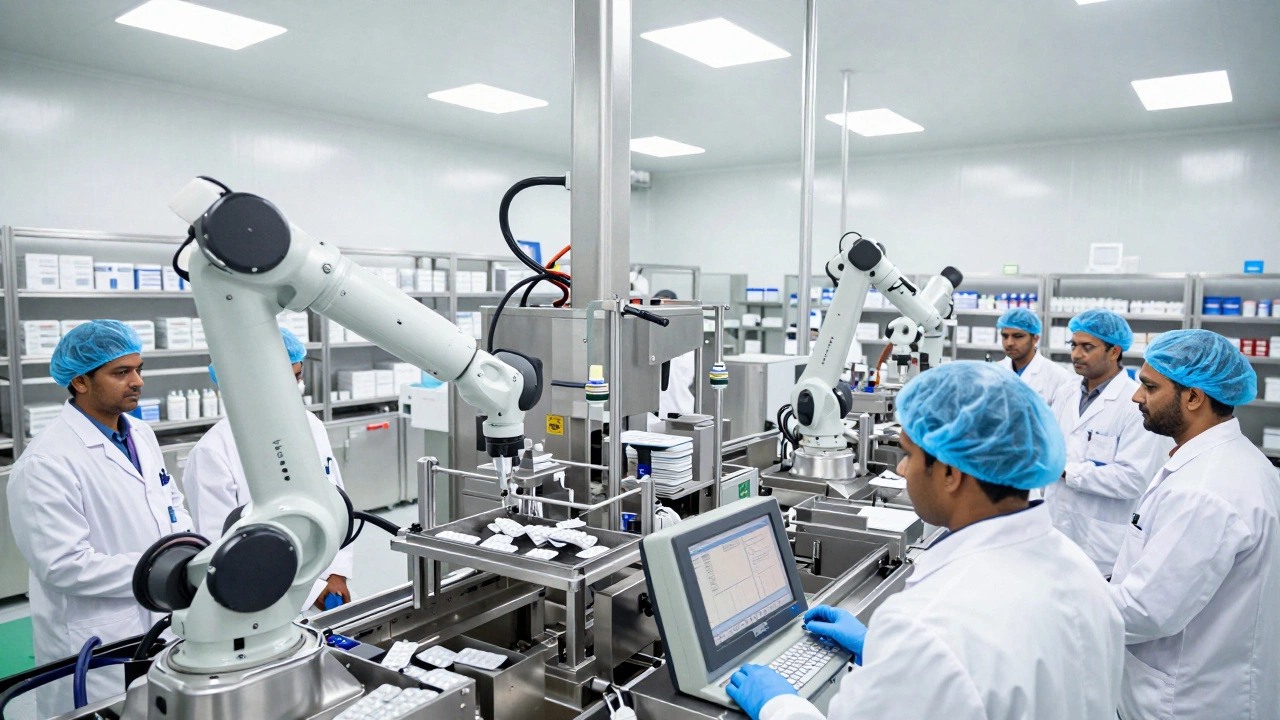
India Pharma Strength Analyzer
Analyze India's Pharmaceutical Powerhouse Status
Explore the multifaceted strength of India's pharmaceutical industry by examining key performance indicators across critical dimensions.
$30B+
Domestic Market Value (2023)
Projected to reach $65-70B by 2030
20%
Global Market Share by Volume
Supplies over 200 countries worldwide
50%+
Generic Vaccines Globally
Serum Institute leads vaccine production
40%
US Generic Medicine Demand
Major supplier to regulated markets
Analysis Complete: India is a Global Pharmaceutical Leader
Strengths
- Unmatched scale in generic medicine production
- Strong regulatory compliance with US FDA standards
- Growing innovation in biosimilars and biologics
- Cost-efficient R&D and manufacturing ecosystem
- Rapid response capability during health crises
Challenges
- Critical dependence on Chinese APIs (70-80%)
- Limited original blockbuster drug discoveries
- Rising wage pressures in urban manufacturing hubs
- Ongoing scrutiny of smaller facilities
- Environmental sustainability concerns
Overall Industry Strength Rating
85/100 - Strong Global Position
Critical Vulnerability Alert:
India imports 70-80% of Active Pharmaceutical Ingredients (APIs) from China, creating significant supply chain risks. The Production Linked Incentive (PLI) scheme aims to address this through domestic manufacturing incentives.
Future Outlook Indicators
AI Integration
Drug discovery optimization
Digitalization
Manufacturing efficiency
Consolidation
Industry M&A activity
When you look at a medicine cabinet anywhere in the world, there is a high chance that some of those pills were made in India. But does having a large market share actually mean the country is "strong"? Or is it just riding on low labor costs? The reality is more complex. India isn't just a factory for cheap copies anymore; it has evolved into a sophisticated hub for innovation, quality control, and global health security. However, like any giant, it carries its own set of heavy burdens.
The Scale of Influence: Why Size Matters
To understand if India is strong, we first have to look at the sheer volume of what it produces. The nation is often called the "pharmacy of the world," and this title isn't just marketing fluff. According to data from the Department for Promotion of Industry and Internal Trade (DPIIT), the domestic pharmaceutical market in India was valued at approximately USD 30 billion in recent years, with projections pushing toward USD 65-70 billion by 2030. That is massive growth driven by rising healthcare awareness and an aging population within the country itself.
But the real story lies in exports. Indian pharmaceutical companies supply over 50% of all generic vaccines globally and roughly 40% of the demand for generic medicines in the United States. If you live in Europe or Africa, the odds are even higher that your antihypertensive medication or antibiotic came from a plant in Hyderabad or Ahmedabad. This scale provides a buffer against global shocks. During the early stages of the pandemic, while other nations struggled to ramp up production, Indian manufacturers pivoted quickly to produce essential drugs, proving their logistical strength.
- Market Share: India holds about 20% of the global market by volume.
- Export Reach: Products are exported to over 200 countries, including developed markets like the US and EU.
- Vaccine Production: The Serum Institute of India alone produces more than half of the world's vaccines.
Quality Control: The Regulatory Backbone
A common criticism of emerging manufacturing hubs is that quantity trumps quality. In the past, this was a valid concern for some players in the Indian pharma sector. Today, however, the landscape has shifted dramatically due to strict regulatory oversight. The Food and Drug Administration (FDA) of the United States is notoriously tough on inspections. Between 2019 and 2024, the number of warning letters issued to Indian facilities dropped significantly compared to previous decades, indicating a maturation in compliance standards.
The Central Drugs Standard Control Organization (CDSCO) in India has also tightened its grip domestically. They now enforce Good Manufacturing Practices (GMP) that align closely with international standards. This means that when a company like Sun Pharma or Dr. Reddy’s Laboratories ships a batch of tablets, it undergoes rigorous testing not just for potency, but for impurities, stability, and packaging integrity. This shift has allowed Indian firms to win contracts for complex formulations, not just simple generics.
Furthermore, the adoption of digital tracking systems for drug serialization has reduced the incidence of counterfeit drugs entering the supply chain. By implementing unique identification codes on packages, authorities can trace every pill back to its source. This transparency builds trust with international buyers who previously hesitated to rely solely on Asian manufacturing bases.

Innovation Beyond Generics: The Biotech Leap
If India only copied existing drugs, its strength would be fragile. Patents expire, and margins shrink. True strength comes from creating new solutions. While India started as a leader in reverse-engineering molecules after patent laws changed in the 1970s, the last decade has seen a surge in Research and Development (R&D). Companies are no longer just making copies; they are developing biosimilars-complex biological products similar to expensive brand-name biologics.
Biosimilars are the next frontier in affordable healthcare. They require advanced cell-culture technology and stringent quality controls, far beyond traditional chemical synthesis. Indian firms are increasingly partnering with global giants to co-develop these therapies. For instance, collaborations between Indian labs and European research institutes have accelerated the development of treatments for cancer and autoimmune diseases. This move signals a transition from being a "cost center" to becoming an "innovation partner" in the global value chain.
Additionally, the rise of Contract Research Organizations (CROs) in cities like Bangalore and Pune has created a robust ecosystem for clinical trials. India offers a diverse patient pool and faster recruitment times compared to Western countries. This efficiency attracts multinational corporations looking to test new compounds, further embedding India into the core of the global pharmaceutical lifecycle.
| Aspect | Strength | Challenge |
|---|---|---|
| Cost Efficiency | Lowest R&D and manufacturing costs globally | Rising wage pressures in urban hubs |
| Regulatory Compliance | High FDA approval rates for major players | Ongoing scrutiny on smaller units |
| Innovation | Growing biosimilar pipeline | Limited original blockbuster drug discoveries |
| Supply Chain | Robust export logistics network | Dependence on China for Active Pharmaceutical Ingredients (APIs) |
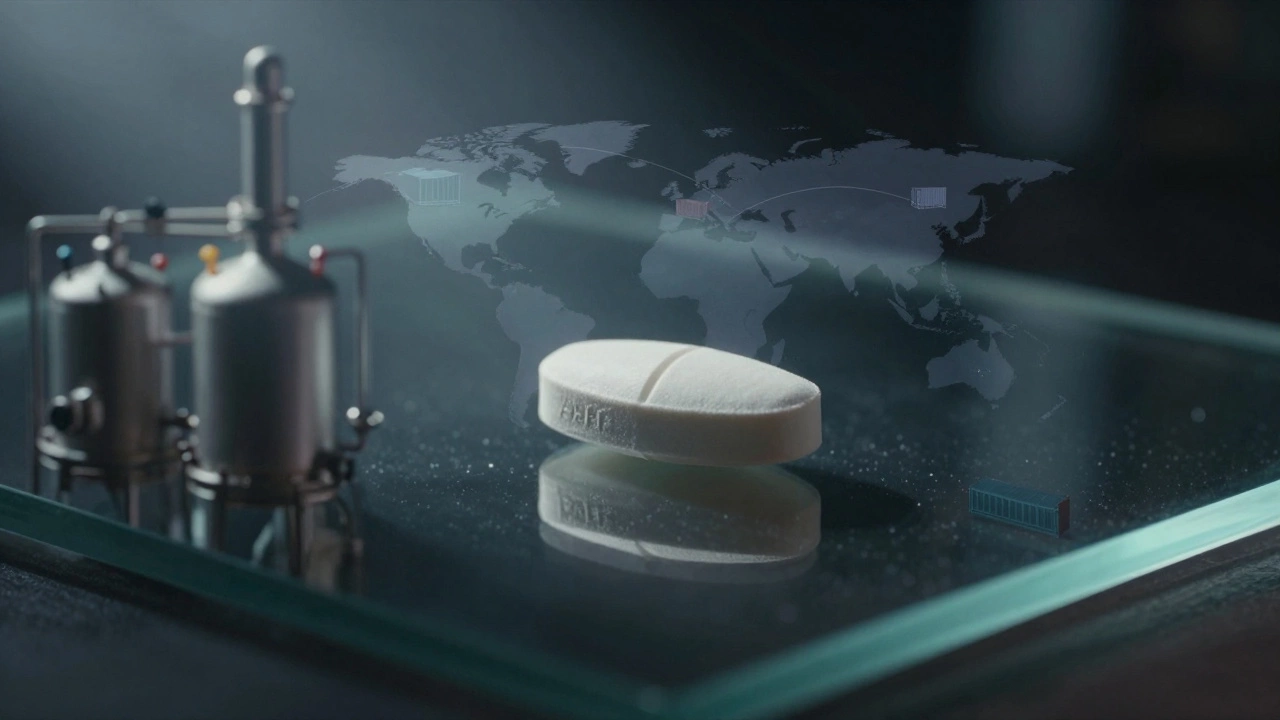
The Achilles' Heel: Dependence on APIs
No discussion about India's pharmaceutical strength is complete without addressing its biggest vulnerability: Active Pharmaceutical Ingredients (APIs). These are the raw materials that give a drug its therapeutic effect. Currently, India imports nearly 70-80% of its API requirements, primarily from China. This dependency creates a strategic risk. If geopolitical tensions rise or supply chains break, Indian manufacturers could face severe shortages overnight.
This reliance exists because producing APIs requires heavy capital investment in chemical infrastructure, which many Indian firms avoided in favor of lower-margin formulation work. However, recognizing this threat, the government launched the Production Linked Incentive (PLI) scheme. This initiative offers financial incentives to companies that set up domestic API manufacturing plants. Early results show promising signs, with several key facilities coming online for antibiotics and cardiovascular drugs. Still, achieving self-sufficiency will take another five to ten years.
Until then, diversifying sources beyond China remains a critical goal. Efforts are underway to encourage partnerships with Korean, Japanese, and American suppliers, but breaking the habit of sourcing from the cheapest provider is difficult for cost-sensitive businesses.
Environmental Sustainability: A Growing Pressure Point
As global attention turns to climate change, the pharmaceutical industry faces intense scrutiny regarding its environmental footprint. Pharmaceutical waste contains toxic chemicals that can contaminate water sources and harm ecosystems. Historically, some Indian clusters faced criticism for inadequate waste treatment protocols. However, the narrative is changing rapidly.
Modern regulations now mandate Zero Liquid Discharge (ZLD) systems in industrial zones. These systems treat wastewater until no liquid waste is released, turning effluent into reusable water or solid waste for disposal. Leading companies are investing heavily in green chemistry techniques that reduce hazardous byproducts during synthesis. This isn't just about compliance; it's about brand reputation. International buyers increasingly prefer partners who demonstrate sustainable practices, making environmental responsibility a competitive advantage rather than just a legal hurdle.
The Future Outlook: Consolidation and Digitalization
Looking ahead, the Indian pharmaceutical industry is poised for consolidation. Smaller players may struggle to meet escalating regulatory costs and invest in digital transformation. Larger conglomerates are acquiring niche biotech firms to broaden their portfolios. This trend mirrors patterns seen in mature markets like the US and Germany, where M&A activity drives innovation and scale.
Digitalization is another key driver. Artificial Intelligence (AI) is being used to predict drug interactions, optimize manufacturing processes, and personalize treatment plans. Indian IT expertise gives local pharma firms a unique edge in integrating these technologies seamlessly. As data analytics become central to drug development, India's dual strength in software and science positions it well for the next wave of medical breakthroughs.
Ultimately, asking if India is strong in the pharmaceutical industry yields a nuanced answer. It is undeniably a powerhouse in terms of volume, cost-efficiency, and access to essential medicines. Yet, true resilience depends on overcoming structural weaknesses like API dependence and continuing to climb the ladder from generics to innovative biologics. With steady policy support and private sector ambition, India is not just maintaining its position-it is redefining what global healthcare accessibility looks like.
Why is India known as the pharmacy of the world?
India earns this title because it supplies a significant portion of the world's generic medicines and vaccines. It provides affordable healthcare solutions to billions of people, particularly in developing nations, while also meeting substantial demand in regulated markets like the US and Europe.
Are Indian-made drugs safe and effective?
Yes, major Indian pharmaceutical companies adhere to strict Good Manufacturing Practices (GMP) approved by international regulators like the US FDA and EMA. Regular inspections ensure that products meet high standards of safety, efficacy, and quality control.
What is the main weakness of the Indian pharma industry?
The primary weakness is the heavy dependence on China for Active Pharmaceutical Ingredients (APIs). Importing most raw materials exposes the industry to supply chain disruptions and geopolitical risks, prompting efforts to boost domestic manufacturing through government incentives.
How does India compare to China in pharmaceuticals?
While China dominates in the production of raw materials and APIs, India leads in formulation and finished dosage forms. India has a stronger presence in regulated markets due to better regulatory compliance records and a focus on quality assurance in final product delivery.
Is the Indian pharma sector investing in R&D?
Yes, investment in Research and Development is growing. Companies are moving beyond simple generics to develop biosimilars and novel therapeutics. Partnerships with global research institutions and increased spending on clinical trials reflect this shift toward innovation.