
Chemical Demand Estimator
Estimate Chemical Demand
Demand Analysis
Select your industry and quantity to see results
India’s chemical industry is growing faster than most people realize. It’s not just about fertilizers and dyes anymore. From electric vehicle batteries to solar panels, from packaging for e-commerce to medicines in rural clinics - chemicals are the hidden backbone of nearly every product you touch every day. But not all chemicals are created equal. Some are in skyrocketing demand, while others are fading out. If you’re a manufacturer, investor, or supplier in India, knowing which chemicals are pulling the most weight right now can make or break your business.
Chlorine and Caustic Soda - The Unsung Heroes
Chlorine and caustic soda (sodium hydroxide) aren’t glamorous, but they’re everywhere. Together, they form the backbone of India’s PVC, bleach, water treatment, and textile industries. In 2025, India consumed over 7 million metric tons of chlorine - up 12% from 2023. Why? Because demand for PVC pipes in housing and irrigation projects exploded. Rural electrification and water supply schemes under government programs like Jal Jeevan Mission need thousands of kilometers of durable, low-cost piping. That means more PVC. More PVC means more chlorine and caustic soda.
Caustic soda is also critical in soap and detergent manufacturing. With rising urban populations and hygiene awareness, household detergent sales jumped 18% in 2024. Factories in Gujarat and Tamil Nadu are running 24/7 to keep up. These two chemicals are not going away. They’re getting more essential.
Phthalic Anhydride - The Plasticizer Powerhouse
If you’ve ever touched a flexible plastic bag, a vinyl floor, or a car dashboard, you’ve touched phthalic anhydride. It’s the key ingredient in phthalate plasticizers that make rigid PVC soft and bendable. India’s construction and automotive sectors are driving demand. In 2025, the country imported over 300,000 metric tons of phthalic anhydride - a 22% increase from two years ago.
Domestic production is catching up, but not fast enough. Companies like Reliance Industries and Gujarat Fluorochemicals are expanding plants in Dahej and Vadodara. Why? Because local demand is outpacing supply. Even small-scale manufacturers of toys, cables, and packaging are switching to locally sourced plasticizers to cut costs and avoid import delays. This isn’t a trend - it’s a structural shift.
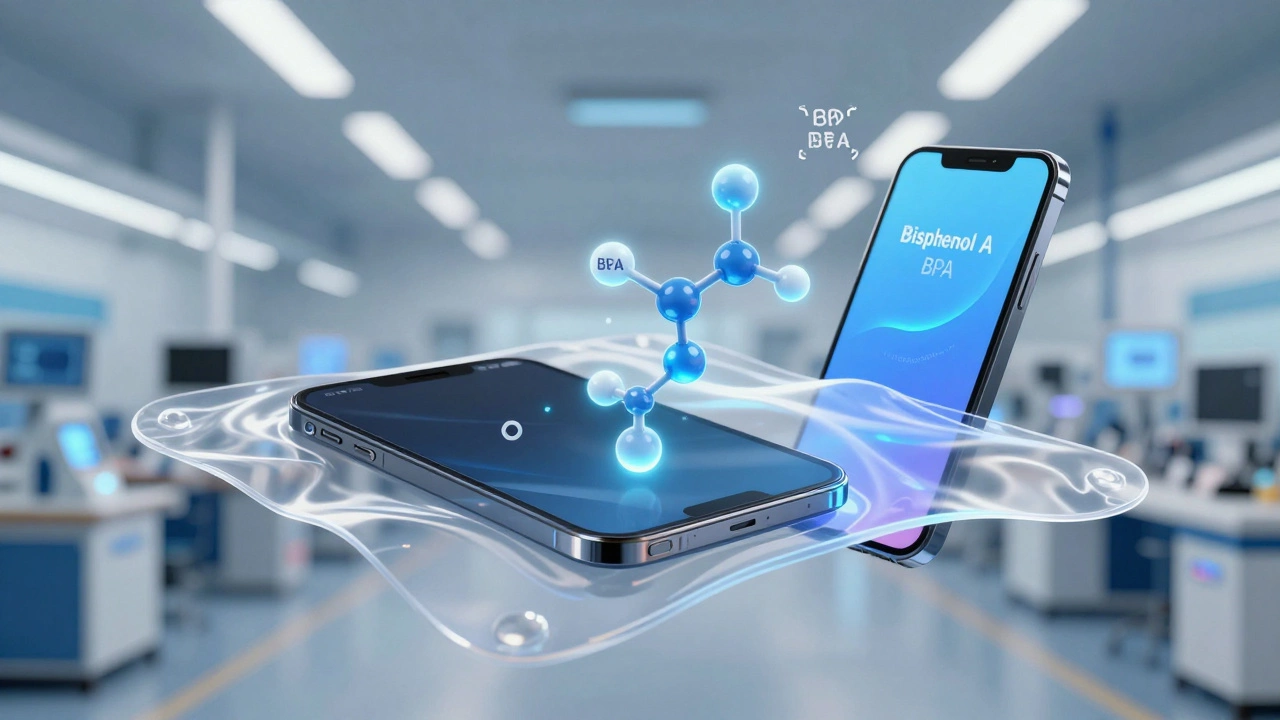
Polycarbonates and Bisphenol A (BPA)
Polycarbonate plastics are strong, clear, and heat-resistant. That’s why they’re used in smartphone screens, water bottles, medical devices, and bulletproof glass. India’s electronics and healthcare sectors are the main drivers. In 2024, medical device manufacturing grew 27%, and with it, demand for polycarbonate resins. The country now imports over 150,000 metric tons annually.
Bisphenol A (BPA) is the raw material for polycarbonate. While some countries are phasing out BPA due to health concerns, India’s regulatory stance is still evolving. Most manufacturers here still rely on BPA-based polycarbonates because alternatives are either too expensive or not yet proven at scale. Companies like LG Chem and SABIC have opened distribution hubs in Mumbai and Chennai to serve this growing market. If you’re in packaging or electronics, this is a chemical you can’t ignore.
Hydrogen Peroxide - The Green Disinfectant
Hydrogen peroxide is no longer just for cleaning wounds. It’s now a key player in textile bleaching, paper production, and wastewater treatment. In 2025, India’s hydrogen peroxide consumption hit 350,000 metric tons - a 30% jump since 2022. Why? Because environmental regulations are tightening. The Central Pollution Control Board now requires textile mills and food processing plants to use eco-friendly bleaching agents. Chlorine-based bleaches are being banned in many states.
Hydrogen peroxide breaks down into water and oxygen. No toxic residues. No sludge. That’s why even small dyeing units in Tiruppur and Ludhiana are switching over. The cost of hydrogen peroxide has dropped too, thanks to new domestic production plants in Gujarat and Maharashtra. It’s becoming the standard for clean manufacturing.
Acetic Acid and Vinyl Acetate Monomer (VAM)
Acetic acid might sound like vinegar, but industrial-grade acetic acid is a different beast. It’s used to make vinyl acetate monomer (VAM), which then becomes polyvinyl acetate - the glue in wood furniture, laminates, and packaging tapes. India’s furniture and packaging industries are booming. E-commerce alone added 2.3 billion new boxes in 2024. Each one needs glue.
Domestic production of acetic acid has doubled in the last five years, but demand still outstrips supply. Companies like IGL and GAIL are investing in new methanol-to-acetic-acid plants. The shift from imported acetic acid to locally produced is happening fast. If you’re in packaging, furniture, or adhesives, this is your chemical. And it’s only getting more important as India pushes for ‘Make in India’ in every sector.
Specialty Chemicals - The New Frontier
It’s not just bulk chemicals anymore. High-value specialty chemicals are now the fastest-growing segment. Think flame retardants for electronics, corrosion inhibitors for solar panel frames, and UV stabilizers for outdoor plastic products. These aren’t sold by the ton - they’re sold by the kilo, but they’re worth far more per gram.
Indian companies like Aarti Industries and Deepak Fertilisers are investing heavily in R&D to produce these. Why? Because global brands like Apple, Samsung, and L’Oréal are shifting production to India. They need chemicals that meet strict international standards - RoHS, REACH, FDA. Local suppliers who can deliver consistent quality are winning contracts. This is where the real profit margins are.

What’s Falling Out of Favor?
Not all chemicals are rising. Some are being phased out. Formaldehyde-based resins in plywood are being replaced by soy-based adhesives. Lead-based pigments in paints are banned nationwide. Asbestos-containing materials are no longer used in insulation. These aren’t just regulations - they’re market shifts. Manufacturers who cling to outdated chemicals are losing bids to competitors who offer cleaner, safer alternatives.
Where to Source These Chemicals in India
The biggest producers are clustered in Gujarat (Dahej, Hazira), Maharashtra (Navi Mumbai, Ratnagiri), and Tamil Nadu (Chennai, Manali). These zones have dedicated chemical parks with pipelines, waste treatment, and logistics support. For small buyers, online B2B platforms like Udaan and IndiaMART now list certified suppliers with batch testing reports. Always ask for a Certificate of Analysis (CoA). Don’t assume quality - verify it.
Future Outlook: What’s Next?
By 2027, India’s chemical market is expected to hit $300 billion. That’s nearly double what it was in 2020. The biggest growth areas? Battery chemicals (lithium, cobalt, electrolytes), biodegradable polymers, and green hydrogen production equipment. The government is offering subsidies under the Production Linked Incentive (PLI) scheme for chemical manufacturing. If you’re thinking about entering this space, now is the time to act - not wait.
What are the top 5 chemicals in demand in India right now?
The top five chemicals in demand in India as of 2025 are chlorine and caustic soda (for PVC and water treatment), phthalic anhydride (for plasticizers), polycarbonate resins (for electronics and medical devices), hydrogen peroxide (for eco-friendly bleaching), and acetic acid (for adhesives and packaging). These are driven by housing, electronics, healthcare, and environmental regulations.
Are Indian manufacturers producing enough of these chemicals locally?
India produces most of the bulk chemicals like chlorine, caustic soda, and acetic acid domestically, but still imports high-purity specialty chemicals like polycarbonate resins and certain plasticizers. Domestic production is expanding fast under PLI schemes, but quality control and consistency remain challenges for smaller players. Large firms like Reliance and Aarti Industries are closing the gap.
Which industries are driving chemical demand in India?
The top industries driving chemical demand are construction (PVC pipes, adhesives), electronics (polycarbonates, specialty resins), healthcare (medical-grade plastics, disinfectants), textiles (hydrogen peroxide for bleaching), and packaging (VAM-based glues). Government infrastructure programs are accelerating all of these.
Is hydrogen peroxide replacing chlorine in Indian factories?
Yes, especially in textile dyeing units and food processing plants. State pollution boards are banning chlorine-based bleaching due to toxic effluents. Hydrogen peroxide breaks down into water and oxygen, making it the preferred alternative. Over 60% of medium-to-large textile mills in Tamil Nadu and Gujarat have switched by 2025.
What should new chemical manufacturers focus on in India?
Focus on specialty chemicals that serve high-growth sectors: battery materials for EVs, biodegradable polymers for packaging, and UV stabilizers for outdoor products. Avoid competing in low-margin bulk chemicals unless you have access to cheap feedstock and logistics. Partner with PLI-eligible projects and invest in quality certifications like ISO 9001 and REACH compliance.
Chemicals are no longer just raw materials - they’re strategic assets. The companies that understand which ones are rising, why they’re rising, and where to source them will lead the next wave of Indian manufacturing. The rest will be left behind.