Global Furniture Market Explorer
Select a country below to view its role in the global furniture ecosystem.
China
Export KingDominates global volume with massive infrastructure.
United States
Top ConsumerHighest domestic spending power and renovation culture.
India
Rising HubFast-growing alternative sourcing hub with raw materials.
Italy
Premium DesignLeader in luxury design and high-value craftsmanship.
Country Details
Primary Role
-
Key Strength
-
Major Challenge
-
Top Destinations
-
Strategic Insight
-
You might assume that the country with the most stylish homes or the highest GDP sells the most furniture. But when you look at the raw numbers, the answer is often surprising. If we talk about who sells the most furniture globally-meaning who exports and supplies the world-the answer is overwhelmingly China. However, if you mean who buys the most furniture domestically, the United States usually takes the top spot. This distinction matters because it changes how you view the entire supply chain.
For someone interested in manufacturing, especially from an Indian perspective, understanding this split is crucial. It tells you where the volume is, where the margins are, and where the opportunities lie. Let’s break down the global furniture landscape, see why China dominates exports, why the US leads consumption, and where India fits into this massive $700+ billion industry.
The Export King: Why China Dominates Global Sales
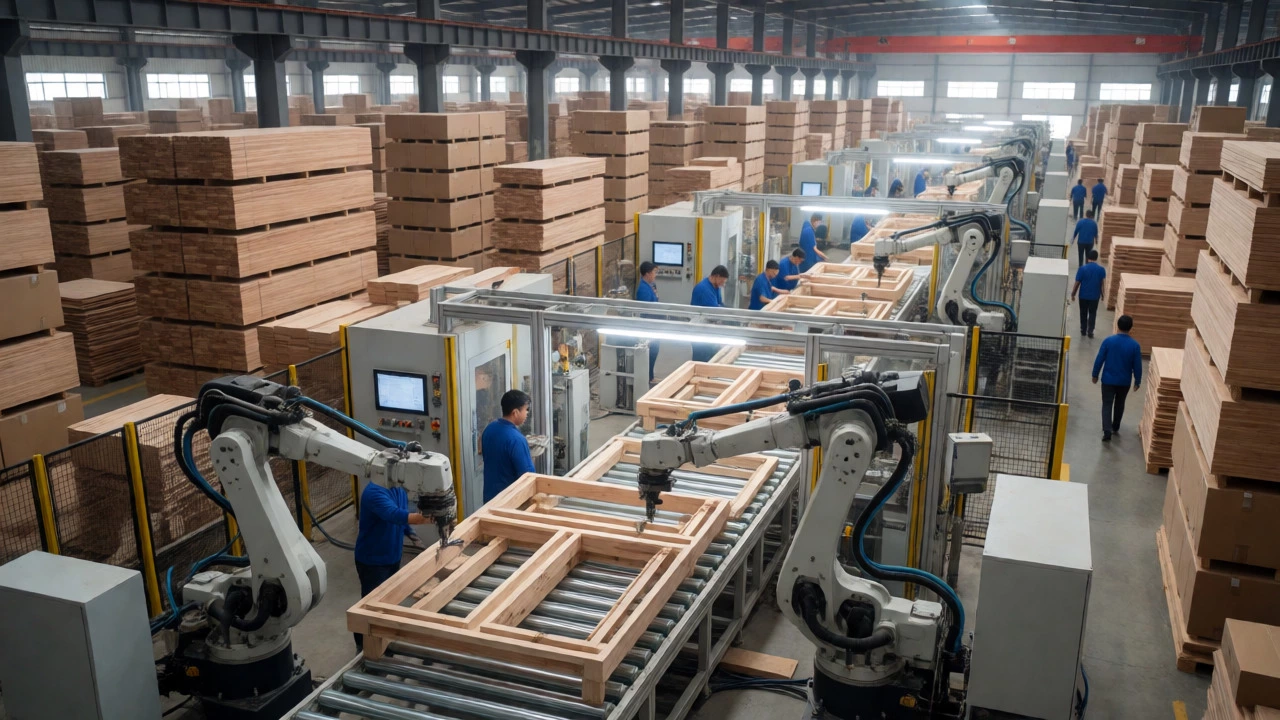
China is the undisputed leader in furniture exports. For years, it has held a dominant share of the global market, often accounting for over 35-40% of all furniture shipped internationally. The reason isn’t just cheap labor anymore; it’s infrastructure. China has built specialized clusters, like Foshan in Guangdong province, which functions as a one-stop shop for everything from raw timber to finished sofas. If you need a specific hinge, a particular fabric, or a custom mold, you can find it within a 10-mile radius.
This ecosystem allows Chinese manufacturers to produce goods at scale faster than almost anyone else. They benefit from economies of scale that keep unit costs low. Even as wages rise in China, their efficiency and logistics networks keep them ahead. When a retailer in Europe or North America places a bulk order, they often default to Chinese suppliers simply because the lead times are predictable and the capacity is massive.
The Consumption Champion: The United States
If we shift the lens from who ships boxes to who opens them, the United States becomes the largest single-country consumer of furniture. Americans spend hundreds of billions of dollars annually on home furnishings. This high demand is driven by a culture of frequent home renovation, a large middle class with disposable income, and a real estate market that encourages staging and updating interiors every few years.
The US market prefers a mix of imported goods and domestic production. While imports flood the lower and mid-market segments, premium American brands maintain a strong foothold. This dual structure creates a complex web where US retailers source heavily from Asia but also support local artisans and factories. For exporters, the US remains the most lucrative destination per unit sold, even if the volume from other regions is higher.
Europe’s Fragmented but Rich Market
Europe doesn’t have a single country that rivals China or the US in sheer volume, but collectively, it is a powerhouse. Countries like Germany, France, and the UK are major players. Germany, in particular, is known for high-quality engineering and design. German furniture often commands a premium price due to its reputation for durability and precision.
Unlike the US, where big-box stores dominate, Europe has a strong tradition of independent retailers and design-led boutiques. This fragmentation means that while no single European country tops the export list alone, the region as a whole is a critical hub for high-end furniture trade. Italy, for instance, is synonymous with luxury design. Italian furniture may not sell in the same volumes as Chinese flat-pack units, but the value per piece is significantly higher.

India’s Emerging Role in Global Furniture Trade
This is where things get interesting for manufacturers in your region. India is rapidly becoming a significant player in the global furniture market. Historically, India was known for handicrafts and wood carvings, but the industry is modernizing. With a growing domestic population and increasing urbanization, internal demand is skyrocketing. Simultaneously, India is positioning itself as an alternative sourcing hub to China.
Why are global buyers looking at India now? Several factors are at play:
- Labor Cost Advantage: While still rising, Indian labor costs remain competitive compared to China and Vietnam.
- Raw Material Availability: India has abundant resources like teak, rosewood, and bamboo, which are prized for durable outdoor and indoor furniture.
- Government Support: Initiatives like "Make in India" and various PLI (Production Linked Incentive) schemes aim to boost manufacturing competitiveness.
- Diversification Strategy: After supply chain disruptions during the pandemic, many Western brands are actively seeking to diversify their supplier base away from sole reliance on China.
Indian cities like Jodhpur, Moradabad, and Saharanpur are traditional hubs, but new industrial parks are emerging to support mass production. The challenge for Indian manufacturers has often been consistency and logistics. Meeting international quality standards and ensuring timely delivery requires upgrading facilities and processes, but those who do so are seeing increased orders.
Comparing the Heavyweights
To visualize how these countries stack up against each other, consider their primary strengths and weaknesses in the global arena. It’s not just about who makes more; it’s about what they make and for whom.
| Country | Primary Role | Key Strength | Major Challenge | Top Export Destinations |
|---|---|---|---|---|
| China | Volume Exporter | Scale, Infrastructure, Speed | Rising Labor Costs, Tariffs | USA, Europe, Japan |
| United States | Top Consumer | High Spending Power, Brand Loyalty | Import Dependency, Logistics | N/A (Net Importer) |
| Italy | Premium Designer | Design Heritage, Craftsmanship | Small Batch Production Limits | USA, Middle East, Asia |
| Germany | Quality Engineering | Durability, Technical Precision | High Operational Costs | EU Neighbors, USA |
| Vietnam | Growing Alternative | Low Labor Costs, Free Trade Agreements | Infrastructure Bottlenecks | USA, EU |
| India | Rising Hub | Raw Materials, Skilled Artisans | Logistics Efficiency, Standardization | USA, EU, Middle East |

What Drives Furniture Sales Trends?
Understanding who sells the most is static; understanding why helps you predict future winners. Currently, three major trends are reshaping the market:
1. E-commerce Integration: Buying furniture online used to be risky. Now, with better return policies and augmented reality apps that let you "place" a sofa in your living room via phone camera, online sales are booming. This favors countries with robust digital logistics, like China and increasingly India.
2. Sustainability Concerns: Buyers in Europe and North America are demanding eco-friendly materials. Bamboo, reclaimed wood, and non-toxic finishes are selling faster than traditional particleboard. Countries that can certify sustainable sourcing gain a competitive edge. India’s vast forest resources and traditional use of natural materials position it well here, provided certifications are managed correctly.
3. The Rise of Flat-Pack: Inspired by IKEA, flat-pack furniture reduces shipping volume and cost. This model favors manufacturers with precise cutting technology and packaging expertise. It’s a game-changer for exporters trying to reach distant markets without eating into margins with freight costs.
Strategic Takeaways for Manufacturers
If you’re operating in the furniture sector, particularly in India, don’t just chase volume. The "race to the bottom" on price is dangerous. Instead, look at where the gaps are. China owns volume. Italy owns luxury. The US owns consumption. Where does India fit? Likely in the "value-plus-design" segment.
Focus on niches where craftsmanship meets scalability. Outdoor furniture made from treated teak, for example, has high demand in Western markets and leverages India’s material advantages. Or consider modular kitchen components, where precision engineering is key. By targeting specific high-margin categories rather than trying to compete with China on generic chairs, Indian manufacturers can build sustainable export businesses.
Also, pay attention to logistics. A great product stuck in customs loses money. Investing in efficient port handling and documentation processes is as important as investing in machinery. Many successful exporters now partner with freight forwarders who specialize in furniture to avoid damage claims and delays.
Which country is the largest exporter of furniture?
China is the largest exporter of furniture in the world. It consistently holds the biggest share of global furniture exports, thanks to its massive manufacturing infrastructure, skilled workforce, and efficient supply chains.
Which country buys the most furniture?
The United States is generally the largest importer and consumer of furniture by value. High household incomes and a culture of home improvement drive significant domestic spending on furnishings.
Is India a major furniture manufacturer?
Yes, India is a significant manufacturer, particularly known for wooden and handcrafted furniture. While it trails China in total export volume, it is one of the fastest-growing markets due to low production costs, availability of raw materials, and improving manufacturing standards.
Why is Vietnam competing with China in furniture exports?
Vietnam competes with China primarily due to lower labor costs and favorable trade agreements with major markets like the US and EU. Many companies are shifting some production to Vietnam to diversify supply chains and reduce dependency on Chinese manufacturing.
What types of furniture does India export most?
India primarily exports wooden furniture, including solid wood dining sets, bedroom furniture, and decorative items. There is also a growing export market for rattan, wicker, and metal-based furniture, leveraging local artisanal skills.