6M Root Cause Analyzer
Problem Input
Enter your production issue to analyze with the 6M framework:
How It Works
The 6M framework systematically checks all possible causes of manufacturing problems:
- Man People
- Machine Equipment
- Material Supplies
- Method Procedures
- Measurement Quality Checks
- Environment Conditions
When you hear "6M in manufacturing," it’s not about six million dollars or six machines. It’s a simple, powerful way to find and fix problems on the factory floor. If your production line is slow, making too many defects, or stopping often, the 6M method helps you dig into the real reasons why. It’s used by factories from small workshops in Birmingham to giant automotive plants in Germany. And it’s not theory-it’s what shop floor supervisors use every day to keep things running.
What Exactly Are the 6M’s?
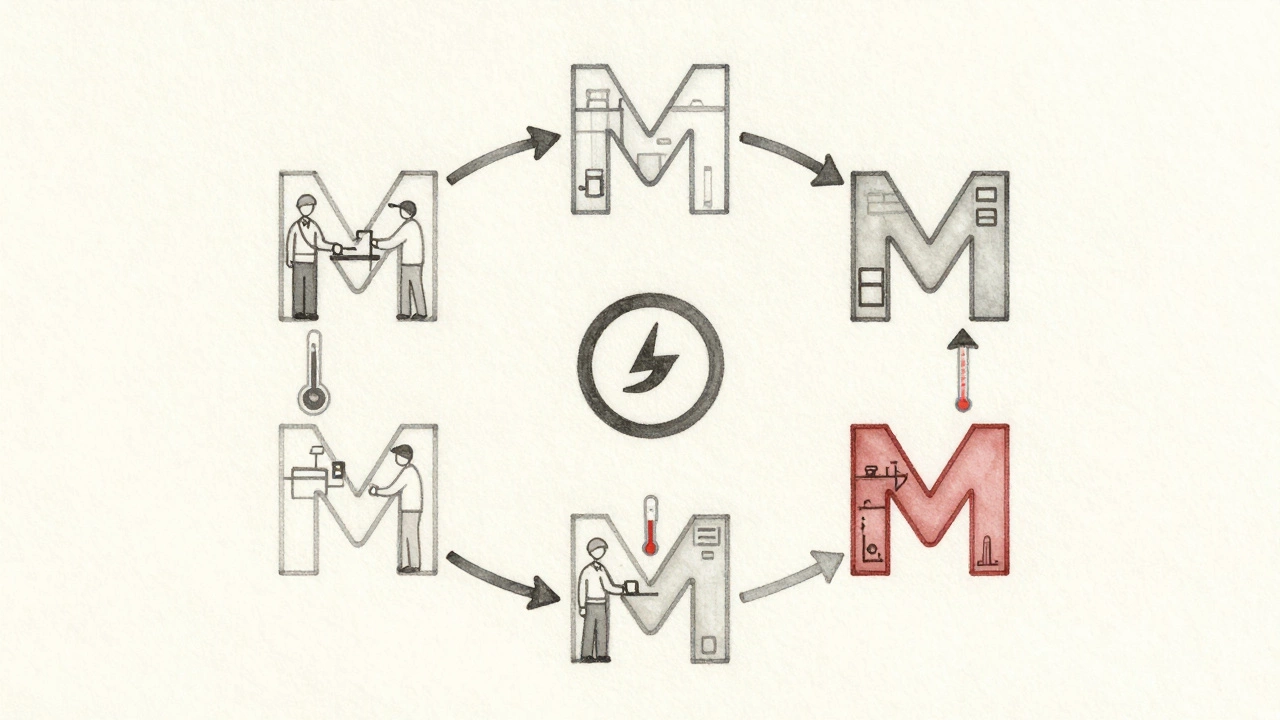
The 6M framework breaks down every possible cause of a manufacturing problem into six clear categories. Think of it like a checklist you run through when something goes wrong. Each "M" stands for a different area that could be causing trouble:- Man - The people working the machines
- Machine - Equipment, tools, robots, conveyors
- Material - Raw parts, components, chemicals, supplies
- Method - How the work is done: procedures, sequences, instructions
- Measurement - How you check quality: gauges, sensors, inspections
- Environment - Temperature, humidity, lighting, cleanliness, noise
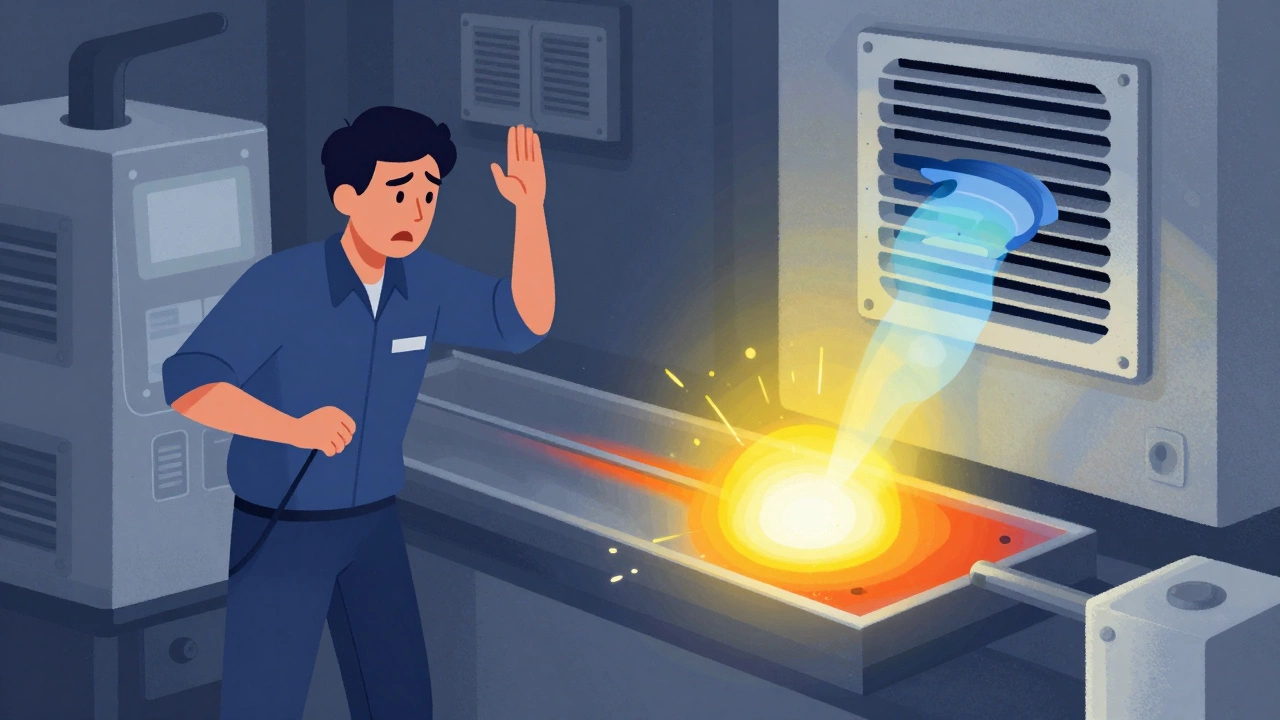
These aren’t just buzzwords. Each one has real, measurable impact. For example, a factory in the West Midlands kept having misaligned welds. They checked the machines-fine. The material-no defects. Then they looked at the environment. Turns out, the welding bay got too cold after 4 p.m. when the heating shut off. The metal contracted slightly, throwing off the weld position. Fixing the temperature cut defects by 70% in two weeks.
Why the 6M Method Works Better Than Guessing
Most factories jump to conclusions. "The machine is broken." "The operator made a mistake." But problems rarely have one cause. The 6M method forces you to look at all angles before blaming anyone.Take a case from a food processing plant in Staffordshire. Bottles kept leaking during filling. First guess? The capping machine. They replaced it. Leaks didn’t stop. Then they checked the bottles themselves. Same brand, same supplier. But the new batch came from a different warehouse. The glass thickness had changed slightly. The capping machine, set for the old bottle specs, was under-tightening. The problem wasn’t the machine-it was the material. And the measurement system didn’t catch it because no one was checking bottle wall thickness.
Without the 6M structure, they’d have wasted thousands on a new capper and still had leaks. With it, they found the real issue in one afternoon.
How to Use the 6M Method Step by Step
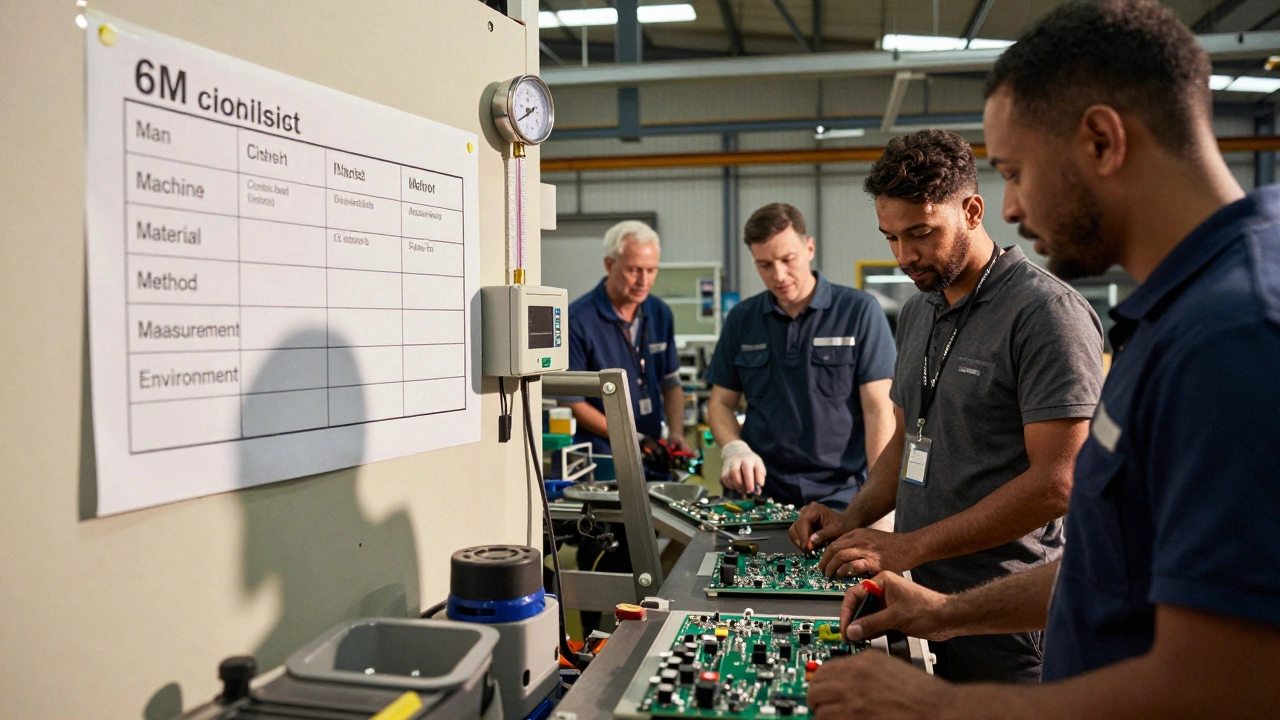
You don’t need a PhD to use this. Here’s how a team in a small electronics factory in Birmingham uses it:- Define the problem clearly. Not "things are slow." But "5% of circuit boards fail final test, mostly between 10 a.m. and noon."
- Grab your team. Include someone who runs the machine, someone who checks quality, and someone who orders materials.
- Go to the spot. Don’t sit in a meeting room. Go to the line. Watch the process. Take notes.
- Ask "Why?" for each M. For Man: Is the operator trained? Are they tired? Are they following the checklist? For Machine: When was it last calibrated? Any unusual sounds? For Material: Are components from the same batch? Any recent supplier changes?
- Test one fix at a time. Don’t change everything. Change the environment first-raise the room temp by 2°C. See if failure rate drops. Then try something else.
- Measure the result. Use the same measurement tool you used to spot the problem. If the failure rate drops, you found it. If not, move to the next M.
This isn’t magic. It’s discipline. The best factories don’t have the fanciest machines-they have teams that stick to this process every single time something goes wrong.
Common Mistakes People Make with the 6M
Even experienced teams mess this up. Here’s what usually goes wrong:- Skipping Environment. Everyone focuses on people and machines. But temperature, dust, or even a flickering light can mess with sensors or cause operator fatigue. In one case, a plastic molding plant had inconsistent part weights. Turns out, the air conditioning was cycling on and off near the injection machines. The plastic cooled too fast during certain hours.
- Blaming the person. If an operator makes a mistake, it’s often because the method is unclear. Maybe the instructions are on a printed sheet that’s faded. Or the training was done six months ago and never updated.
- Not measuring properly. If you’re using a ruler to check a part that needs a micrometer, you’re not measuring-you’re guessing. Poor measurement systems hide problems instead of exposing them.
- Thinking it’s a one-time fix. The 6M isn’t a fire drill. It’s a daily habit. The best factories review one 6M case every morning during their 10-minute huddle.
6M vs Other Methods: Why It Stands Out
You’ve probably heard of 5S, Six Sigma, or Kaizen. They’re all useful. But here’s how 6M is different:| Method | Focus | Best For | Time to Use |
|---|---|---|---|
| 6M | Root causes of specific defects or failures | Immediate line issues: downtime, defects, rework | 15 minutes to 2 hours |
| 5S | Workplace organization | Reducing clutter, improving safety | Days to weeks |
| Six Sigma | Statistical variation reduction | Long-term quality improvement | Weeks to months |
| Kaizen | Continuous small improvements | Process efficiency, waste reduction | Ongoing, daily |
6M is the fastest way to solve a problem that’s happening right now. It doesn’t require fancy software or statistical training. Any worker can learn it in an hour. That’s why it’s the go-to tool in small and medium factories across the UK and Europe.
Real Impact: Numbers That Matter
A 2025 survey of 127 UK manufacturing sites using the 6M method showed:- Average 42% reduction in defect rates within 30 days
- 31% fewer machine stoppages due to operator error
- 27% faster problem resolution time
- 89% of teams said they felt more confident solving problems after using 6M
These aren’t guesses. They’re from a report by the Manufacturing Growth Programme, a government-backed initiative that helps small manufacturers improve. The 6M method is one of the most recommended tools because it works fast and doesn’t cost anything.
Getting Started with 6M in Your Factory
You don’t need to overhaul your whole operation. Start small:- Pick one recurring problem: a machine that jams every Friday, or a batch of parts that keeps failing inspection.
- Print out the 6M checklist. Hang it near the machine.
- Ask your team: "Which of these six could be causing this?" Let them talk. Don’t interrupt.
- Try one fix. Measure the result. Repeat.
Within a week, you’ll start seeing patterns. And you’ll stop wasting time chasing ghosts.
Is 6M the same as 5M or 4M?
Some industries use fewer M’s, like 5M (leaving out Environment) or 4M (Man, Machine, Material, Method). But in modern manufacturing, Environment matters more than ever. Temperature swings affect metal expansion, humidity changes how plastics cool, and lighting impacts visual inspections. The full 6M version is the most reliable for today’s complex production lines.
Do I need special software to use 6M?
No. You can use a whiteboard, a printed sheet, or even a notebook. The power of 6M is in the thinking, not the tool. Some companies use apps or digital forms, but those are just for record-keeping. The real value comes from talking to your team and watching the process.
Can 6M be used for non-production problems?
Absolutely. The same framework works for supply chain delays, inventory errors, or even warehouse picking mistakes. Replace "machine" with "system," "material" with "documents," and "environment" with "work culture." The logic stays the same.
Who should lead a 6M session?
Not necessarily the manager. The best 6M sessions are led by someone who works on the line every day. They know the quirks of the machine and the rhythm of the shift. A supervisor can facilitate, but the people who do the work should drive the discussion.
How often should we use the 6M method?
Use it every time something goes wrong. But also, use it proactively. Set a weekly 15-minute slot to review one small issue-even if it seems minor. That’s how great factories stay great. It’s not about fixing big disasters. It’s about stopping small ones before they grow.