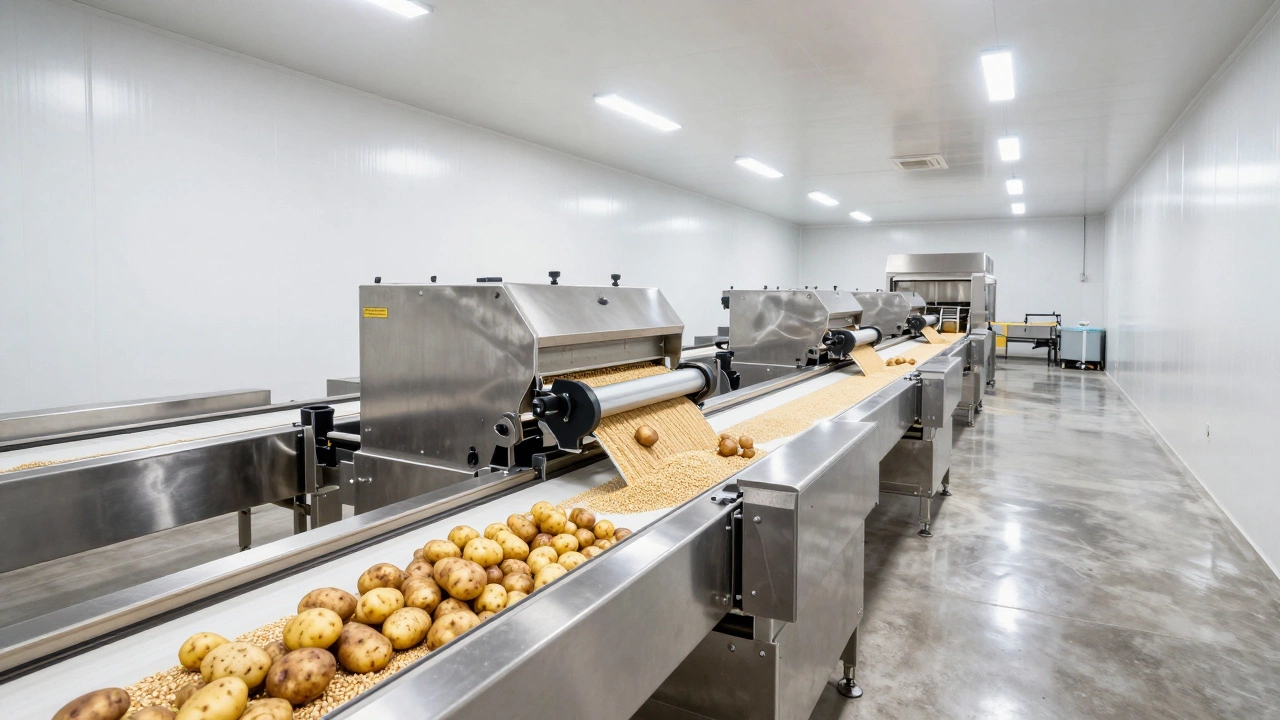
Food Processing Unit Simulator
Select a raw ingredient or product below to see how it moves through a Food Processing Unit and what requirements are needed to manufacture it.
🌾
Wheat
🥔
Potato
🥛
Milk
🥩
Meat
Product Path
Processing Level
Primary
Description here...
Secondary
Description here...
Tertiary
Description here...
Facility Requirements
- List
- Point
Standard: 304/316 Stainless Steel & Coving floors required for all units.
Basically, a food processing unit is a dedicated industrial facility where raw food materials are transformed into value-added products through mechanical, chemical, or biological processes. These units range from tiny artisanal workshops making organic jam to massive, automated factories producing thousands of tons of frozen peas per day. Whether it's pasteurizing milk or milling wheat into flour, these units are the bridge between the farm and your dinner table.
Quick Summary of Food Processing Units
- Primary Purpose: Extend shelf life, improve safety, and increase the nutritional or culinary value of raw ingredients.
- Scale: Can range from small-scale cottage industries to large industrial complexes.
- Core Processes: Includes cleaning, sorting, heating, cooling, drying, and packaging.
- Regulation: Heavily governed by health and safety laws to prevent foodborne illnesses.
The Different Levels of Processing
Not all food units do the same thing. Depending on what comes out the other end, we categorize them by the intensity of the processing. If you're looking to start a business or just curious about the supply chain, you need to know where a unit fits in this hierarchy.
First, there are primary processing units. These are the "rough" stages. Think of a Grain Mill or a slaughterhouse. Here, the goal is simply to make the raw material usable. They remove the inedible parts-like husks from corn or wool from sheep-and prepare the product for the next stage. You won't find a lot of "cooking" here; it's all about cleaning and basic separation.
Then we move to secondary processing. This is where the real magic happens. This is the domain of the Bakery or the canning plant. In these units, primary processed ingredients are combined, cooked, and preserved. For example, a primary unit produces flour; a secondary unit takes that flour, adds yeast and water, and bakes it into bread. This stage is where most branding and consumer-facing packaging occur.
Finally, there is tertiary processing. This is the high-tech side of things. These units create "ultra-processed" foods-think ready-to-eat meals or complex snack foods. They often use techniques like extrusion or chemical stabilization to create textures and flavors that don't exist in nature. If you're eating a protein bar that lasts two years on a shelf, it came from a tertiary processing unit.
Key Components of a Modern Production Plant
Walking into a professional unit is a bit like walking into a laboratory. Everything is designed to minimize human contact and maximize hygiene. If you've ever seen a food plant on TV, you know the white coats and hairnets, but the machinery is the real star.
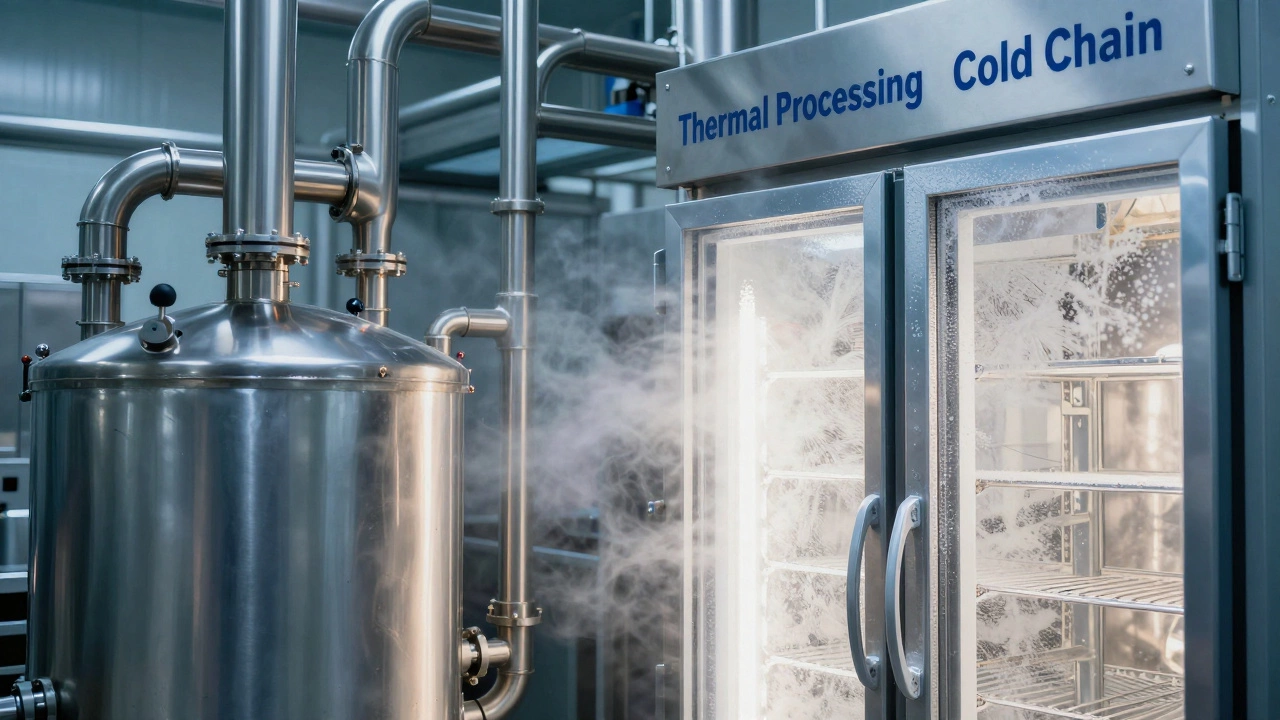
The heart of most units is the Cold Chain. This isn't one machine, but a system of Industrial Refrigeration units and blast freezers that keep perishables from spoiling. Without a tight cold chain, a meat processing unit would be a health hazard within hours. These systems use precise temperature controls to slow down bacterial growth.
Then there is the Thermal Processing zone. This is where Pasteurization and sterilization happen. By heating liquids or solids to a specific temperature for a set time, units kill off pathogens like Salmonella or E. coli. For instance, a milk processing unit uses a heat exchanger to flash-heat milk, ensuring it's safe to drink without boiling away the nutrients.
Lastly, you have the Packaging and Labeling section. Modern units use automated vacuum sealers or Modified Atmosphere Packaging (MAP). MAP replaces the oxygen inside a bag of salad with a mixture of nitrogen and carbon dioxide, which tricks the vegetables into "sleeping," extending their freshness from three days to two weeks.
| Unit Type | Primary Goal | Example Process | Typical Output |
|---|---|---|---|
| Primary Unit | Basic Preparation | Hulling, Sorting | Wheat Kernels, Raw Meat |
| Secondary Unit | Value Addition | Baking, Canning | Loaf of Bread, Canned Soup |
| Tertiary Unit | Convenience/Stability | Extrusion, Reconstitution | Frozen Pizza, Snack Bars |
The Rules of the Game: Safety and Compliance
You can't just rent a warehouse and start processing food. The risks of contamination are too high. Every legitimate unit must follow strict guidelines. In the US, the FDA (Food and Drug Administration) sets the rules, while in Europe, agencies like the EFSA handle it.
The gold standard for any unit is HACCP (Hazard Analysis and Critical Control Points). This isn't just a certificate; it's a systematic approach to food safety. Instead of checking the food at the end, a HACCP-compliant unit identifies "critical points" during production. For example, in a jam-making unit, the boiling point is a critical control point. If the temperature doesn't hit 100°C, the batch is flagged as unsafe and discarded before it ever reaches a jar.
Another huge factor is Sanitary Design. This means the physical layout of the unit. You won't find 90-degree corners in a professional food plant because bacteria love to hide in corners where mops can't reach. Instead, floors are curved up into the walls (called coving), and stainless steel-specifically 304 or 316 grade-is used for every surface because it doesn't react with food acids and is easy to sanitize with high-pressure steam.
Common Challenges in Food Unit Management
Running a food unit isn't all smooth sailing. One of the biggest headaches is Waste Management. In a potato processing unit, a huge percentage of the raw material ends up as peelings or bruised tubers. Smart units now use "upcycling" to turn this waste into animal feed or biogas, reducing the environmental footprint and cutting costs.
Then there's the Seasonality Struggle. A fruit canning unit might be working 24/7 in August but sitting completely silent in January. This creates a massive challenge for staffing and cash flow. Many modern units solve this by diversifying-processing peaches in the summer and pears or apples in the autumn.
Finally, there's the pressure of Traceability. If a customer gets sick from a batch of spinach, the unit needs to be able to trace that specific bag back to the exact field and the exact hour it was harvested. This is why most units now use blockchain or advanced ERP systems to log every single movement of a raw ingredient.
Future Trends: Where are Food Units Heading?
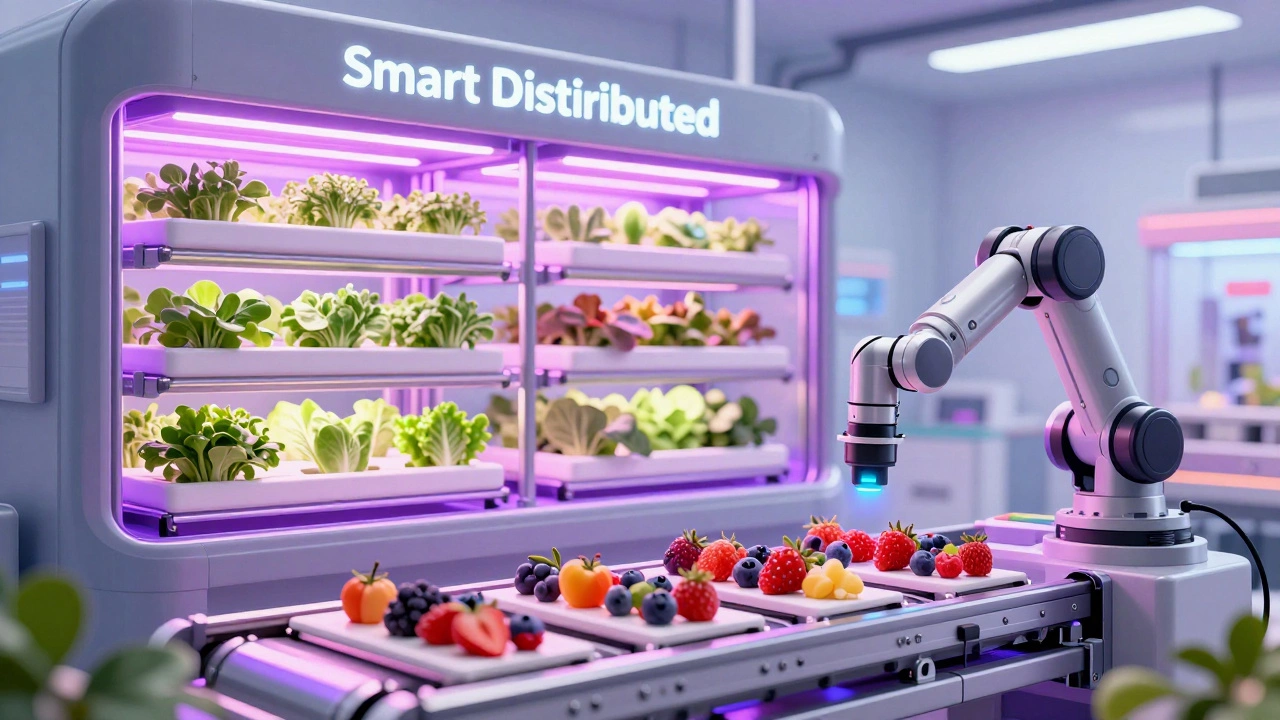
The industry is moving away from "massive and centralized" toward "smart and distributed." We're seeing the rise of Vertical Farming units where the processing happens right next to the growing area, eliminating the need for long-haul trucking.
Automation is also hitting an all-time high. Robotic arms now handle the delicate task of sorting berries by color and size using AI-powered cameras. This doesn't just speed things up; it removes the human element, which is the primary source of contamination in most plants.
We're also seeing a shift toward Clean Label Processing. Consumers want fewer chemicals. This is pushing units to adopt "High Pressure Processing" (HPP). Instead of using heat or chemicals to preserve juice, HPP puts the food under insane amounts of water pressure, which crushes bacteria but keeps the fresh taste and vitamins intact. It's a game-changer for the health-food sector.
Is a kitchen considered a food processing unit?
Technically, a home kitchen processes food, but in an industrial context, a "food processing unit" refers to a commercial facility that meets specific regulatory, sanitary, and scale requirements. A professional restaurant kitchen is a service unit, whereas a factory that makes frozen meals for stores is a processing unit.
What is the difference between a food plant and a food unit?
The terms are often used interchangeably. However, a "plant" usually refers to the entire physical complex, while a "unit" can refer to a specific section of that plant (like the dehydration unit or the packaging unit) or a smaller, single-purpose facility.
What are the most common machines used in food processing?
Common machinery includes industrial centrifuges for separating liquids, conveyor belts for transport, homogenizers to ensure a consistent texture, blast chillers for rapid cooling, and automated filling and sealing machines for packaging.
Why is stainless steel used in food units?
Stainless steel is non-porous, meaning it doesn't absorb food particles or harbor bacteria. It's also resistant to corrosion from the harsh cleaning chemicals (like caustic soda) used to sanitize equipment between production runs.
How does food processing improve food safety?
Processing removes harmful pathogens through heat (pasteurization), reduces moisture to prevent mold (drying), or uses vacuum sealing to stop aerobic bacteria from growing. It essentially creates an environment where pests and microbes cannot survive.
Next Steps for Aspiring Operators
If you're thinking about setting up your own unit, don't start with the machines. Start with the Regulations. Contact your local health department to understand the zoning laws and sanitary requirements for your specific food type. A mistake in the floor drainage or ventilation can cost you thousands of dollars to fix once the concrete is poured.
Next, map out your Workflow. A food unit should move in one direction: Raw $ ightarrow$ Processed $ ightarrow$ Packaged. If your raw ingredients cross paths with your finished products, you risk cross-contamination, which is a major red flag during a health inspection.
Finally, look into Equipment Sourcing. Don't just buy the cheapest machine. Look for equipment that is easy to disassemble for cleaning. If a machine takes four hours to take apart and scrub, your labor costs will eat your profits. Focus on "CIP" (Clean-in-Place) systems that allow you to sanitize the inside of pipes and tanks without dismantling them.