- How Much Does It Cost to Start a Furniture Business in India? Nov 25, 2025
- Exploring India's Groundbreaking Car Inventions Jan 17, 2025
- How to Start a Manufacturing Business from Zero: Step-by-Step Guide for Beginners Nov 17, 2025
- Who is the King of Textiles? Apr 16, 2025
- What Are the Six Primary Types of Manufacturing? Jan 30, 2026
Indigenous Car Manufacturing in India: What’s Really Made Here
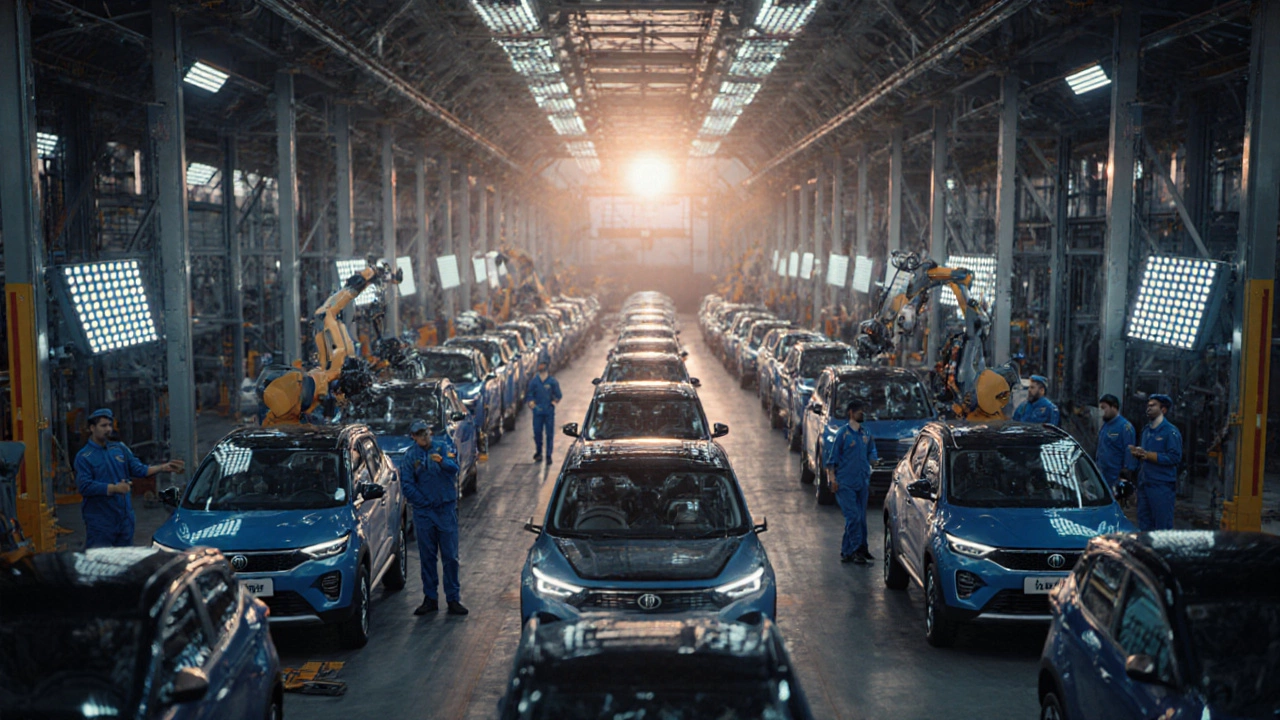
When we talk about indigenous car manufacturing, the process of designing and building vehicles primarily within India using local parts, labor, and infrastructure. Also known as local car production, it’s not just about putting an Indian sticker on a foreign design—it’s about building the whole thing here, from the chassis to the software. The Indian government pushed hard for this with the Make in India campaign, but not every car labeled ‘Made in India’ actually is. Some still import key parts like engines, transmissions, or ECUs from abroad. True indigenous manufacturing means over 90% of the vehicle’s value comes from within India’s borders.
What makes a car truly Indian? It’s not just where it’s assembled. It’s about the local supply chain, the network of Indian suppliers providing components like axles, wiring harnesses, seats, and even battery packs for EVs. Companies like Mahindra and Tata Motors have gone further than most—they design their own platforms, develop their own engines, and source over 85% of parts domestically. Compare that to some foreign brands that assemble here but still rely on imported modules. Then there’s the car localisation, the process of adapting foreign designs to use Indian-made parts and meet local conditions like heat, dust, and road quality. That’s where real innovation happens—not just saving money, but building cars that work better here.
India doesn’t just want to make cars. It wants to make them smarter, cleaner, and more affordable. That’s why EVs like the Tata Tiago and Mahindra eKUV100 are part of the next wave—they’re designed here, built here, and powered by batteries made in India. The real test isn’t how many cars roll off the line—it’s how many parts come from Indian factories, how many engineers worked on the design, and how much of the R&D happened in Pune, Hyderabad, or Jamshedpur. The posts below cut through the noise. You’ll find exact models that are 100% made in India, the hidden truth behind marketing claims, and what’s coming next as India tries to become a global auto hub—not just an assembly plant.
Automobile Manufacturing
Which car brands are made in India?
- Aarav Sekhar
- Oct 27, 2025
Discover which car brands are actually made in India, from Tata and Mahindra to Maruti Suzuki and Hyundai. Learn how India became a global auto manufacturing hub with locally designed, exported vehicles.