Semiconductor Job Impact Calculator
Job Creation Impact
India's semiconductor push aims to create over 1 million jobs by 2030. Based on the article's data:
- Each fab creates 5,000-8,000 direct jobs
- Each fab creates up to 20,000 indirect jobs
- Government targets 1 million+ jobs by 2030
Projected Job Creation
Direct Jobs
Indirect Jobs
Total Jobs
Note: These estimates are based on the article's data: 5,000-8,000 direct jobs per fab and up to 20,000 indirect jobs per fab.
For years, India imported nearly all its semiconductors-from the chips in smartphones to the ones powering traffic lights and medical devices. But that’s changing. In 2022, India announced its semiconductor manufacturing push with a $10 billion incentive scheme. Fast forward to 2026, and the country isn’t just talking anymore. Factories are breaking ground. Deals are being signed. And the first Indian-made chips are starting to roll off production lines.
Why India Needs Its Own Chips
India is the second-largest smartphone market in the world. It’s also a growing hub for electronics assembly, with companies like Apple, Samsung, and Xiaomi setting up massive production lines here. But here’s the problem: every single chip inside those devices comes from Taiwan, South Korea, or the United States. That means India is dependent on global supply chains that can snap shut overnight-like during the pandemic, when chip shortages delayed millions of phones and TVs.
Then there’s national security. Critical infrastructure-from defense systems to power grids-relies on chips. Relying on foreign suppliers for these isn’t just risky; it’s a vulnerability. And with the U.S.-China tech war heating up, countries are racing to build domestic chip capacity. India couldn’t afford to stay out.
The Government’s Big Bet: $10 Billion Incentives
In December 2022, India’s government launched the India Semiconductor Mission (ISM). The goal? Attract global players to set up chip fabrication plants (fabs) and packaging units on Indian soil. The incentive? Up to 50% of project costs covered by the government, with some projects getting even more.
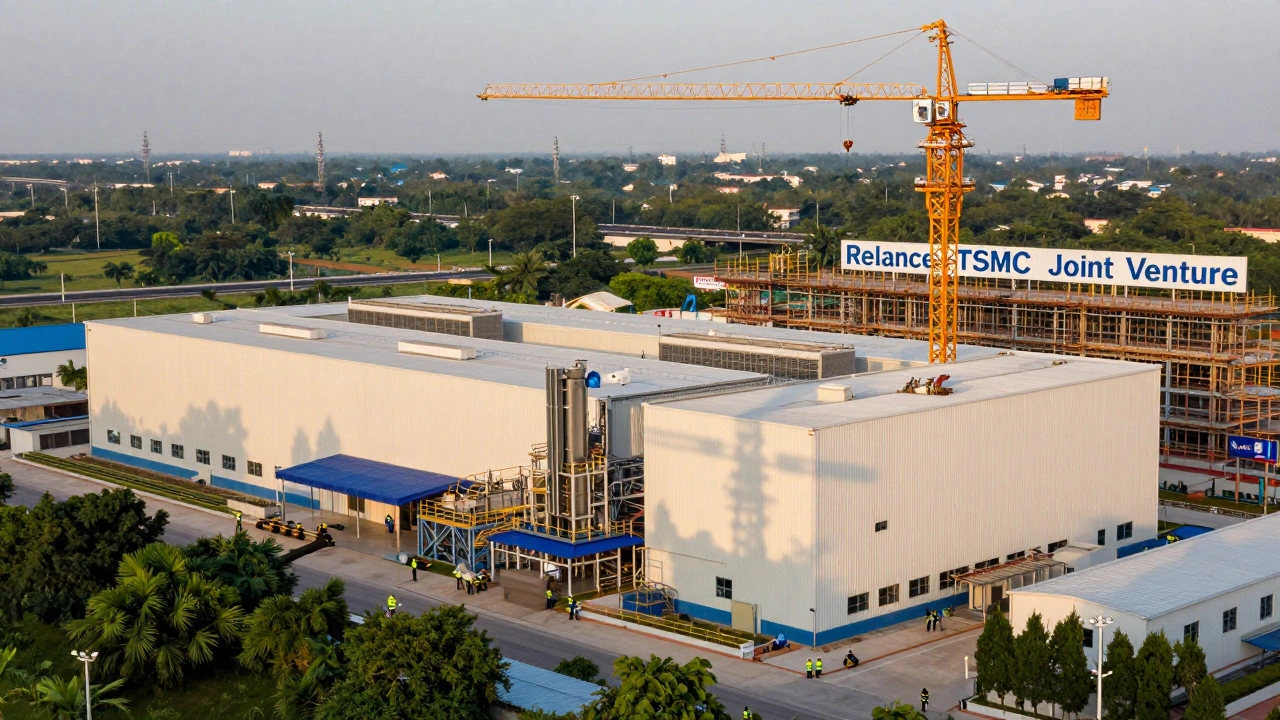
The first big win came in 2023 when Reliance Industries partnered with Taiwan Semiconductor Manufacturing Company (TSMC) to build a $12 billion chip plant in Gujarat. It’s not a full fab-it’s a packaging and testing facility-but it’s the first of its scale in India. By 2026, it will process over 20 million chips a month for global brands.
Then came Graphene Semiconductor, an Indian startup backed by the government, which announced its own $2.5 billion fab in Karnataka. It’s not building cutting-edge 3nm chips yet, but it’s focused on mature nodes-28nm and 40nm-that power everything from cars to smart home devices. These chips are easier to make, cheaper, and still in massive global demand.
Who’s Already Making Chips in India?
It’s not just big names. Smaller players are stepping up too.
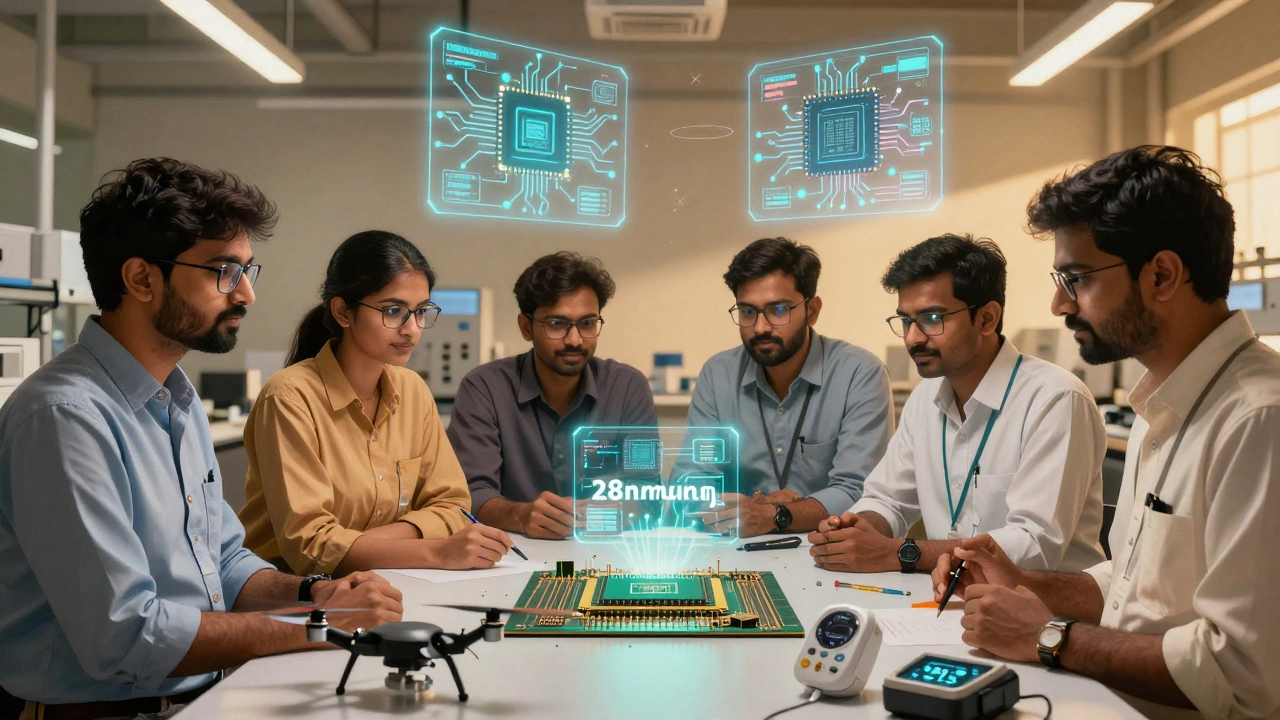
- Garuda Aerospace started designing its own drone chips in 2024 to avoid export controls. Now, it’s producing them in-house in Bengaluru.
- CEAT, India’s tire maker, began using locally packaged microcontrollers in its smart tires after global supply delays.
- Wipro and Tata Consultancy Services (TCS) are now designing custom chips for industrial automation, partnering with Israeli and Japanese firms to handle the fabrication abroad but doing the R&D in India.
Even the Indian Space Research Organisation (ISRO) has started using domestically designed radiation-hardened chips in its satellites. These aren’t flashy, but they’re vital. And they prove India can make chips under extreme conditions.
What’s Still Missing?
India isn’t going to make Apple’s A18 chips tomorrow. It doesn’t have the infrastructure for cutting-edge nodes like 3nm or 2nm yet. Building those requires ultra-pure water, extreme ultraviolet (EUV) lithography machines, and highly specialized labor-all of which take decades to develop.
Instead, India is focusing on what’s called the "mature node" market: chips made on 28nm, 40nm, and even 90nm processes. These are used in:
- Automotive systems (engine control units, sensors)
- Industrial machinery
- Smart meters and grid controllers
- Medical devices like glucose monitors
- Basic smartphones and IoT gadgets
That’s a smart move. Global demand for these chips is rising-not falling. In fact, TSMC and Intel are expanding their mature node capacity because the market for them is growing faster than the cutting-edge market.
Challenges on the Ground
It’s not all smooth sailing. India still lacks:
- A deep pool of chip design engineers-only about 5,000 in the country, compared to 200,000 in Taiwan.
- Reliable, 24/7 power supply-chip fabs need uninterrupted electricity.
- Water treatment systems capable of recycling 95%+ of ultra-pure water used in manufacturing.
- Domestic suppliers for chemicals and gases used in chip production.
Training programs are being rolled out. The Indian Institute of Technology (IIT) network now offers specialized semiconductor courses. The government is partnering with Intel and Qualcomm to set up skill centers in Tamil Nadu and Telangana.
One major hurdle? Land acquisition. Building a chip plant needs 50-100 acres of flat, stable land near ports and highways. In states like Uttar Pradesh and Maharashtra, bureaucratic delays have slowed projects by over a year.
The Real Test: Will Companies Stay?
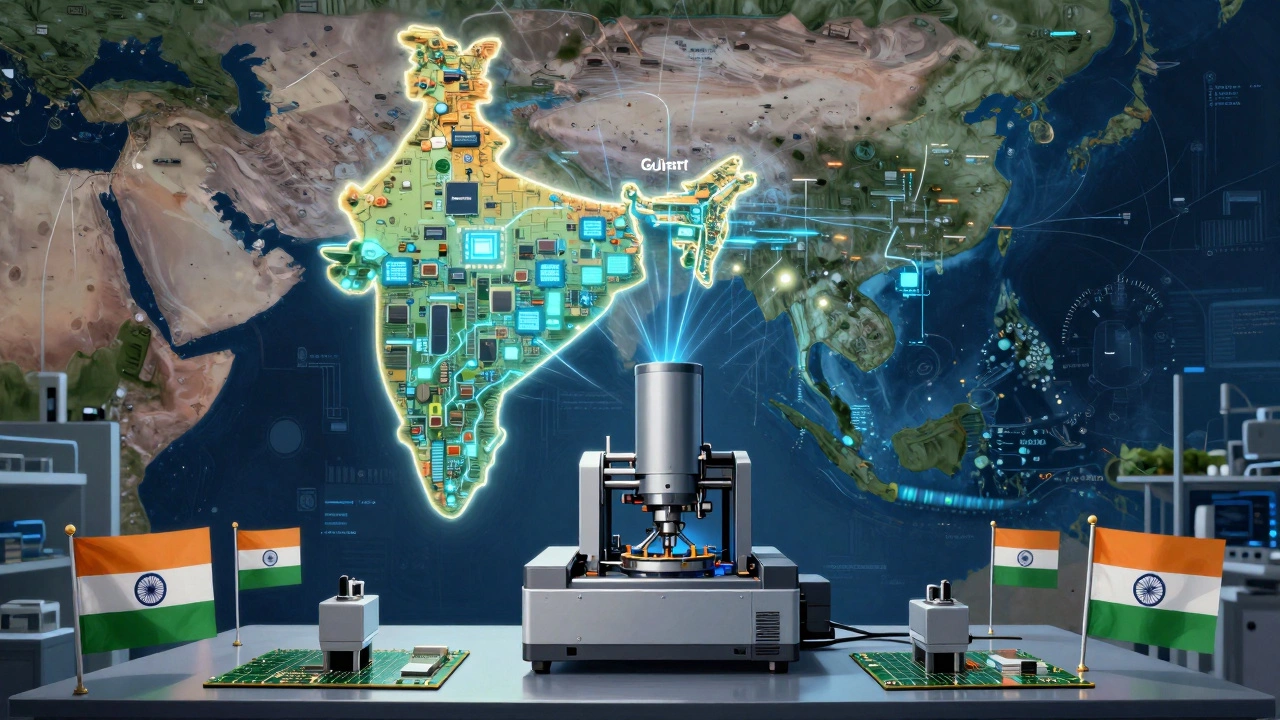
Incentives are great-but they’re temporary. The real question is whether global companies will keep investing after the 5-year subsidy period ends. That’s why India is pushing for long-term deals: tax holidays, streamlined customs, and even dedicated industrial zones for semiconductor manufacturing.
One telling sign? In late 2025, Applied Materials and Lam Research, two U.S. chip equipment giants, opened their first India service centers. They’re not just selling machines-they’re training local technicians to maintain them. That’s a sign they believe India’s chip industry is here to stay.
What This Means for India
If India succeeds, it won’t just make chips. It will transform its entire tech ecosystem.
- Startups won’t have to wait six months for a chip shipment-they’ll get them locally.
- Electronics assembly plants will stop paying extra for imported components.
- Engineers will stay in India instead of moving to Silicon Valley or Singapore.
- India could become a regional hub for Southeast Asia and Africa, supplying chips to countries that can’t afford to build their own fabs.
By 2030, India could produce 15-20% of the world’s mature-node chips. That’s not just manufacturing. That’s economic sovereignty.
What Comes Next?
India’s next goal? Building its own EUV lithography machine. It’s a 10-year project, but ISRO and DRDO are already working on prototypes. It’s ambitious. But if China can build one, why not India?
For now, the message is clear: India isn’t trying to beat Taiwan. It’s carving out its own space. And that space? It’s real. It’s growing. And it’s already making chips.
Can India make the same chips as Taiwan or South Korea?
Not yet, and not in the same way. Taiwan and South Korea lead in cutting-edge chips like 3nm and 2nm used in iPhones and AI servers. India is focusing on mature-node chips (28nm and above), which are simpler to produce and still in high demand for cars, appliances, and industrial gear. India’s goal isn’t to replace TSMC-it’s to fill a gap in the global market that’s been ignored.
Are Indian-made chips reliable?
Yes, for the applications they’re designed for. Chips made in India’s first fabs are already being tested in Indian-made electric scooters, medical devices, and smart meters. Early reports from the Indian Standards Institute show these chips meet global reliability benchmarks. They’re not perfect, but they’re good enough-and getting better fast.
Will India’s chip plants create jobs?
Absolutely. Each chip fab creates 5,000-8,000 direct jobs-engineers, technicians, logistics staff-and up to 20,000 indirect jobs in suppliers, construction, and services. The government estimates the semiconductor push could create over 1 million jobs by 2030, mostly in Tier-2 and Tier-3 cities.
Why not just buy chips from abroad?
Because supply chains are unstable. During the 2021-2023 chip shortage, India’s electronics assembly plants sat idle for months. Importing chips also means losing control over pricing, delivery schedules, and future innovation. Making chips locally means India can build its own tech future instead of waiting for someone else to decide what it gets.
How long until India exports chips?
Already happening. In late 2025, India shipped its first batch of locally packaged chips to Vietnam and Thailand for use in automotive sensors. By 2027, exports are expected to hit $2 billion annually, mostly to Southeast Asia and Africa. India won’t be the biggest exporter-but it will be a new player on the map.