Steel Origin & Application Advisor
Select your project type and priority to receive data-driven recommendations on steel sourcing based on quality, cost, and supply chain resilience.
You might have heard the claim that American steel is superior to its Chinese counterpart. It’s a common talking point in construction sites, auto showrooms, and political debates. But is it actually true? The short answer is: it depends on what you need the steel for. If you’re building a skyscraper in an earthquake zone or a high-performance sports car, the nuances of metallurgy matter. If you’re making rebar for a standard concrete foundation, the price tag might matter more.
This isn’t just about national pride; it’s about chemistry, regulation, and economics. To understand why many engineers prefer one over the other, we have to look under the hood at how these materials are made, where they come from, and what risks they carry in your final product.
Key Takeaways
- American steel typically offers higher consistency and traceability due to strict environmental and safety regulations.
- Chinese steel dominates the market with lower costs but faces scrutiny over carbon emissions and potential substandard practices in smaller mills.
- The choice often comes down to application-specific requirements: critical infrastructure favors US/EU steel, while cost-sensitive projects may opt for Asian imports.
- Supply chain resilience has become a key factor post-2024, pushing buyers toward diversified sources rather than relying solely on the cheapest option.
The Chemistry of Trust: Why Origin Matters
When we talk about steel quality, we aren’t just talking about strength. We’re talking about predictability. In engineering, a material that behaves exactly as expected every single time is worth more than a material that is stronger on average but unpredictable.
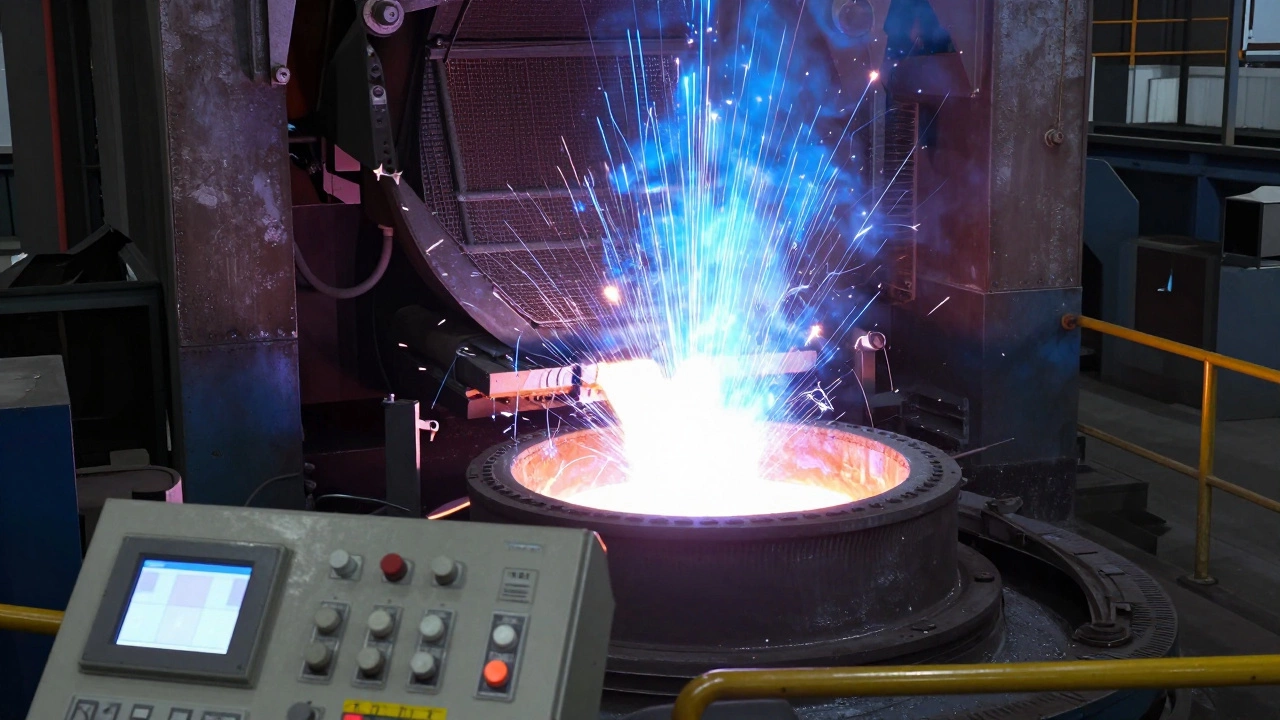
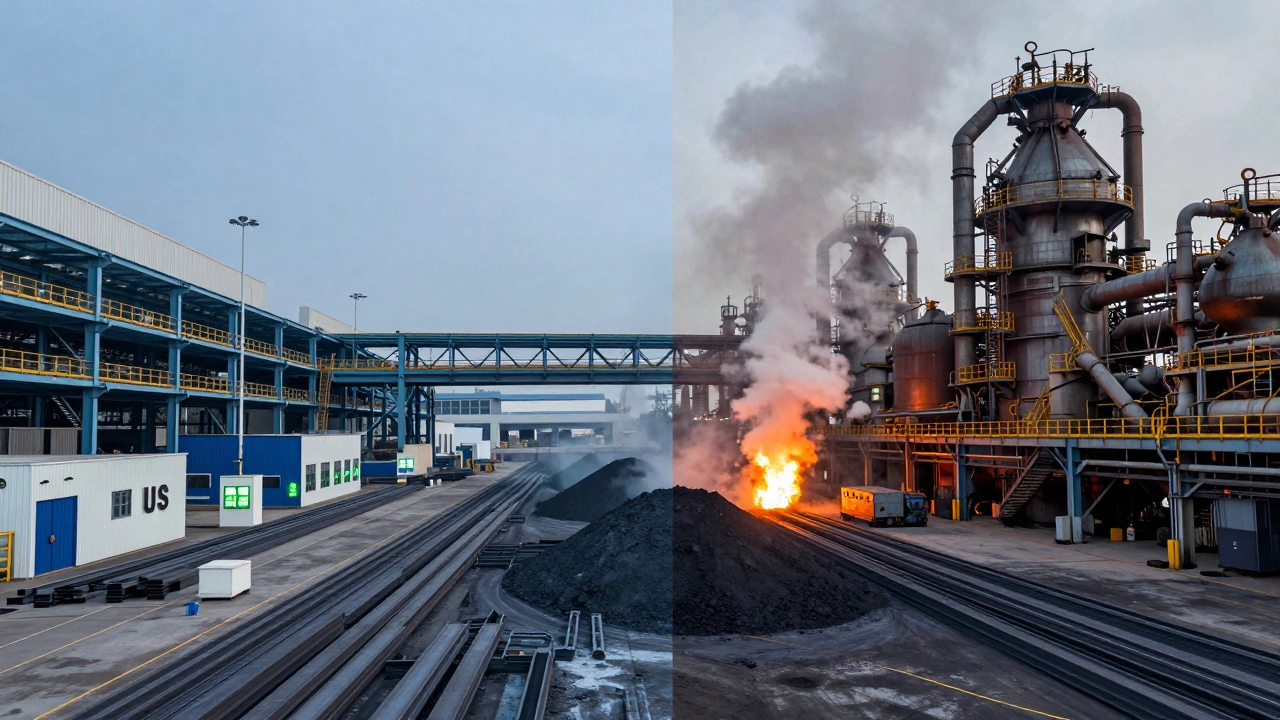
Here is where the production methods diverge significantly. The United States relies heavily on Electric Arc Furnaces (EAFs). These furnaces melt down scrap metal using electricity. This process allows for precise control over the chemical composition of the final alloy. Because the input material is recycled scrap, the resulting steel can be tailored for specific properties like weldability or corrosion resistance.
In contrast, China still operates a massive number of Basic Oxygen Furnaces (BOFs) alongside EAFs. BOFs use iron ore and coal (coke) to produce steel. While this method is efficient for mass production, it historically struggled with consistency in smaller, less regulated mills. Although China has consolidated its industry through mergers-creating giants like China Baowu Steel Group, the world’s largest steelmaker-the legacy of varied quality standards persists in the perception of global buyers.
Think of it like coffee. You can buy a bulk bag of beans cheaply, but if you want a consistent espresso shot every morning, you pay for the precision roast and bean origin. In structural engineering, that consistency prevents catastrophic failures.
Regulatory Frameworks: The Invisible Quality Control
One of the biggest differentiators between American and Chinese steel isn’t the machinery-it’s the rulebook. The United States enforces stringent environmental and labor laws. Agencies like the Environmental Protection Agency (EPA) monitor emissions closely. This forces US mills to invest in cleaner technology, which often correlates with better overall process control.
For example, stricter limits on sulfur and phosphorus impurities in US steel mean fewer weak points in the final product. These elements can make steel brittle, especially in cold temperatures. When you build a bridge in Minnesota, you don’t want the steel becoming glass-like in winter. US standards mandate rigorous testing for these impurities.
China has tightened its own regulations significantly since 2016, cracking down on illegal small-scale mills. However, enforcement can vary by region. A mill in Shanghai might adhere to international ISO standards, while a smaller facility in a remote province might cut corners to save costs. This variability creates a risk premium for buyers who source from China without direct oversight.
| Factor | United States | China |
|---|---|---|
| Dominant Production Method | Electric Arc Furnace (EAF) (~70%) | Mixed BOF and EAF (~50/50) |
| Environmental Oversight | Federal EPA mandates, strict penalties | National targets, local enforcement varies |
| Traceability | High (Mill certifications required) | Moderate (Improving, but documentation gaps exist) |
| Carbon Intensity | Lower (due to EAF/scrap usage) | Higher (coal-dependent BOF dominance) |
Cost vs. Value: The Economic Reality
Let’s address the elephant in the room: price. Chinese steel is often cheaper. Sometimes significantly so. This isn’t because the atoms are different; it’s because of economies of scale, lower labor costs, and state subsidies.
For a developer building affordable housing units, the savings on steel beams can mean the difference between profit and loss. In these scenarios, "better" doesn’t always mean "best." It means "good enough for the application at a viable price." Many Chinese mills now produce steel that meets ASTM (American Society for Testing and Materials) standards perfectly well. The issue arises when buyers assume all Chinese steel is created equal, or when suppliers substitute lower-grade material without disclosure.
However, hidden costs exist. If a batch of imported steel fails inspection on site, the delay costs money. If a structure requires welding repairs due to inconsistent grain structure, labor costs spike. American steel commands a premium partly because it reduces these administrative and logistical headaches. You know what you’re getting, and the paperwork usually matches the physical product.
Supply Chain Resilience in 2026
By 2026, the conversation around steel has shifted from pure cost to supply chain security. The geopolitical tensions of the early 2020s taught manufacturers a harsh lesson: reliance on a single source is risky. Tariffs, trade wars, and shipping disruptions have made diversification essential.
Many large construction firms and automotive manufacturers have adopted a "friend-shoring" strategy. They prioritize steel from countries with aligned regulatory frameworks and stable political relations. For European and North American companies, this means favoring US, Canadian, and EU steel producers. It’s not just about quality anymore; it’s about ensuring the material arrives when promised.
Additionally, the rise of carbon border adjustments (CBAM) in the European Union and similar discussions in the US means that high-carbon steel from coal-heavy regions will face additional taxes. This levels the playing field slightly, making the "cheap" advantage of some Chinese steel less attractive for export-oriented markets.
Application-Specific Recommendations
So, which should you choose? Here is a practical guide based on common use cases:
- Critical Infrastructure (Bridges, Skyscrapers): Opt for US or EU steel. The traceability and consistent mechanical properties justify the higher cost. Failure here is not an option.
- Automotive Components: High-strength low-alloy (HSLA) steels from integrated mills in the US or Japan offer the best balance of formability and strength. Many automakers source globally but require rigorous certification.
- Construction Rebar and General Fabrication: Chinese steel can be a viable option if sourced from reputable, large-scale mills with verified third-party inspections. Ensure contracts specify exact chemical compositions and include penalty clauses for non-compliance.
- Sustainable Projects: Look for steel produced via Hydrogen Direct Reduced Iron (DRI) or EAF with green energy. The US and Sweden are leading this transition. If sustainability is a KPI, avoid coal-based BOF steel regardless of origin.
How to Verify Steel Quality Regardless of Origin
If you decide to import steel, don’t rely on trust alone. Implement these verification steps:
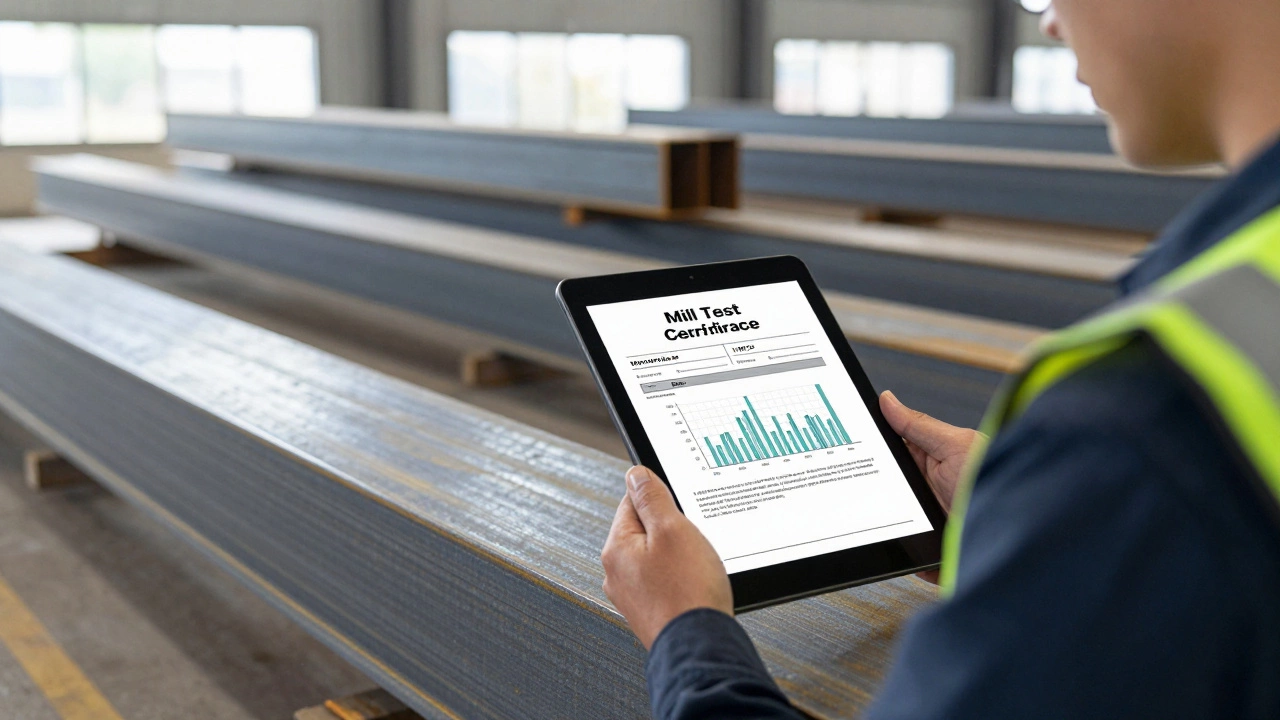
- Request Mill Test Certificates (MTC): These documents detail the chemical analysis and mechanical test results of the specific heat of steel. Cross-reference them with independent lab tests.
- Use Third-Party Inspection: Hire agencies like SGS or Bureau Veritas to inspect shipments before they leave the port of origin.
- Conduct Incoming Material Tests: Perform ultrasonic testing or tensile tests on a sample of each delivery upon arrival.
- Check Supplier History: Work with suppliers who have a long track record with major international projects. New entrants may lack the quality control systems needed for consistent output.
Is American steel actually stronger than Chinese steel?
Not necessarily. Strength depends on the specific grade and alloy composition, not the country of origin. Both countries produce high-strength steel grades that meet international standards. However, American steel is often perceived as more reliable due to stricter quality control and consistency in production processes.
Why is Chinese steel so much cheaper?
Chinese steel benefits from massive economies of scale, lower labor costs, abundant domestic raw materials (like iron ore), and historical government subsidies. Additionally, the widespread use of Basic Oxygen Furnaces, which are efficient for large volumes, contributes to lower per-ton production costs compared to some Western methods.
Can I use Chinese steel for residential construction?
Yes, provided it meets local building codes and standards (such as ASTM or EN standards). Many reputable Chinese mills produce compliant steel. The key is to verify the supplier’s credentials and ensure proper documentation and testing accompany the shipment.
What is the environmental impact difference between US and Chinese steel?
US steel generally has a lower carbon footprint because a larger portion is produced in Electric Arc Furnaces using recycled scrap metal. Chinese steel production relies more heavily on coal-fired Basic Oxygen Furnaces, resulting in higher CO2 emissions per ton of steel. However, China is rapidly investing in greener technologies to reduce this gap.
How do tariffs affect the choice between American and Chinese steel?
Tariffs increase the cost of imported steel, making domestic options more competitive. In the US, Section 232 tariffs have historically protected domestic producers. Buyers must calculate whether the pre-tariff price advantage of Chinese steel outweighs the added duty costs and potential supply chain delays.