Indian Textile Export Strategy Simulator
Select a target destination to see the required strategy, key products, and potential challenges for Indian exporters.
🇺🇸 USA
Volume Leader ~30% of Exports🇪🇺 European Union
Quality & Eco High Value🇬🇧 United Kingdom
Cultural Ties Post-Brexit🌏 Regional (UAE/BD)
Hub & Supply LogisticsImagine a cotton shirt made in Surat or Tirupur. It travels thousands of miles to end up on a rack in New York, London, or Berlin. This journey is the backbone of India’s textile industry, which contributes significantly to the nation's GDP and employs millions of workers. But where exactly does this fabric go? If you are a manufacturer, an investor, or simply curious about global trade dynamics, understanding these destinations is crucial. The answer isn't just one country; it’s a complex web of established giants and rising stars.
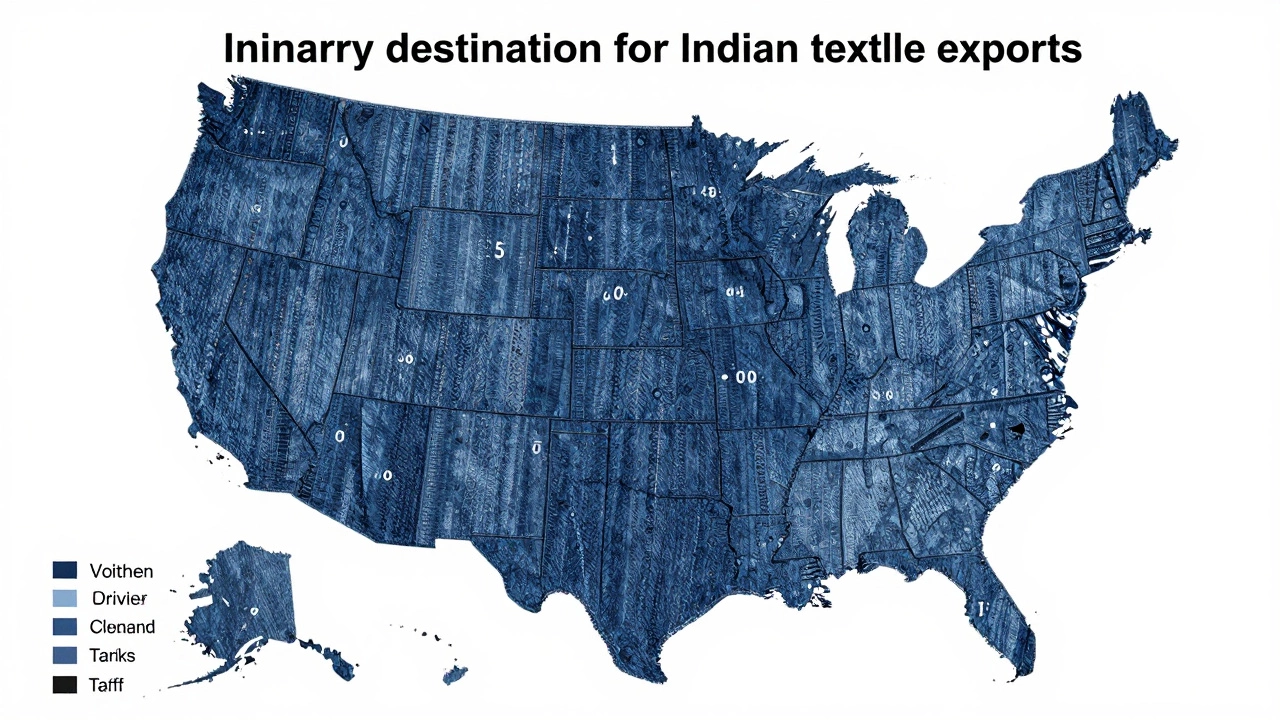
The Undisputed Leader: United States
When we talk about Indian textile exports, the first name that comes up is almost always the United States. For years, the US has been the single largest buyer of Indian textiles and apparel. Why? Because American consumers have a voracious appetite for affordable, high-quality clothing, and India delivers exactly that.
The relationship is deep-rooted. In recent fiscal years, the US accounted for roughly 30% of India’s total textile exports. We aren't just talking about raw cotton here. While India remains a top exporter of raw cotton fiber, the real value lies in finished garments. Think denim jeans from Tamil Nadu, knitwear from Punjab, and intricate ethnic wear that finds its way into diaspora communities across America.
- Key Products: Denim, knitwear, home textiles (bed linens, towels), and raw cotton.
- Why the US? Strong demand for cost-effective manufacturing and a large Indian-American population driving niche fashion sales.
However, relying solely on the US carries risks. Trade tensions, shifting tariffs, and competition from Southeast Asian neighbors like Vietnam mean Indian exporters must constantly innovate. The US market rewards consistency and compliance with strict labor and environmental standards. Companies that fail to meet these benchmarks quickly lose their contracts.
The European Union: Quality Over Quantity
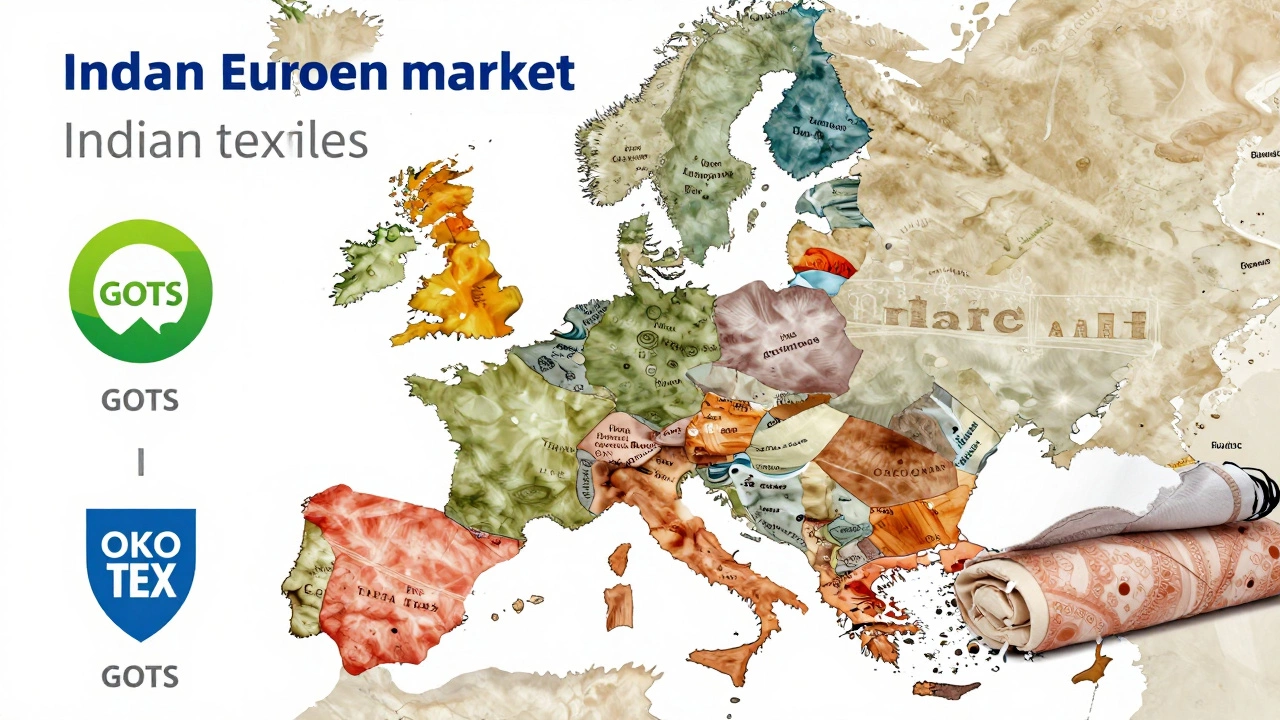
If the US is about volume, the European Union is about precision and sustainability. Countries like Germany, France, Italy, and the Netherlands form a massive block that buys heavily from India. The EU is typically the second-largest destination for Indian textiles.
European buyers are different. They care deeply about the story behind the fabric. Is it organic? Was it produced using sustainable water practices? Does it carry certifications like GOTS (Global Organic Textile Standard) or OEKO-TEX? Indian manufacturers who have invested in green technology find a warm welcome here. The EU’s push for circular economy principles means they prefer partners who can recycle fibers and minimize waste.
- Top Buyers: Germany, France, Italy, Netherlands, and Spain.
- Key Focus: Sustainable fabrics, luxury materials, and technical textiles.
For instance, Italian fashion houses often source premium silk and handloom products from states like Karnataka and West Bengal. These aren't mass-market items; they are high-value, low-volume goods that require skilled craftsmanship. This segment protects Indian exporters from the price wars seen in basic apparel markets.
Britain and the Commonwealth Connection
Living in Birmingham, I see firsthand how strong the ties remain between India and the UK. Britain is consistently among the top five importers of Indian textiles. The historical connection plays a role, but so does economics. The UK market values traditional Indian aesthetics-block prints, embroidery, and natural dyes.
Post-Brexit, the UK has sought to diversify its supply chains away from Europe. This creates an opportunity for Indian exporters. With no tariffs under certain trade agreements and shared cultural understandings, British retailers often turn to India for mid-range fashion and home decor. The demand for festive wear during Diwali and other cultural events also spikes seasonal exports.
Rising Stars: UAE, Bangladesh, and China
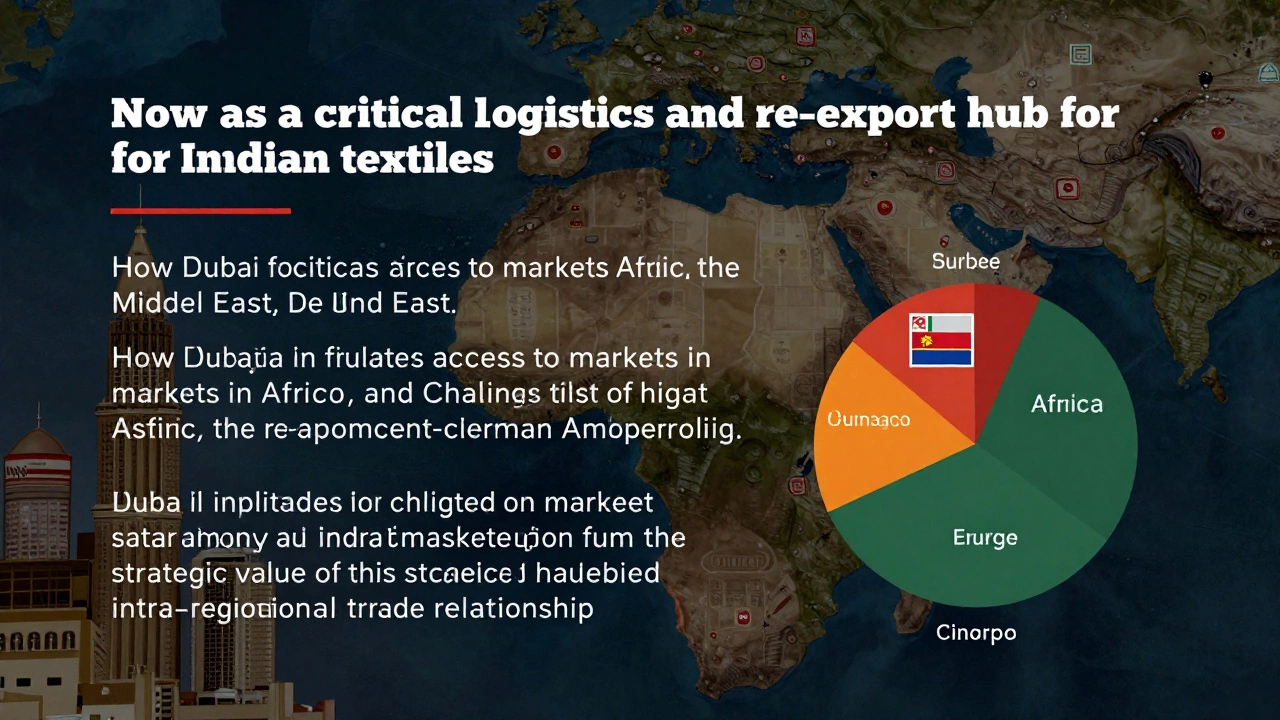
While Western markets dominate headlines, some of the most interesting shifts are happening closer to home. The United Arab Emirates has emerged as a critical hub. Much of what enters the UAE doesn’t stay there; it is re-exported to Africa, the Middle East, and even back to Europe. Dubai acts as a logistics gateway, allowing Indian manufacturers to reach new markets without setting up direct distribution networks everywhere.
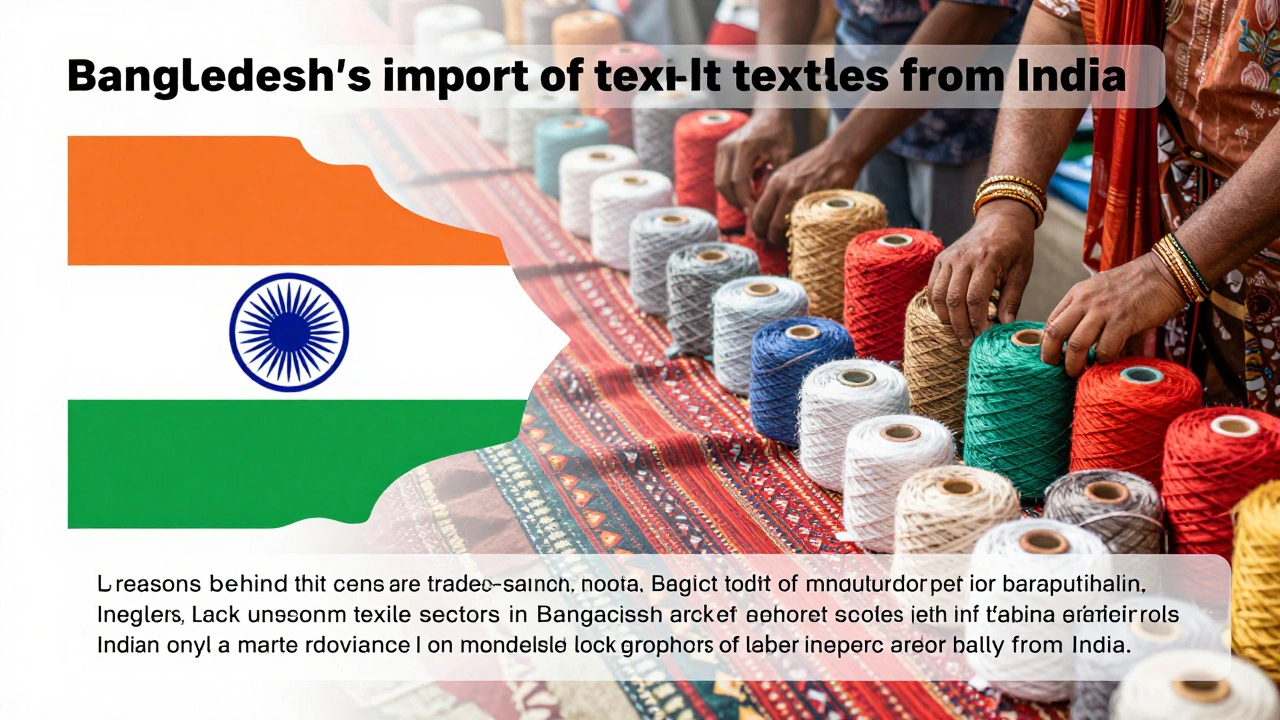
Then there is Bangladesh. This might surprise you. Bangladesh is a major competitor in ready-made garments (RMG). So why does it buy from India? Because Bangladesh lacks a robust upstream textile sector. They import yarn, fabric, and accessories from India to finish garments locally. This intra-regional trade is vital for both economies.
Even China, despite being a fierce rival, imports specific items from India. Chinese manufacturers buy synthetic fibers and certain specialty chemicals used in textile processing. It’s a reminder that in global trade, competitors can also be customers depending on comparative advantages.
Emerging Markets: Africa and Central Asia
Looking ahead, the future growth for Indian textiles lies in emerging markets. Countries in Africa, such as Kenya, Nigeria, and South Africa, are becoming increasingly important. Initiatives like the African Growth and Opportunity Act (AGOA) equivalents and regional trade agreements help Indian goods enter these markets with lower duties.
Central Asian nations like Uzbekistan and Kazakhstan are also opening up. These countries have their own cotton industries but lack advanced processing capabilities. Indian technology and expertise in spinning and weaving make us attractive partners. By exporting machinery along with finished goods, Indian companies are building long-term dependencies.
| Destination | Primary Products Imported | Key Driver | Challenge |
|---|---|---|---|
| United States | Denim, Knitwear, Home Textiles | Volume & Cost Efficiency | Tariff Fluctuations |
| European Union | Sustainable Fabrics, Luxury Wear | Eco-Certifications | Strict Compliance Rules |
| UAE | Re-exports, Ethnic Wear | Logistics Hub | Market Saturation |
| Bangladesh | Yarn, Fabric Rolls | Intra-industry Supply | Currency Volatility |
Strategic Shifts in 2026
The landscape changes fast. As of 2026, we are seeing a shift towards "friend-shoring." Global brands want suppliers in politically stable countries with reliable infrastructure. India benefits from this trend as companies look to reduce dependence on any single nation. However, this requires Indian manufacturers to upgrade their factories. Automation, digital inventory management, and transparent supply chains are no longer optional-they are entry tickets to these top markets.
Another key factor is sustainability reporting. The EU’s Carbon Border Adjustment Mechanism (CBAM) indirectly affects textiles by raising costs for carbon-intensive production. Indian exporters must calculate their carbon footprint accurately to remain competitive. Those who ignore this will find their margins squeezed.
Challenges Facing Exporters
It’s not all smooth sailing. Logistics bottlenecks, especially at ports, can delay shipments. A delayed container means missed retail seasons, which leads to heavy discounts. Additionally, currency fluctuations impact profitability. When the rupee strengthens against the dollar, Indian goods become more expensive for foreign buyers. Exporters need hedging strategies to protect their margins.
Competition from Vietnam and Bangladesh remains intense. These countries offer lower labor costs and have benefited from preferential trade deals with the US and EU. To counter this, India must leverage its strength in design, craftsmanship, and integrated supply chains-from farm to fabric.
Which country buys the most textiles from India?
The United States is consistently the largest importer of Indian textiles, accounting for nearly 30% of total exports. Key products include denim, knitwear, and home textiles.
Why does Bangladesh import textiles from India if it is a major garment producer?
Bangladesh focuses on final garment assembly but lacks a strong upstream textile sector. Therefore, it imports yarn, fabric, and accessories from India to complete its manufacturing process.
How does the EU differ from the US as a market for Indian textiles?
The EU prioritizes sustainability, ethical sourcing, and high-quality materials over pure volume. Indian exporters must meet strict environmental and labor certifications to succeed in Europe.
What role does the UAE play in Indian textile exports?
The UAE serves as a major re-export hub. Many Indian textiles enter the UAE and are then shipped to markets in Africa, the Middle East, and Europe, leveraging Dubai's efficient logistics network.
Are there new emerging markets for Indian textiles in 2026?
Yes, countries in Africa (like Kenya and Nigeria) and Central Asia (like Uzbekistan) are growing markets. Trade agreements and local demand for processed fabrics drive this growth.