Food Processing Unit Operation Identifier
🔬
Operation Name
CategoryDescription goes here.
Common Equipment:
--
Example Products:
--
Key Principle:
--
Ready to analyze. Select your material and goal to see which unit operation is required. This tool uses principles from chemical engineering applied to food science.
Have you ever wondered why your morning yogurt is smooth, your canned beans are safe to eat years later, and your frozen pizza stays crispy? It’s not magic. It’s the result of precise unit operations, which are the fundamental physical steps used to transform raw agricultural materials into safe, stable, and palatable food products. In the world of food processing, these operations form the backbone of every manufacturing line, from small-scale artisanal kitchens to massive industrial plants. Understanding how these operations are classified helps engineers design better equipment, managers optimize production lines, and quality control specialists ensure safety.
The concept of unit operations was borrowed from chemical engineering in the early 20th century. The idea is simple: no matter what food you are making-whether it’s cheese, juice, or chicken nuggets-you are essentially performing a handful of basic physical tasks. By classifying these tasks, we can standardize equipment, predict energy usage, and troubleshoot problems more effectively. Instead of seeing food processing as a chaotic mix of unique recipes, we see it as a modular system of repeatable steps.
Mechanical Separation and Size Reduction
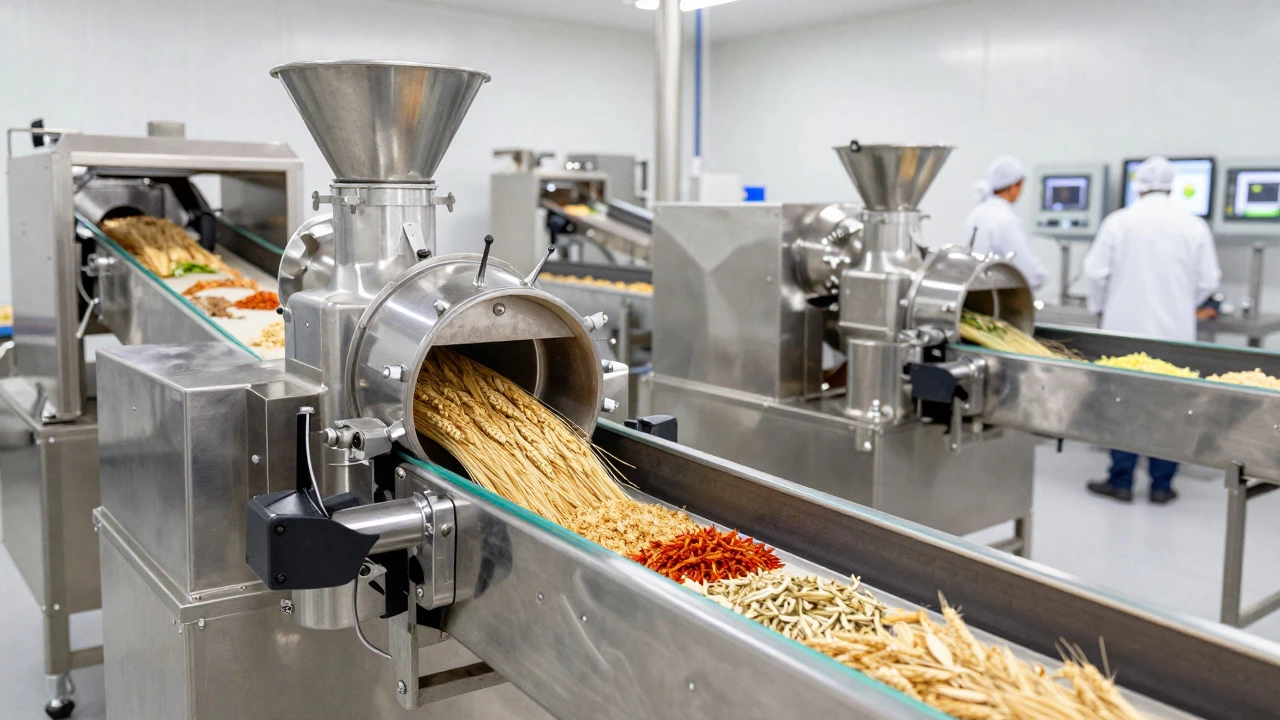
The first thing that happens to almost any raw ingredient is that it needs to be cleaned, sorted, or broken down. This falls under the category of mechanical unit operations. These processes rely on physical forces rather than heat or chemistry to change the state of the food.
Size reduction is one of the most common starting points. Think about grinding wheat into flour or crushing coffee beans. The goal here is to increase the surface area of the material. Why does this matter? Because a larger surface area allows for faster extraction of flavors, quicker cooking times, and better mixing. However, there’s a catch: excessive grinding generates heat, which can damage sensitive nutrients like vitamins or alter the taste profile of delicate ingredients like spices. Engineers use crushers, grinders, and mills, each designed for specific textures and moisture levels.
Once the material is sized correctly, it often needs to be separated from impurities or other components. Mechanical separation includes techniques like sieving, filtration, and centrifugation. For example, when you make orange juice, the pulp needs to be removed from the liquid. A filter press or a centrifuge spins at high speeds to separate the heavier solids from the lighter liquid based on density differences. In dairy processing, separators spin milk to divide cream from skim milk. These operations are purely physical, meaning they don’t change the chemical structure of the food, but they drastically affect its texture and appearance.
Thermal Processing: Heat Transfer and Preservation
If mechanical operations prepare the food, thermal operations preserve it. Heat transfer is perhaps the most critical classification in food safety. The primary goal is to destroy pathogenic microorganisms-bacteria, viruses, and parasites-that cause foodborne illnesses. But heat also activates enzymes that can spoil food if left unchecked, so controlling temperature is non-negotiable.
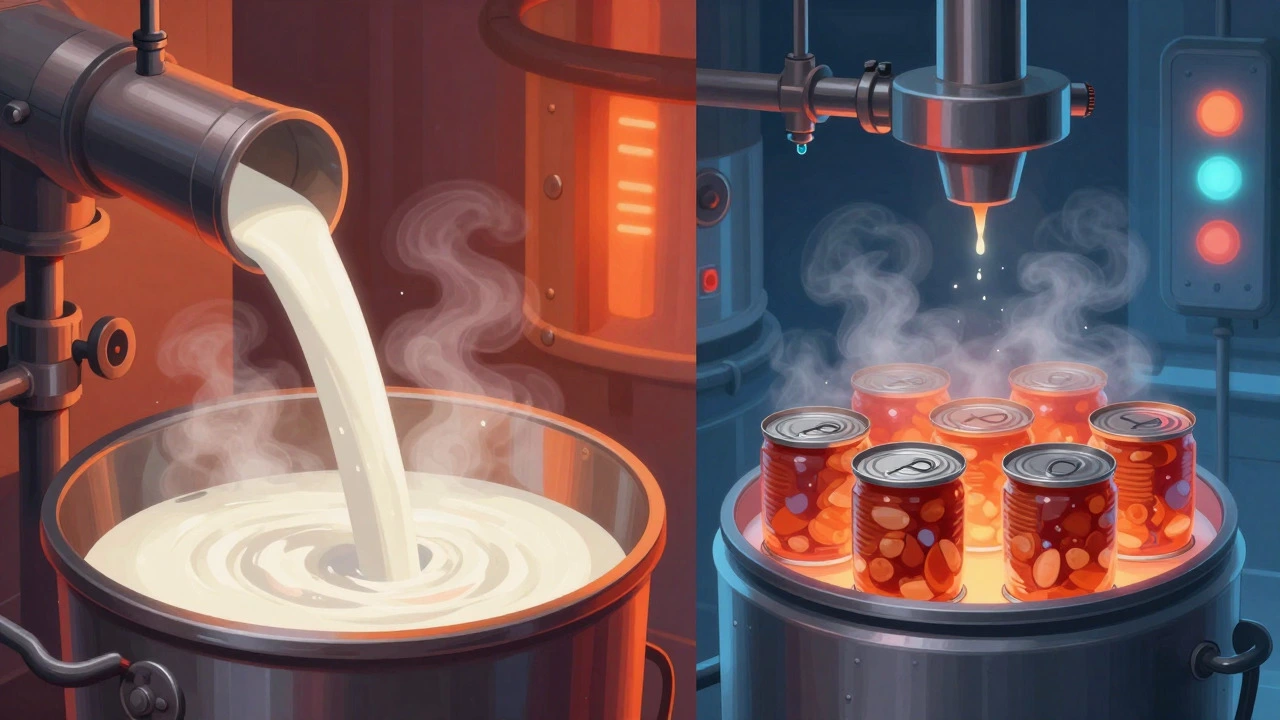
There are several ways to apply heat, each with distinct advantages. Pasteurization involves heating liquids like milk or juice to a specific temperature (usually between 72°C and 85°C) for a short time, then rapidly cooling them. This kills harmful bacteria without significantly altering the taste or nutritional value. On the other end of the spectrum is Sterilization, or commercial sterilization, used for canned goods. Here, food is heated to temperatures above 100°C under pressure to kill even the toughest bacterial spores, such as those from Clostridium botulinum. This allows products to be stored at room temperature for months or years.
But heat isn’t always applied directly. Sometimes, it’s transferred through conduction, convection, or radiation. Microwaves use dielectric heating, where water molecules vibrate to generate internal heat. This is fast but can lead to uneven cooking if not carefully controlled. Meanwhile, traditional boiling or steaming relies on convection, where hot air or water circulates around the food. Choosing the right method depends on the food’s sensitivity. Delicate fruits might suffer from nutrient loss in boiling water, so steam blanching is preferred to retain color and vitamin C.
Cooling and Freezing: Managing Cold Energy
Just as heat preserves food by killing microbes, cold preserves it by slowing them down. Refrigeration and freezing are essential unit operations that manage the kinetic energy of molecules. When you cool food, you reduce the rate of chemical reactions and microbial growth. But there’s a big difference between chilling and freezing.
Chilling keeps food just above its freezing point, typically between 0°C and 4°C. This is ideal for fresh produce, dairy, and meats that need to remain ready-to-eat. Freezing, however, drops the temperature below the freezing point, turning water inside the food into ice crystals. The size of these crystals matters immensely. If you freeze food too slowly, large ice crystals form, puncturing cell walls and causing mushy texture upon thawing. That’s why blast freezers are used in industry-they freeze food rapidly, creating tiny crystals that preserve cellular integrity. Think of the difference between store-bought frozen berries and ones you froze at home; the industrial version usually retains its shape and firmness because of controlled freezing rates.
Another consideration is freezer burn. This occurs when sublimation takes place-ice turns directly into vapor, leaving dry, discolored patches on the food. Proper packaging and maintaining consistent low temperatures are crucial to preventing this. Modern facilities use vacuum packing or modified atmosphere packaging alongside freezing to extend shelf life further.
Mass Transfer Operations: Drying and Concentration
Water is both a blessing and a curse in food processing. It carries flavor and nutrients, but it also supports microbial growth. Removing water is a key strategy for preservation, leading us to mass transfer operations. These involve moving substances from one phase to another, such as evaporating water from a liquid solution or drying solid foods.
Evaporation is commonly used to concentrate liquids like fruit juices, milk, or tomato puree. By boiling off water under reduced pressure (vacuum evaporation), manufacturers can achieve higher concentrations at lower temperatures, preserving heat-sensitive compounds. For instance, condensed milk is made by removing about 60% of the water from regular milk. This not only extends shelf life but also intensifies flavor.
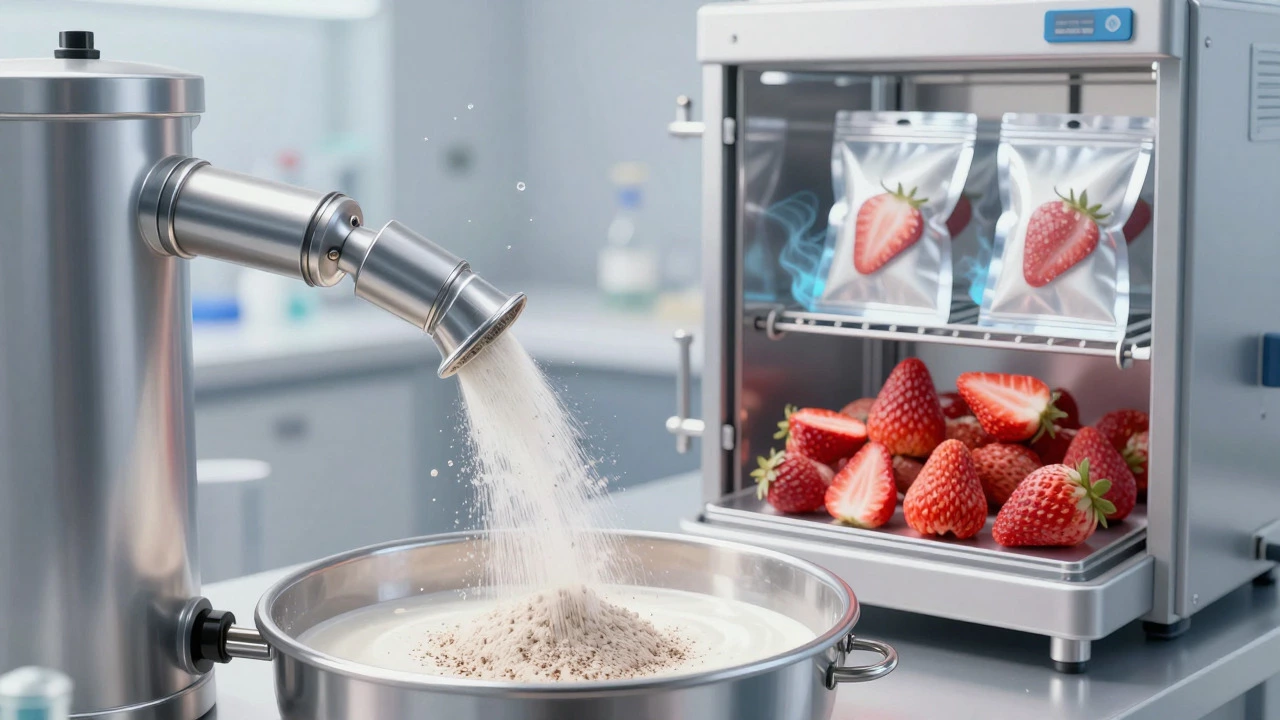
For solid foods, Drying is the go-to method. Techniques range from simple sun-drying to sophisticated spray drying. Spray drying is particularly interesting: a liquid feed is atomized into fine droplets and sprayed into a hot gas stream. The water evaporates instantly, leaving behind a powder. This is how instant coffee, powdered milk, and egg powders are made. The challenge lies in controlling particle size and preventing caking. If the particles are too hygroscopic, they absorb moisture from the air and clump together, ruining the product’s usability.
Freeze-drying, or lyophilization, represents the premium end of drying. Here, food is frozen and then placed in a vacuum chamber where ice sublimes directly into vapor. This process removes up to 98% of water while retaining nearly all original structure, flavor, and nutrients. Astronauts rely on freeze-dried meals because they rehydrate quickly and weigh almost nothing. While expensive, it’s worth it for high-value products like strawberries or herbs where quality is paramount.
Mixing, Blending, and Emulsification
Not all unit operations involve changing temperature or moisture. Some are about combining ingredients uniformly. Mixing and blending ensure that flavors, colors, and additives are distributed evenly throughout the product. Imagine making mayonnaise: you need oil, vinegar, egg yolk, and mustard to blend into a stable emulsion. Without proper agitation, the oil would separate and float to the top.
Emulsification is a specialized type of mixing where two immiscible liquids (like oil and water) are forced together using surfactants and high-shear mixers. The surfactant reduces surface tension, allowing tiny droplets of one liquid to suspend in the other. This principle applies to salad dressings, ice cream, and chocolate. In chocolate production, conching-a prolonged mixing and heating process-develops flavor and smooths out texture by reducing particle size and removing volatile acids.
Homogenization is another critical operation, especially in dairy. Milk naturally separates into cream and skim layers. Homogenizers force milk through narrow valves at high pressure, breaking fat globules into microscopic sizes that stay suspended. This gives milk its uniform white appearance and prevents cream from rising to the top. Without homogenization, every glass of milk would require shaking before drinking.
Filtration and Clarification
Clarity matters in beverages. Whether it’s beer, wine, apple juice, or tea, consumers expect a clear, bright product. Filtration removes suspended solids, yeast cells, and haze-forming proteins. There are various methods depending on the desired level of clarity.
Simple screen filters remove large particles, while depth filters trap smaller impurities within a porous medium. Membrane filtration goes even finer, using semi-permeable membranes to block bacteria or viruses. Ultrafiltration, for example, can separate proteins from whey, producing high-protein supplements. Microfiltration is gentler, often used to pasteurize milk without heat, extending shelf life while keeping natural flavors intact.
In winemaking, fining agents like bentonite clay are added to bind with proteins that cause cloudiness. After settling, the clear wine is filtered again. Each step requires careful monitoring to avoid stripping desirable aromas along with the haze. Over-filtration can result in flat-tasting beverages, so balance is key.
Packaging as a Unit Operation
Often overlooked, Packaging is technically a unit operation because it protects the final product from environmental factors like oxygen, light, and moisture. It’s not just about aesthetics; it’s functional preservation. Modified Atmosphere Packaging (MAP) replaces air inside the package with nitrogen or carbon dioxide to slow oxidation and microbial growth. Vacuum packaging removes oxygen entirely, ideal for cured meats and cheeses.
Active packaging goes further by incorporating scavengers that absorb oxygen or ethylene gas produced by ripening fruits. Intelligent packaging includes indicators that change color if the cold chain is broken or if the food has spoiled. These innovations turn packaging from passive containment into an active participant in food safety.
| Operation Type | Primary Goal | Common Equipment | Example Products |
|---|---|---|---|
| Mechanical Separation | Remove impurities/solids | Centrifuges, Filters | Orange Juice, Skim Milk |
| Thermal Processing | Kill pathogens/preserve | Pasteurizers, Retorts | Canned Beans, Pasteurized Milk |
| Drying/Evaporation | Remove water/concentrate | Spray Dryers, Evaporators | Instant Coffee, Condensed Milk |
| Freezing | Slow microbial growth | Blast Freezers | Frozen Vegetables, Ice Cream |
| Emulsification | Stabilize mixtures | High-Shear Mixers | Mayonnaise, Salad Dressing |
Why Classification Matters for Efficiency
Classifying unit operations isn’t just academic-it drives efficiency. When engineers understand that drying and evaporation share similar thermodynamic principles, they can reuse designs across different products. If a plant produces both tomato paste and apple juice, the same evaporator system can handle both, saving capital costs. Similarly, recognizing that pasteurization and sterilization differ only in intensity allows flexible scheduling of heat exchangers.
This modular thinking also aids troubleshooting. If a batch of yogurt comes out grainy, knowing that homogenization failed points directly to the mixer settings. If canned soup explodes during storage, the issue likely lies in inadequate sterilization or poor sealing. Clear classification creates a diagnostic framework that speeds up problem-solving.
Moreover, regulatory bodies like the FDA and EFSA base their guidelines on these standardized operations. Compliance becomes easier when processes are well-defined. Hazard Analysis and Critical Control Points (HACCP) plans rely on identifying critical unit operations where hazards can occur. For example, thermal processing is a critical control point for lethality, while metal detection is a critical control point for contamination.
What is the difference between unit operations and unit processes?
Unit operations refer to physical changes like heating, cooling, or separating, whereas unit processes involve chemical changes, such as fermentation or enzymatic reactions. For example, pasteurization is a unit operation, while brewing beer involves both unit operations (filtering) and unit processes (fermentation).
Which unit operation is most important for food safety?
Thermal processing, particularly pasteurization and sterilization, is generally considered the most critical for eliminating pathogens. However, proper hygiene during mechanical handling and effective packaging also play vital roles in preventing post-process contamination.
Can unit operations be combined in a single machine?
Yes, many modern machines integrate multiple operations. For instance, a continuous flow processor might wash, cut, blanch, and cool vegetables in one automated line. This reduces labor costs and minimizes cross-contamination risks between stages.
How does freeze-drying differ from regular drying?
Freeze-drying removes water via sublimation after freezing, preserving structure and nutrients better than conventional drying, which uses heat to evaporate moisture. Freeze-dried products rehydrate faster and retain more original flavor and color, though the process is slower and more expensive.
Why is homogenization necessary for milk?
Homogenization breaks down fat globules in milk so they don’t rise to the top as cream. This ensures a uniform texture and appearance, improves mouthfeel, and extends shelf stability by preventing separation. It doesn’t change nutritional content but enhances consumer acceptance.
What role does pH adjustment play in unit operations?
Adjusting pH affects solubility, enzyme activity, and microbial growth. Lowering pH can inhibit bacteria, aiding preservation. It also influences gel formation in products like yogurt and tofu, impacting texture. Proper pH control is essential for consistency across batches.
Are there new technologies replacing traditional unit operations?
Emerging technologies like high-pressure processing (HPP) and pulsed electric fields (PEF) offer alternatives to thermal methods. HPP uses extreme pressure to kill microbes without heat, preserving fresh-like qualities. PEF disrupts cell membranes using electrical pulses, useful for juice clarification and mild pasteurization.
How do unit operations impact sustainability in food production?
Efficient unit operations reduce waste and energy consumption. Recycling water from washing steps, recovering heat from pasteurizers, and optimizing drying cycles lower environmental footprints. Sustainable design focuses on minimizing resource use while maintaining product quality and safety.