Manufacturing Job Creation Calculator
Calculate U.S. Manufacturing Job Impact
Based on data from the CHIPS and Science Act, Inflation Reduction Act, and other programs, this calculator estimates job creation from manufacturing investments. Uses real-world data from the article for accuracy.
The United States hasn’t seen this level of focused government investment in manufacturing since the 1950s. After decades of offshoring and supply chain fragility, Washington is now pouring billions into bringing production back home. It’s not just about jobs-it’s about national security, technological leadership, and resilience. If you’re wondering what’s actually happening on the ground, here’s what’s real, what’s funded, and what’s changing factories right now.
CHIPS and Science Act: Rewiring America’s Semiconductor Supply Chain
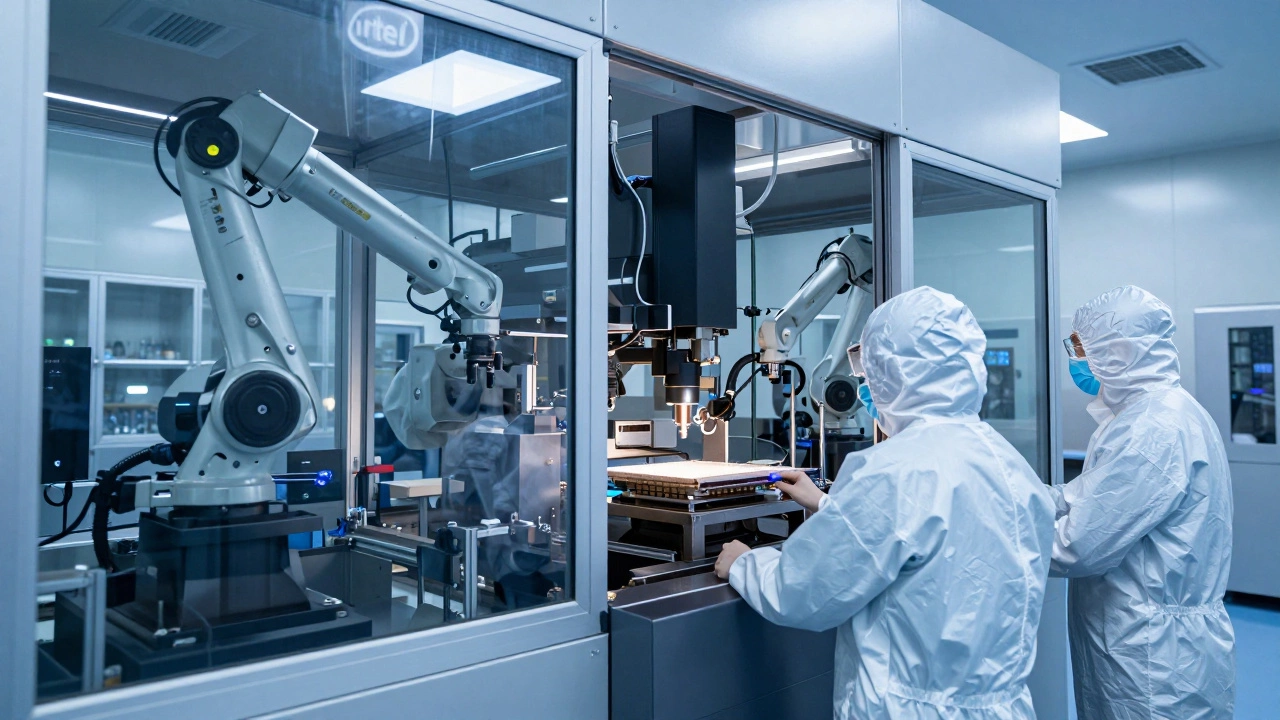
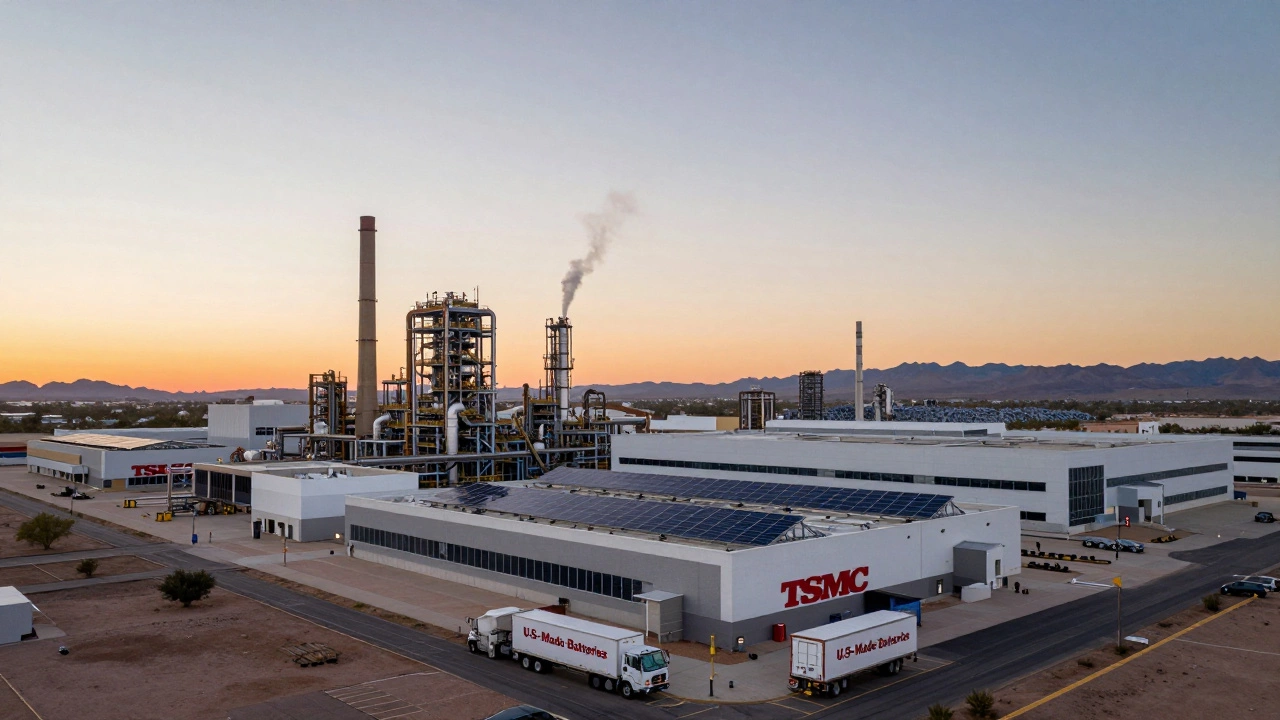
The CHIPS and Science Act of 2022 is the biggest single push to rebuild domestic chip production. It authorized $52.7 billion in direct funding and tax credits. Companies like Intel, TSMC, and Samsung have already announced over $200 billion in new investments across 18 states. Intel’s $20 billion plant in Ohio alone will create 3,000 high-skill jobs and supply chips for everything from cars to smartphones. TSMC’s $40 billion Arizona campus will produce 5-nanometer chips by 2026-technology previously only made in Taiwan.
This isn’t just about building fabs. The Act also funds R&D at national labs, university partnerships, and workforce training programs. The Department of Commerce has already awarded $11 billion in grants to 53 companies and research centers. The goal? Cut U.S. reliance on foreign chips from 90% to under 20% by 2030.
Inflation Reduction Act: Clean Energy Manufacturing Takes Center Stage
The Inflation Reduction Act (IRA) of 2022 didn’t just target emissions-it rewrote the rules for making clean tech in America. It offers up to $30 billion in production tax credits for solar panels, wind turbines, batteries, and electrolyzers made in the U.S. with American-made components.
Companies like Tesla, First Solar, and LG Energy Solution have expanded factories in Georgia, Tennessee, and Michigan because of these credits. First Solar now produces solar panels in Ohio with 100% U.S.-made materials, something impossible just five years ago. The IRA also mandates that electric vehicles qualify for the $7,500 tax credit only if their batteries are assembled in North America-and that 40% of critical minerals come from the U.S. or free trade partners.
As a result, U.S. battery manufacturing capacity is expected to jump from 35 GWh in 2022 to over 1,000 GWh by 2030. That’s enough to power 10 million EVs annually.
Manufacturing Extension Partnership: Helping Small Factories Compete
While big names grab headlines, the real backbone of U.S. manufacturing is the 300,000 small and medium-sized manufacturers. The Manufacturing Extension Partnership (MEP), run by NIST, supports them with free consulting, tech upgrades, and supply chain help.
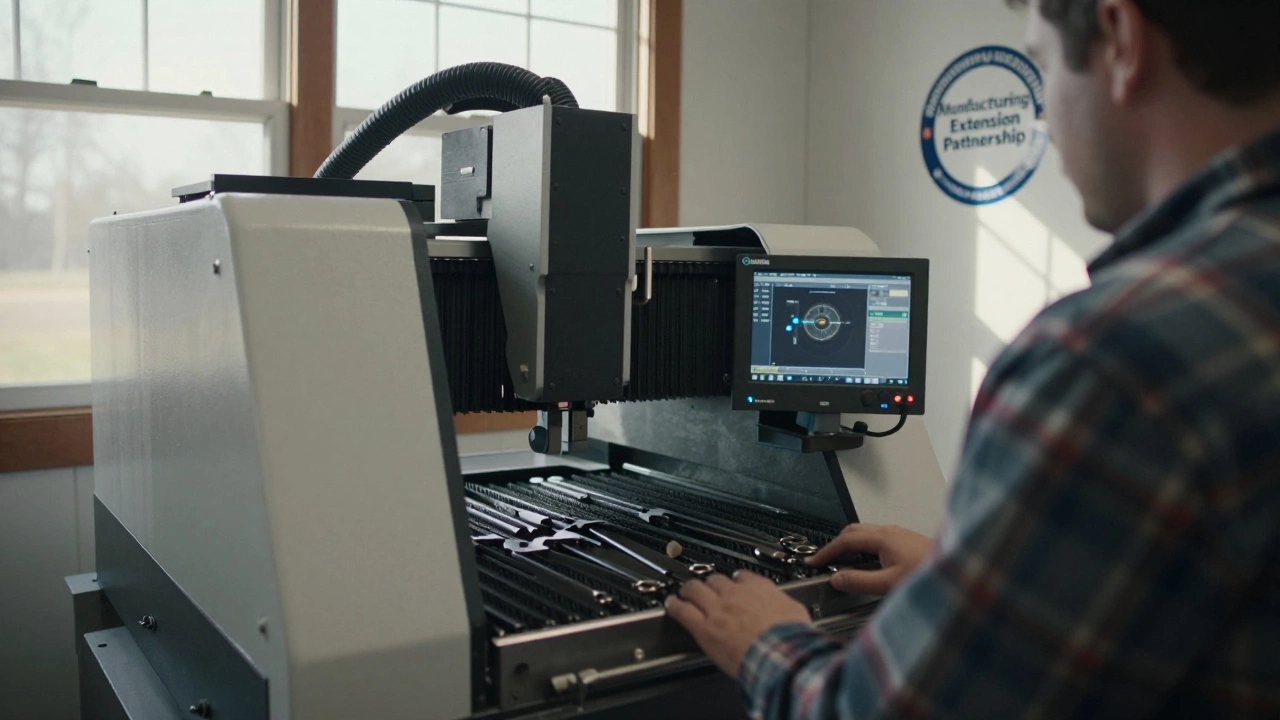
MEP centers in every state connect small shops with federal labs, help them adopt robotics, and train workers in digital manufacturing. A machine shop in Iowa used MEP guidance to automate its CNC operations, cutting waste by 30% and winning a contract with a defense contractor. Another in Alabama switched from manual inspection to AI-powered vision systems, boosting output by 40%.
Since 2020, MEP has helped over 40,000 manufacturers increase sales by $32 billion and create 180,000 jobs. It’s low-profile but high-impact-exactly what the U.S. needs to keep its industrial ecosystem alive.
Defense Production Act: Securing Critical Materials and Tech
The Defense Production Act (DPA), originally used during the Korean War, is now being used to force private companies to prioritize government orders. In 2023, the Biden administration invoked the DPA to secure supply chains for lithium, nickel, and rare earth elements used in batteries and defense systems.
Under Title III of the DPA, the government can fund domestic mining, processing, and recycling. A new facility in Texas now recycles lithium-ion batteries to recover 95% of cobalt and nickel-something previously shipped overseas. The DPA also forced a rare earth processor in California to ramp up production for military radar systems, reducing reliance on China.
These aren’t emergency measures. They’re structural changes. The U.S. now has a legal framework to treat critical materials like semiconductors and lithium as national security assets-not just commodities.
Advanced Manufacturing Partnerships: Bridging Research and Factory Floors
The National Network for Manufacturing Innovation (NNMI), now called Manufacturing USA, is a network of 17 innovation institutes across the country. Each focuses on a specific technology: advanced robotics, biomanufacturing, additive manufacturing, and more.
For example, the Advanced Robotics for Manufacturing (ARM) institute in Massachusetts connects startups, universities, and factories to develop affordable robots for small shops. A company in Pennsylvania used ARM’s open-source software to build a $15,000 robotic arm-instead of paying $150,000 for an imported one.
Another institute, NextFlex, is making flexible electronics that can be printed like ink on fabric. These are now being used in military uniforms with embedded sensors. These institutes don’t just fund projects-they create ecosystems where ideas move from lab to factory in months, not decades.
Workforce Development: Training the Next Generation of Factory Workers
Every manufacturing initiative fails without skilled workers. The U.S. faces a shortage of over 2 million skilled production jobs by 2030. To fix this, federal programs are partnering with community colleges and unions.
The Department of Labor’s Manufacturing Training Grants fund apprenticeships in states like Ohio, Michigan, and North Carolina. A single program in Detroit trains unemployed auto workers to operate CNC machines and robotic welding systems. Graduates earn $25-$35/hour-double what they made in service jobs.
Community colleges now offer stackable credentials: a 6-week course in PLC programming, then a 12-week course in quality control, then an associate’s degree. Employers like GE and Boeing help design the curriculum. This isn’t theoretical-it’s getting people back to work with real, in-demand skills.
What’s Not Working-and Why
Not everything is smooth. Some companies took federal grants but didn’t meet hiring targets. A battery plant in Nevada received $1.2 billion but hired only 120 workers instead of the promised 1,000. Others faced delays due to permitting, labor shortages, or supply chain bottlenecks for specialized equipment.
Also, not all regions benefit equally. The South and Midwest are seeing the most growth. Rural areas and former industrial towns in the Northeast still struggle to attract investment. And while federal money is flowing, local zoning laws and infrastructure gaps often slow things down.
But the direction is clear: the U.S. is no longer waiting for manufacturing to come back. It’s building it-brick by brick, chip by chip, battery by battery.
Are U.S. manufacturing initiatives actually creating jobs?
Yes. Over 200,000 manufacturing jobs have been created since 2021, mostly in advanced sectors like semiconductors, batteries, and clean energy. The Department of Commerce estimates these programs will support over 1 million jobs by 2030. These aren’t low-wage positions-they’re skilled roles paying $25-$50/hour on average.
How do these initiatives affect small businesses?
Small manufacturers benefit through the Manufacturing Extension Partnership (MEP), which offers free technical help, supply chain connections, and training. Many small shops are now supplying parts to big projects like EV battery plants or semiconductor fabs. One Ohio machine shop now supplies custom brackets to TSMC’s Arizona facility after getting certified through MEP.
Is the U.S. really becoming less dependent on China for manufacturing?
Yes, but slowly. For semiconductors, the U.S. is cutting reliance from 90% to under 20% by 2030. For batteries, over 60% of lithium-ion cells sold in the U.S. will be made domestically by 2030. For rare earths, the U.S. now recycles and processes more domestically than it did a decade ago. It’s not complete independence-but it’s the fastest shift away from China in decades.
What’s the biggest challenge facing these initiatives?
Skilled labor shortages and permitting delays. Even with funding, companies can’t build factories if they can’t find welders, electricians, or engineers. And getting environmental permits for new plants can take 3-5 years. The government is trying to streamline this, but local opposition and bureaucracy remain big hurdles.
Can these programs be reversed if politics change?
Some parts could be slowed, but not undone. Factories already built-like Intel’s Ohio plant or TSMC’s Arizona campus-won’t close. Contracts with suppliers are locked in for 10-15 years. Workforce training programs have created a new generation of skilled workers who won’t disappear. The momentum is structural now, not political.
What Comes Next?
The next phase isn’t about more money-it’s about execution. The U.S. government is shifting from announcing programs to measuring outcomes. Are factories producing? Are workers trained? Are supply chains reliable?
By 2030, the U.S. aims to produce 50% of its own semiconductors, 40% of its EV batteries, and 90% of its critical minerals through recycling and domestic mining. That’s not fantasy-it’s a plan with timelines, funding, and accountability.
If you’re watching from abroad, it’s easy to think this is just political rhetoric. But walk into any new factory in Ohio, Georgia, or Arizona, and you’ll see the proof: machines humming, workers in safety gear, and a quiet but powerful belief that American manufacturing isn’t dead-it’s being rebuilt.