Manufacturing System Bottleneck Diagnostic
Select the primary issue currently affecting your production line to diagnose the root cause and find relevant support strategies.
Diagnosis & Strategy
Analysis
Recommended Action:
Government Support Focus
Scheme Name
Description of scheme alignment.
Based on the "Three Pillars" framework.
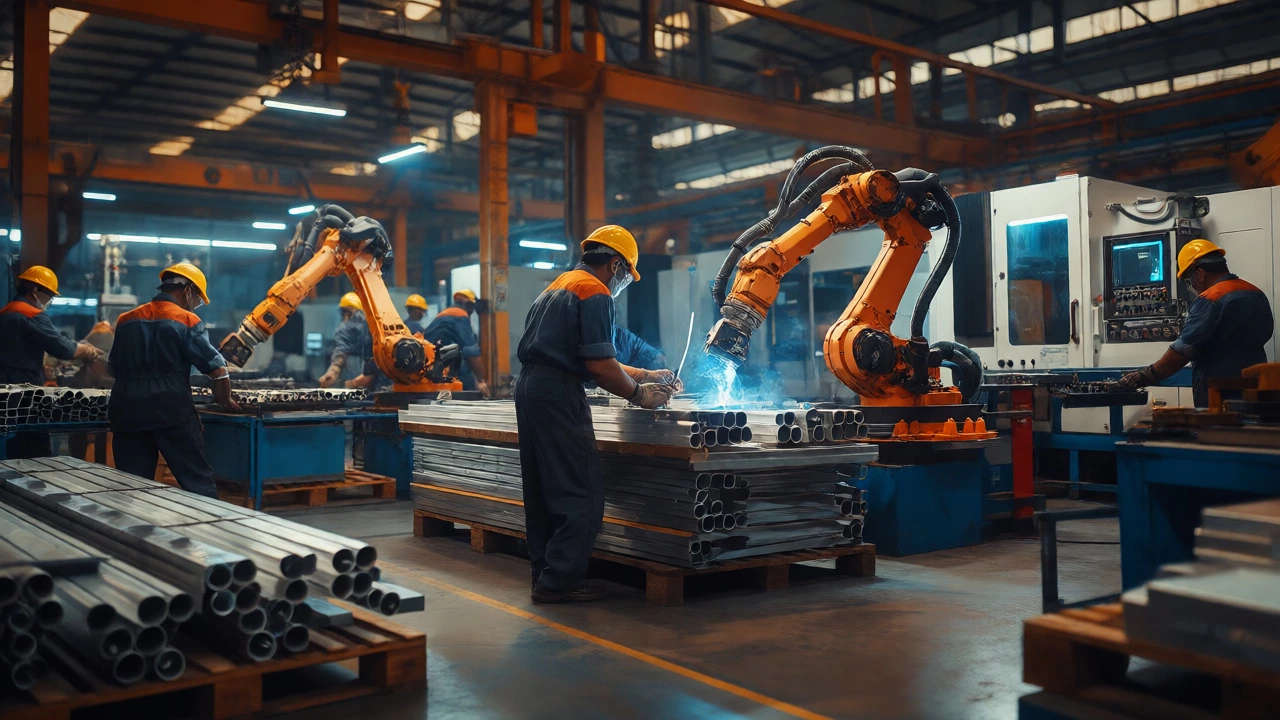
You walk into a factory floor. It’s loud, it’s organized chaos, and something is moving. But what actually makes that movement happen? Is it the shiny robot arm welding a car door? Is it the skilled engineer programming the code? Or is it the raw steel waiting in the warehouse?
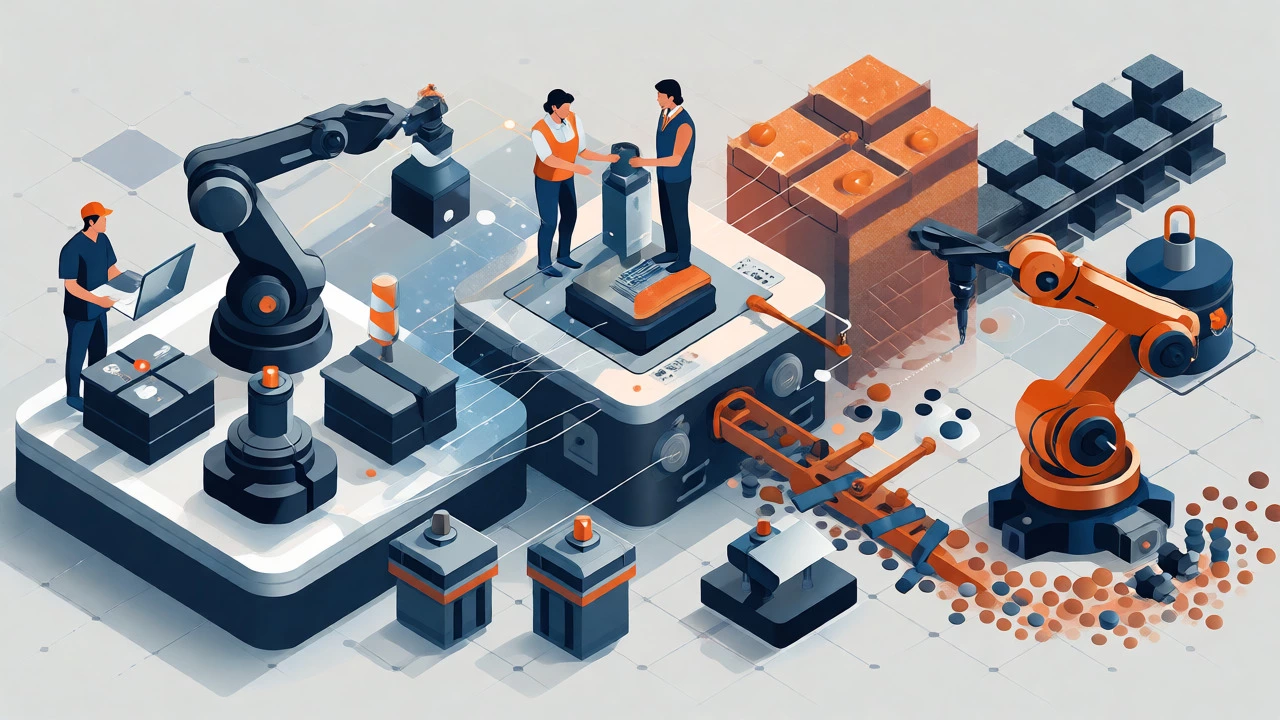
The truth is, none of them work alone. A Manufacturing System is not just a building full of equipment; it is an integrated network of three distinct but inseparable components: People (Labor), Machines (Technology), and Materials (Inputs). If you miss one, the whole thing grinds to a halt. You can have the most advanced robotic assembly line in Birmingham, but without trained operators or raw aluminum, it’s just expensive furniture.
Understanding these three pillars isn't just academic trivia for engineering students. It’s the foundation of every business decision you’ll make about efficiency, cost control, and scaling up. Whether you’re running a small-scale textile unit or overseeing a multinational electronics plant, your success depends on how well these three elements interact. Let’s break down exactly what each component does, why they fail when isolated, and how modern government schemes are trying to upgrade all three at once.
People: The Brain and Hands of Production
It sounds obvious, but people are often the most underestimated variable in the equation. In traditional models, labor was seen as a simple input-a pair of hands to turn a screw. Today, Human Capital is the adaptive intelligence layer of the manufacturing system. Machines don’t solve unexpected problems; people do.
Think about a quality control issue on a plastic injection molding line. The machine might produce a defect due to a subtle change in humidity. A sensor might flag it, but only a human operator understands the context-maybe the batch of resin was slightly different this morning. That judgment call saves thousands of pounds in wasted material.
This component includes everyone from the shop-floor technicians to the supply chain managers and the data analysts interpreting IoT sensors. Their role has shifted from manual repetition to cognitive oversight. In the UK, where labor costs are high compared to emerging markets, maximizing the value of this component means investing in upskilling rather than just hiring more bodies. Government initiatives like the Skills Bootcamps specifically target this area, recognizing that a smart workforce drives productivity faster than buying new gear ever could.
- Direct Labor: Operators, assemblers, and maintenance staff who physically interact with the product.
- Indirect Labor: Engineers, planners, and supervisors who design processes and manage workflows.
- Cognitive Role: Problem-solving, innovation, and adaptability during downtime or errors.
Machines: The Technology and Infrastructure Layer
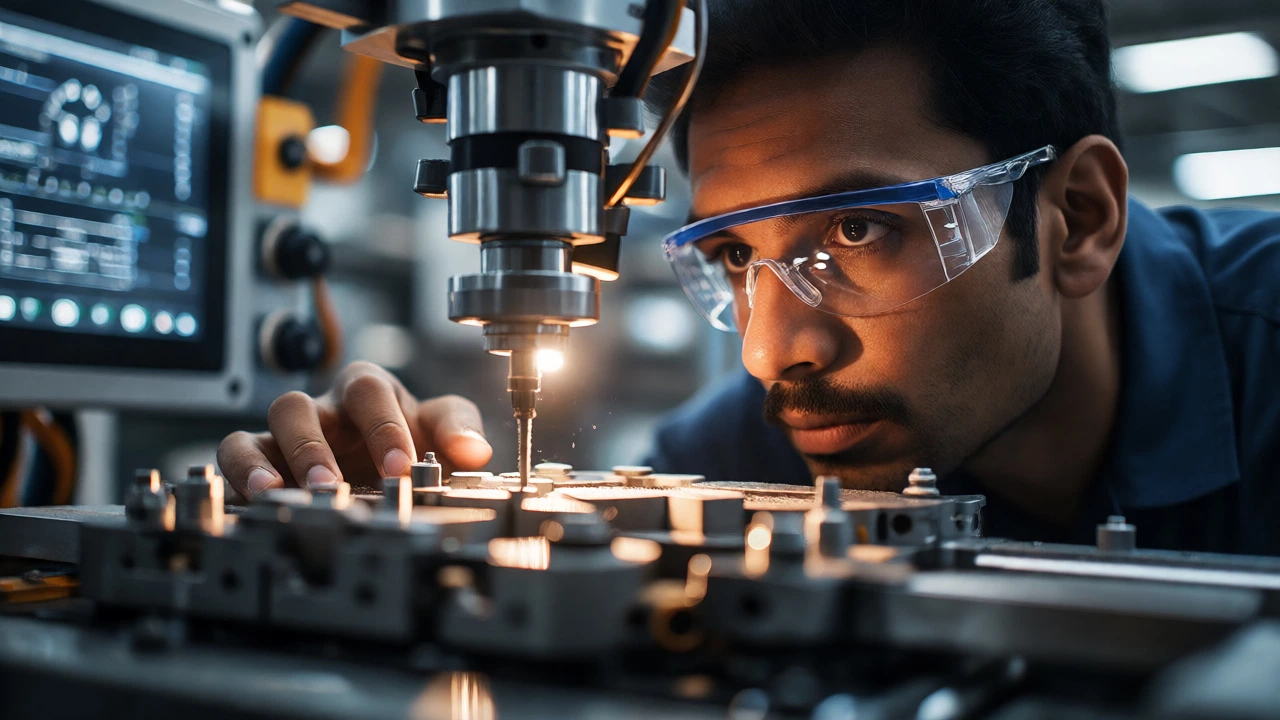
If people are the brain, machines are the muscle. This component encompasses everything used to transform inputs into outputs. We aren’t just talking about heavy lathes and presses anymore. The definition of "machines" has expanded dramatically to include software, automation systems, and digital infrastructure.
A modern Production System relies on a hierarchy of technology. At the bottom, you have traditional capital equipment-CNC mills, conveyor belts, and packaging units. Above that sits the automation layer: PLCs (Programmable Logic Controllers) and robotics. And increasingly, the top layer is digital: MES (Manufacturing Execution Systems) and AI-driven predictive maintenance tools.
Why does this matter? Because machines dictate capacity and precision. You cannot manufacture a microchip by hand with the same consistency as a photolithography machine. However, machines are rigid. They do exactly what they are told, which is great for consistency but terrible for flexibility. If your market demand shifts from blue widgets to red widgets, your machines need retooling, which takes time and money. This rigidity is why integrating machines with flexible human oversight is critical.
| Feature | Traditional Machinery | Modern Smart Factory Tech |
|---|---|---|
| Primary Function | Physical transformation (cutting, shaping) | Data collection + Physical transformation |
| Flexibility | Low (requires manual retooling) | High (software-configurable) |
| Downtime Cost | Lost production hours | Lost production + Data gaps |
| Maintenance | Reactive (fix when broken) | Predictive (AI alerts before failure) |
Materials: The Inputs and Supply Chain Flow
The third pillar is often treated as a procurement detail, but in a manufacturing system, Material Flow is the lifeblood. Without a steady, reliable stream of raw materials and components, even the best people and machines sit idle. This component isn't just about having stock; it's about the logistics of getting the right stuff to the right place at the right time.
Inefficient material handling is a silent killer of margins. Think about the cost of storing excess inventory versus the risk of stockouts. Lean manufacturing principles focus heavily here, aiming to reduce waste in the form of excess movement, waiting, and overproduction. When we talk about materials, we also include sub-assemblies and energy. Yes, electricity is a material input. If your power grid fluctuates, your sensitive electronics manufacturing lines can crash.
Recent global disruptions have highlighted the fragility of this component. Just-in-time delivery works beautifully until a ship gets stuck in the Suez Canal or a supplier goes bankrupt. Now, manufacturers are balancing efficiency with resilience, often keeping higher safety stocks or diversifying suppliers. For small-scale manufacturers in the UK, accessing local supply chains through regional clusters can mitigate these risks significantly.
How These Components Interact: The System View
Here is where the magic happens-and where most businesses struggle. These three components don’t operate in silos. They are deeply interconnected. A failure in one creates a ripple effect across the others.
Consider a scenario where a machine breaks down (Machines). If the spare part isn’t in inventory (Materials), the repair is delayed. During that delay, the operators (People) are idle, leading to overtime costs later to catch up. Conversely, if you have excellent materials and fast machines but poorly trained staff, you’ll see high scrap rates because operators can’t calibrate the equipment correctly.
Effective manufacturing management is essentially the art of balancing these three. You optimize flow by ensuring:
- Synchronization: Material arrival matches machine capacity and labor shifts.
- Feedback Loops: Machine data informs material ordering; operator insights improve machine settings.
- Agility: The system can pivot quickly when one component faces constraints.
This interplay is why terms like "Integrated Manufacturing" exist. It’s not enough to buy the best robots if your supply chain is chaotic. It’s not enough to have cheap materials if your workers lack the training to handle them efficiently.
The Role of Government Schemes in Upgrading Components
Since you’re interested in how this ties into policy, let’s look at how government interventions target these specific components. Governments rarely fund "manufacturing" broadly; they fund upgrades to people, machines, or logistics.
In the UK, schemes like the Industrial Energy Transformation Fund target the Machine/Energy component, helping factories switch to greener, more efficient technologies. Meanwhile, programs focused on apprenticeships directly boost the People component by closing the skills gap. There are also grants for digitalization, which help integrate the Material tracking systems with the production floor.
For a business owner, understanding this triad helps you apply for the right support. Are you struggling with outdated tech? Look for capital investment grants. Struggling to find skilled welders? Look for training subsidies. Struggling with supply chain visibility? Look for digital adoption funds. Aligning your needs with the correct component-specific scheme increases your chances of securing funding.
Common Pitfalls When Ignoring One Component
Many companies fall into the trap of optimizing one pillar while neglecting the others. Here are three common disasters:
- The Automation Trap: Buying expensive robots (Machines) without training staff (People) to maintain them. Result: High downtime, low ROI.
- The Inventory Bloat: Over-ordering materials (Materials) to prevent stockouts, tying up cash flow that could have been used for better machinery (Machines).
- The Skills Gap: Hiring cheaper, less skilled labor (People) to save costs, resulting in higher error rates and increased material waste (Materials).
Audit your own operation. Which component is currently the bottleneck? Is your team frustrated by broken machines? Are your machines waiting for parts? Or are your staff overwhelmed by complex processes? Identifying the weak link is the first step toward systemic improvement.
Can a manufacturing system function without automated machines?
Yes, absolutely. Many artisanal and small-scale manufacturing operations rely entirely on manual tools and skilled craftsmanship. In these cases, the "Machine" component consists of basic hand tools and jigs, while the "People" component carries the bulk of the productivity load. However, scaling such a system usually requires introducing some level of mechanization to maintain consistency and volume.
Which of the three components is the most expensive to fix?
This varies by industry, but generally, upgrading the "Machine" component involves the highest upfront capital expenditure. Replacing legacy CNC machines or installing robotic arms costs hundreds of thousands of pounds. However, fixing the "People" component through extensive retraining programs can be more costly in terms of lost productivity time during the learning curve. The "Materials" component costs are ongoing operational expenses, making them harder to eliminate completely.
How does Industry 4.0 change these three components?
Industry 4.0 integrates the three components through data. Machines generate real-time data about their status. This data informs material ordering systems (Materials) so supplies arrive exactly when needed. Simultaneously, dashboards present this information to operators (People), allowing them to make proactive decisions rather than reactive ones. Essentially, digitalization acts as the nervous system connecting the muscles (machines), blood (materials), and brain (people).
Are government schemes available for all three components?
Mostly, yes. While specific eligibility changes annually, there are typically separate streams of funding. Capital allowances and grants cover machine upgrades. Training vouchers and apprenticeship levies support workforce development. Digital adoption grants often cover software for supply chain and inventory management. It is crucial to check current guidelines from agencies like Innovate UK or local enterprise partnerships, as priorities shift based on economic goals.
What is the biggest mistake startups make regarding these components?
Startups often over-invest in Machines (buying fancy equipment too early) while under-investing in Processes (People) and Supply Chain (Materials). They assume technology will solve inefficiency, but without standardized procedures and reliable suppliers, even the best machines produce inconsistent results. Balancing all three from day one is key to sustainable growth.