Small-Scale Manufacturing Profitability Calculator
Select a manufacturing niche below or customize the values to analyze your potential profitability.
Custom Packaging
Eco-friendly boxes & mailers
Specialty Food
Hot sauces & spices
Leather Goods
Wallets & accessories
Your Business Analysis
Contribution Margin
£0.00
Per unit profit after direct costs
Profit Margin %
0%
Percentage of revenue kept as profit
Break-Even Point
0 units
Units needed to cover fixed costs
Material Cost Ratio
0%
Labor Cost Ratio
0%
💡 Strategic Insight
Enter your values above to receive personalized advice on optimizing your manufacturing business.
Business Viability Score
Neutral
Based on industry standards for small-scale manufacturing (target: >40% margin)
You don't need a factory the size of a football field to make serious money. In fact, some of the most profitable businesses today are built on tiny footprints and massive margins. If you are looking for the cheapest way to enter the manufacturing world without betting your life savings, you are asking the right question at the right time. The landscape of small scale manufacturing is a sector where entrepreneurs produce goods in limited quantities using minimal capital and space. It has shifted dramatically. Automation costs have dropped, raw materials are more accessible than ever, and consumers are craving niche, high-quality products that big corporations ignore.
The goal here isn't just to start a business; it's to start one that survives its first year and thrives by the third. We are going to look at specific manufacturing models that require under £5,000 to launch but offer profit margins exceeding 40%. These aren't theoretical ideas. These are tangible, physical products you can build, sell, and scale from a garage or a small rented unit in places like Birmingham or anywhere else in the UK.
Why Low-Cost Manufacturing Still Wins
Many people assume manufacturing requires heavy machinery and huge loans. That was true in the 1990s. Today, the barrier to entry has collapsed. You can buy a used CNC router for less than a new car. You can source food-grade ingredients from local wholesalers rather than international giants. The key to profitability in this sector isn't volume; it's value density. You want to sell products where the customer pays for expertise, customization, or convenience, not just the raw material cost.
When you keep overheads low, your break-even point drops. This means you can survive slower months while still making a profit during peak seasons. For a beginner, this safety net is crucial. Let’s look at three specific niches that dominate the low-cost, high-profit chart right now.
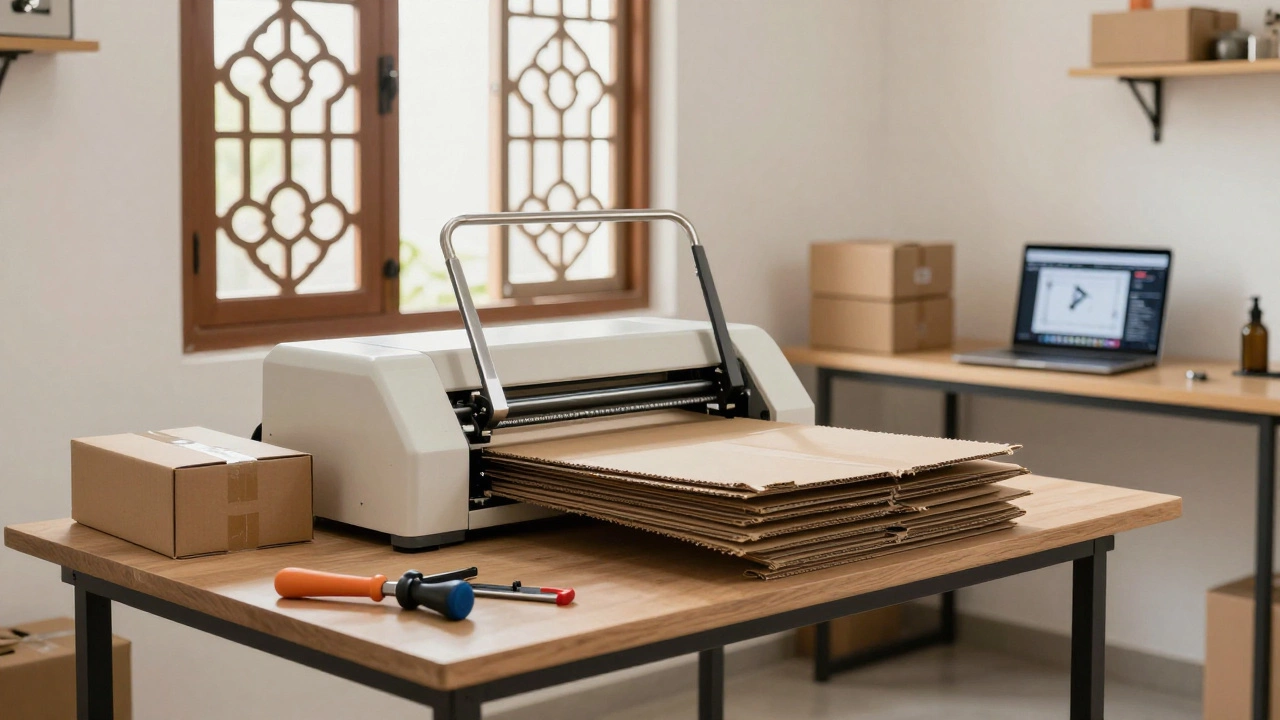
Niche 1: Custom Packaging and Eco-Friendly Boxes
Custom packaging is personalized boxes, mailers, and inserts designed to protect products while enhancing brand identity. Every e-commerce business needs it. With the rise of direct-to-consumer brands, there is an insatiable demand for unboxing experiences that feel premium yet sustainable. Big manufacturers often have minimum order quantities (MOQs) of 5,000 units. Small businesses hate that. They want 500 units with their logo. That is your gap in the market.
To start, you need a die-cutting machine and a printer. A decent desktop die-cutter costs around £800-£1,200. You can buy recycled cardboard stock in bulk for pennies per square meter. The markup? Huge. A box that costs you £0.30 to produce can sell for £1.50 to £2.50 depending on the complexity and branding. You are selling marketing collateral, not just cardboard.
- Startup Cost: £2,000 - £4,000 (Machine, stock, basic software)
- Profit Margin: 60% - 70%
- Target Client: Local bakeries, boutique clothing brands, cosmetic startups
The skill here is design. Learn how to create dielines in Adobe Illustrator or free alternatives like Inkscape. Once you have the templates, production is fast. You cut, fold, glue, and ship. No complex assembly lines. Just clean, efficient output.
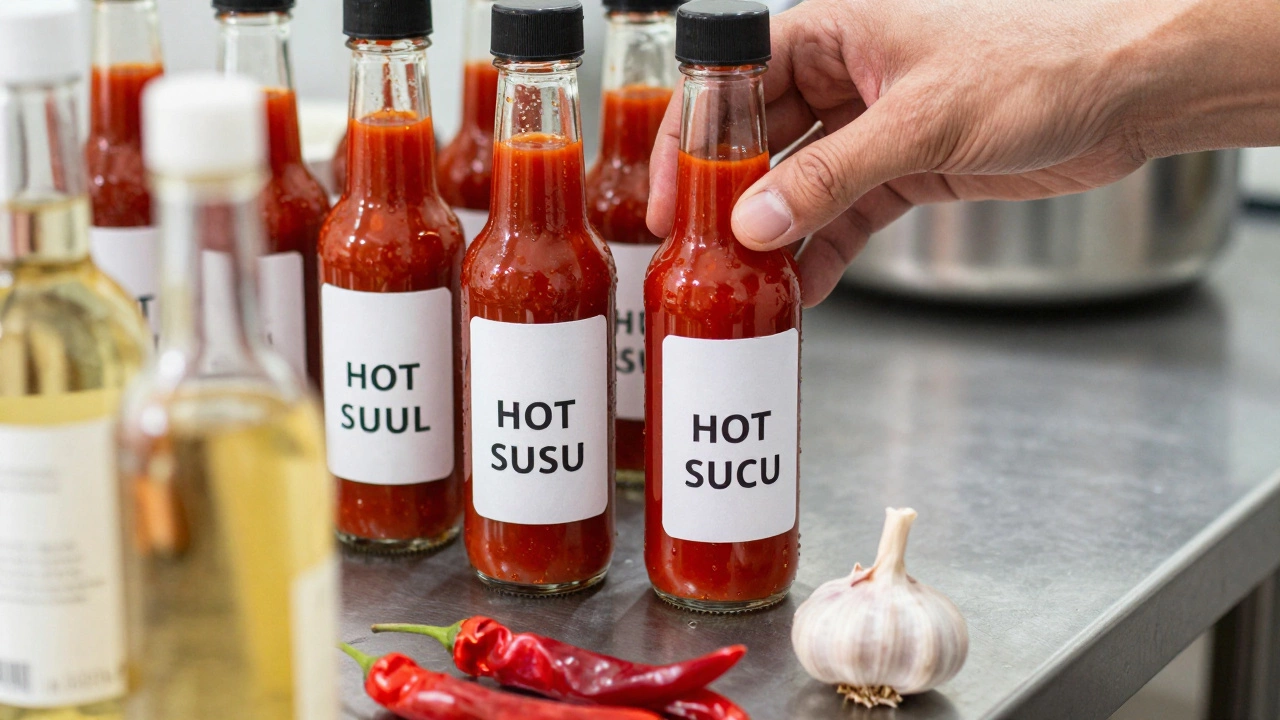
Niche 2: Specialty Food Processing (Hot Sauces & Spices)
Specialty food processing involves transforming raw agricultural ingredients into shelf-stable, branded consumable goods like sauces, jams, or spice blends. People love food. But they also love unique flavors they can’t find in Tesco or Sainsbury’s. Hot sauce is the king of this category. Why? Because the ingredients are cheap (chilies, vinegar, garlic), the shelf life is long due to acidity, and the perceived value is high when packaged well.
In the UK, you must follow strict hygiene regulations. You will need to register your premises with your local environmental health office. However, you do not need a commercial kitchen immediately if you follow the 'cottage food' style rules for certain non-perishables, though for hot sauce, a shared commercial kitchen rental is safer and often cheaper than building your own. Rent a kitchen for two days a month to batch-produce 500 bottles. Your cost per bottle might be £0.80 (ingredients + label + bottle). You sell it for £4.50 online or at farmers' markets.
| Item | Estimated Cost (£) | Notes |
|---|---|---|
| Chilies & Vegetables | £150 | Bulk wholesale price |
| Vinegar & Salt | £30 | Long shelf life |
| Glass Bottles & Caps | £120 | Reusable molds save money later |
| Labels & Design | £50 | Printed locally |
| Total Production Cost | £350 | For approx. 100 bottles |
If you sell those 100 bottles at £5 each, you make £500. That’s a 43% gross margin before marketing costs. And unlike electronics, food doesn’t become obsolete next year. If the recipe is good, customers come back every month.
Niche 3: Personalized Leather Goods and Accessories
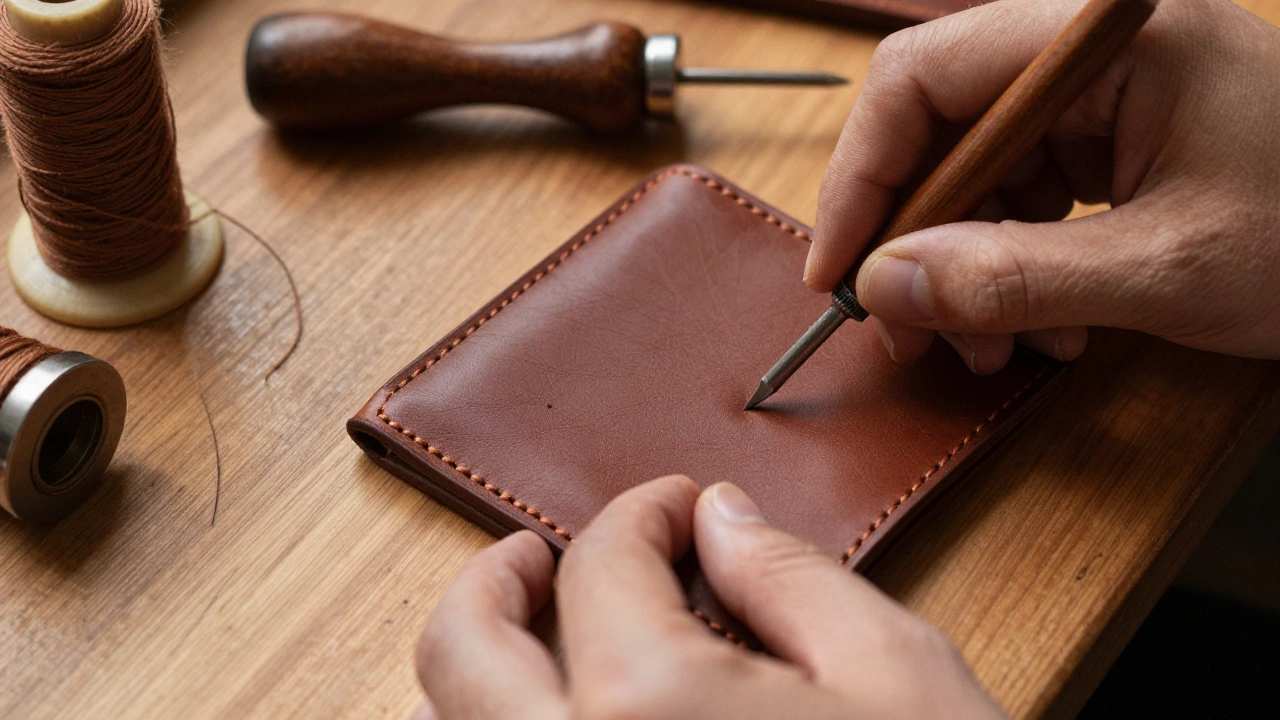
Leather crafting is the process of cutting, stitching, and finishing leather hides to create durable, personalized accessories like wallets, belts, and bags. Leather ages beautifully. It tells a story. Customers pay a premium for handcrafted items because they know a machine didn’t mass-produce them in a sweatshop. The equipment list is short: a good knife, needles, thread, wax, and maybe a small press for embossing initials.
You can start with vegetable-tanned leather scraps, which are cheaper and eco-friendly. A simple cardholder takes 20 minutes to make once you are skilled. Material cost: £2. Sale price: £25. That is a 92% margin. The limiting factor isn’t money; it’s your hands. But that’s okay. As you grow, you hire one apprentice. Then two. You scale labor, not capital.
This model works exceptionally well with social media marketing. Show the process. Show the burnishing of the edges. Show the stamping of the name. People buy the craftsmanship as much as the product. Platforms like Etsy and Instagram are perfect for this. You don’t need a website initially. You need a portfolio.
How to Calculate Real Profitability
Don’t get fooled by revenue. Revenue is vanity; profit is sanity. To know if a business idea is truly "profitable," you need to calculate your Contribution Margin. This is the money left over after paying for the direct costs of making one unit.
Formula: Selling Price - Direct Materials - Direct Labor = Contribution Margin.
If your contribution margin is positive, you can cover your fixed costs (rent, internet, insurance) and then pure profit. Always aim for a contribution margin of at least 50%. If it’s lower, you’re working too hard for too little return. Raise prices or find cheaper suppliers. Never compromise on quality to cut costs, but always negotiate with suppliers. Call them. Ask for discounts. Most wholesalers expect haggling.
Avoiding Common Startup Traps
Even the best ideas fail due to poor execution. Here are three traps to avoid:
- Over-inventorying: Do not buy six months’ worth of stock. Buy what you can sell in two weeks. Cash flow kills more small businesses than lack of sales. Keep your cash liquid.
- Ignoring Legalities: In the UK, you need to register as self-employed or set up a Limited Company. You need product liability insurance, especially for food or children’s items. Get this sorted before you sell your first unit. The cost is roughly £100-£200 a year. Cheap insurance is worth it.
- Trying to Be Everything to Everyone: Niche down. Don’t make "leather goods." Make "minimalist leather wallets for developers." Specificity sells. Generalists compete on price; specialists compete on value.
Scaling Without Losing Control
Once you have a steady stream of orders, how do you grow? Don’t rush to rent a bigger warehouse. First, optimize your current workflow. Can you batch tasks? Can you automate invoicing? Use tools like QuickBooks or Xero to track every penny. When you outgrow your space, consider dropshipping components. Instead of holding inventory of bottles or leather, partner with a supplier who ships directly to you or to your customers. This shifts you from a manufacturer to a brand manager, which is even more profitable.
The cheapest business to start is the one that solves a specific problem for a specific group of people. Whether it’s protecting a fragile product with custom packaging, adding heat to a meal with artisanal sauce, or carrying essentials in a handmade wallet, the principle remains the same: low input, high perceived value, relentless focus on quality.
What is the absolute lowest cost manufacturing business I can start?
The lowest cost option is likely digital printing on demand or simple assembly services like gift baskets. However, for physical manufacturing, custom leather goods or small-batch candle making often require under £500 to start. You only need basic tools and raw materials. The key is selling directly to consumers to maximize margins.
Do I need a factory to start small scale manufacturing?
No. Many successful small manufacturers operate from home garages, spare rooms, or rented shared workspaces. Check your local council’s zoning laws regarding home-based businesses. For food production, you may need a certified commercial kitchen, but you can rent these hourly rather than buying one.
How do I find reliable suppliers for raw materials?
Start with local wholesale markets and online B2B platforms like Alibaba or Thomasnet. Attend trade shows relevant to your niche. Build relationships with suppliers by ordering small samples first. Reliable communication and consistent payment history will help you negotiate better rates as you grow.
Is it legal to manufacture food products at home in the UK?
It depends on the type of food. Low-risk foods like baked goods or preserves may fall under relaxed regulations, but you must still register with your local authority. High-risk foods like meat or dairy require stricter controls. Always consult with your local environmental health officer before starting food production to ensure compliance with food safety standards.
How much profit can I realistically expect from small scale manufacturing?
Profit varies widely based on niche and efficiency. Aim for a gross margin of 40-70%. Net profit after expenses might be 10-20% initially. As you optimize processes and reduce waste, net margins can improve. Focus on high-value, low-volume products to maintain higher profitability without needing massive sales volume.