Manufacturing Readiness Checker
Pitch Readiness Scorecard
Check the boxes below to see if you are ready to approach a manufacturer or if you need more preparation to avoid being rejected.
Key Takeaways
- Manufacturers care about volume and feasibility, not just "cool" concepts.
- A professional Tech Pack or CAD file is non-negotiable for a serious pitch.
- Your goal is to prove that your product can be made efficiently and profitably.
- NDA agreements protect your intellectual property before you share secrets.
Getting Your House in Order Before the Pitch
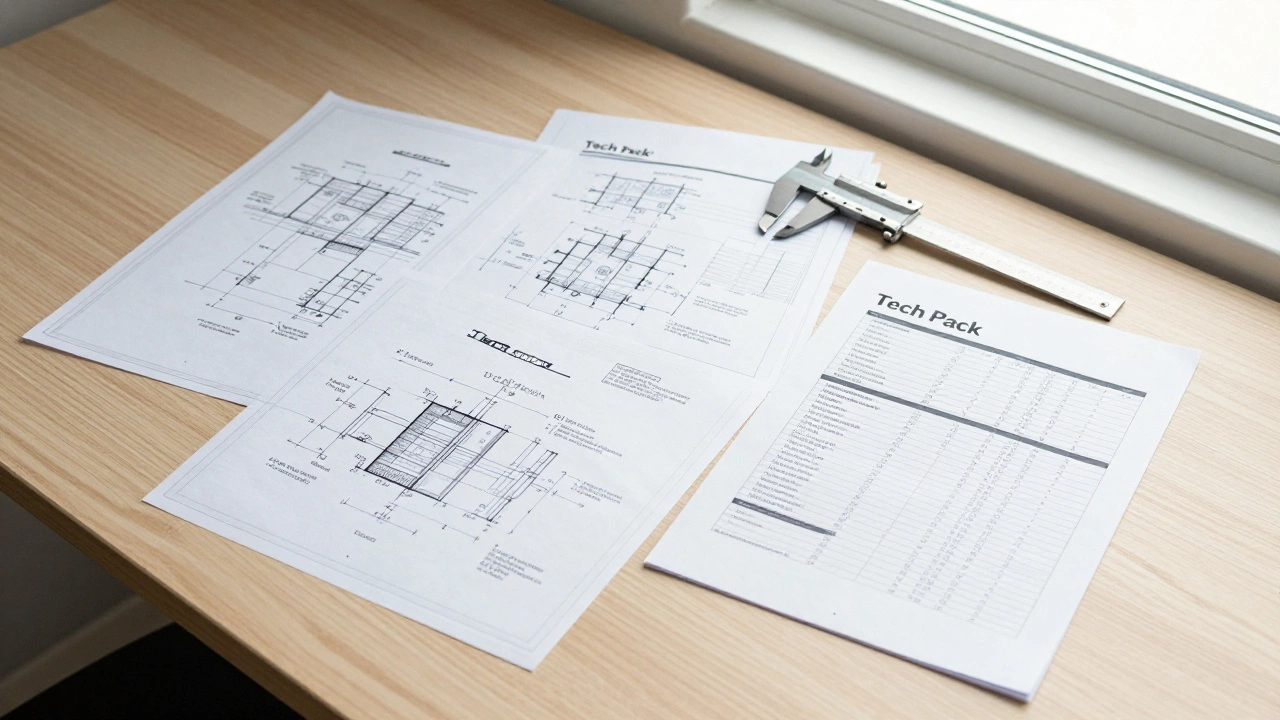
You wouldn't walk into a bank and ask for a million-dollar loan by just describing your dream; you'd bring a business plan. Pitching to a manufacturer is the same. Before you even send an email, you need a Tech Pack. This isn't just a drawing; it's a comprehensive blueprint that includes materials, dimensions, tolerances, and finishing requirements. If you're doing electronics, this means a Bill of Materials (BOM) that lists every single resistor, capacitor, and casing screw.
Why does this matter? Because a manufacturer's biggest fear is "scope creep"-the tendency for a client to keep changing the design after production has started. By providing a locked-in specification, you show them you're professional. If you're pitching a manufacturing startup ideas project, you need to prove that you've thought through the assembly process. Can this be put together in three steps, or does it require a specialized robot that only two factories in the world own? The simpler the assembly, the more likely they are to take you on.
Creating a Prototype That Actually Works
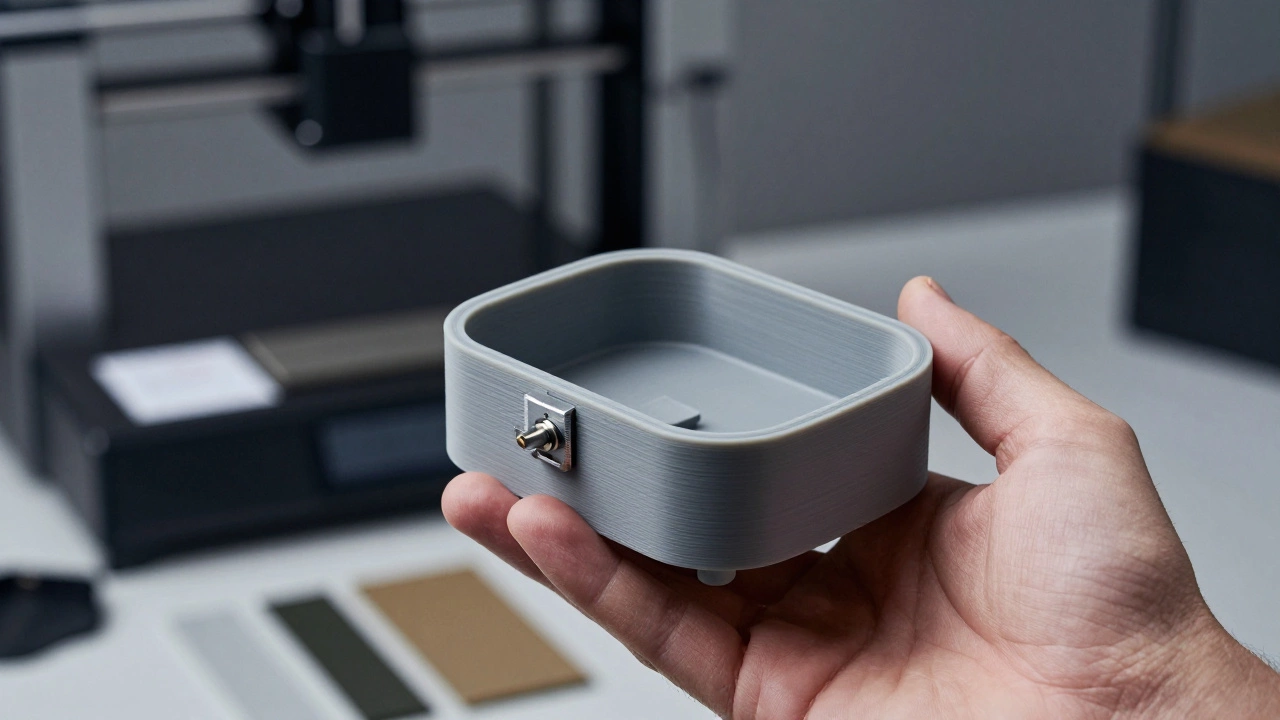
A 3D render on a screen is a suggestion; a physical prototype is a proof of concept. You don't need a factory-grade sample, but you do need something that proves the physics work. Whether you used 3D Printing (Additive Manufacturing) or hand-carved it from foam, having a physical object in your hand changes the conversation. It moves the discussion from "Can we do this?" to "How do we make 10,000 of these?"
When you present a prototype, focus on the "pain points" you've already solved. Tell them, "I noticed the hinge was too weak in version one, so I reinforced it with a steel pin in this version." This tells the manufacturer that you understand the reality of materials and that you won't be a nightmare client who ignores their technical advice. It builds a bridge of trust between the inventor and the engineer.
Finding the Right Manufacturing Partner
Not all factories are created equal. You wouldn't go to a Boeing plant to make a plastic toy, and you wouldn't go to a boutique jewelry shop to make automotive parts. You need to distinguish between Contract Manufacturing (where they make your design for a fee) and Original Design Manufacturing (ODM), where they help you design it based on their existing capabilities).
| Criteria | Contract Manufacturer (CM) | ODM Partner | Boutique Shop |
|---|---|---|---|
| Control | High - You own the design | Medium - Shared design | Very High - Custom work |
| Speed to Market | Medium | Fast (Uses existing molds) | Slow |
| Minimum Order (MOQ) | High | Medium | Low |
| Best For | Unique, patented tech | Standardized goods | High-end prototypes |
Once you've identified the type of partner, use platforms like Alibaba or Thomasnet to find candidates, but don't stop there. Look for factories that already produce things similar to your product. If they already make high-end coffee machines, they'll have the tooling for heating elements and pumps, which makes your product cheaper and easier to produce.
The Pitch: What to Say and How to Say It
When you finally get a meeting or a Zoom call, don't spend twenty minutes talking about why the world needs your product. The manufacturer doesn't care about your marketing vision; they care about their machines. Instead, lead with the numbers. Start with your Minimum Order Quantity (MOQ). If you tell them you want 100 units, a large factory will likely ignore you. If you tell them you have a projected demand for 50,000 units over two years, you're suddenly a priority client.
Use a direct, transparent approach. Be clear about your budget for tooling. Tooling-the creation of molds and dies-is the most expensive part of the process. If you're honest about what you can afford for the Injection Molding phase, they can suggest cheaper materials or design tweaks to lower the cost. This collaborative approach makes them feel like a partner rather than just a vending machine for parts.
Protecting Your Idea without Killing the Deal
The biggest fear for any startup is having their idea stolen by the factory. This is where the Non-Disclosure Agreement (NDA) comes in. However, be careful. If you demand a 10-page legal document before you even tell them what the product is made of, a high-demand factory might just decline the project to avoid the hassle.
The trick is to share the "what" (the general function) and the "who" (your market research) first, and only share the "how" (the secret sauce, the specific internals) after a basic NDA is signed. Better yet, if you have a Patent pending, mention it. It signals that you are serious about the legal protection of your IP, which actually makes you a more attractive, professional partner.
Navigating the Negotiation and Sampling Phase
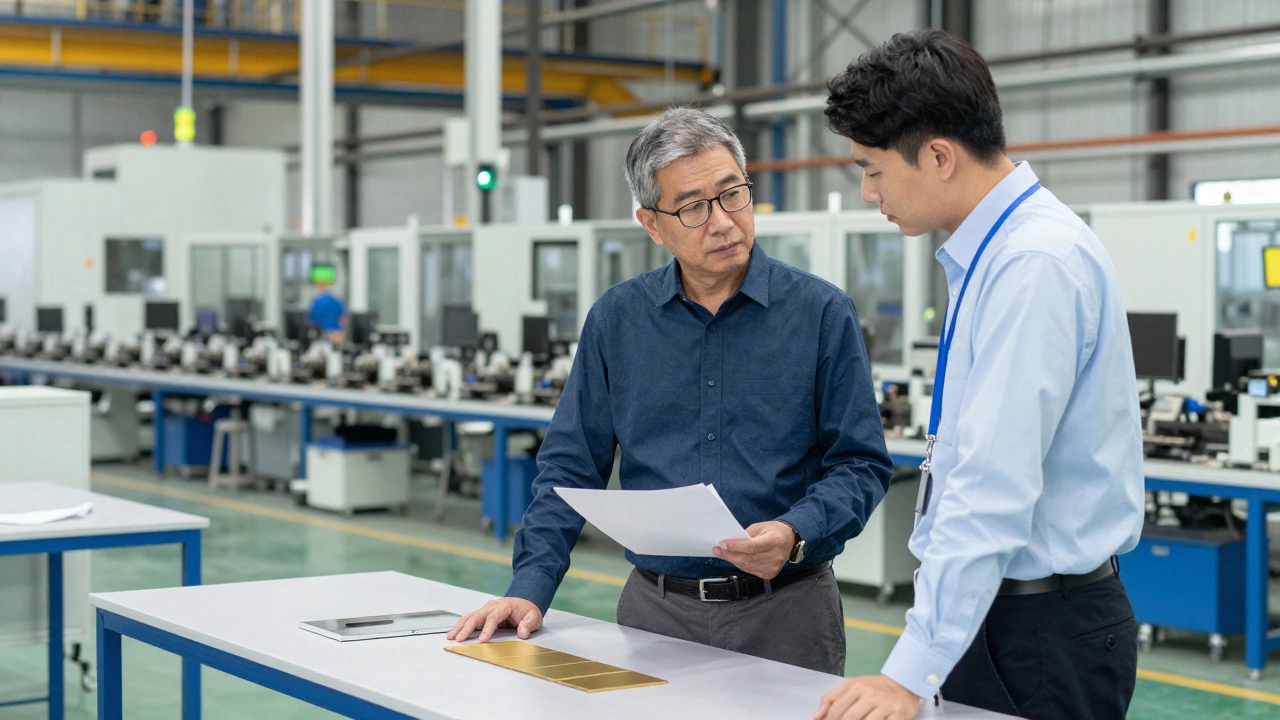
Once they agree to the pitch, you enter the sampling phase. Never skip this. A "golden sample" is the perfect version of your product that serves as the benchmark for the rest of the production run. If the factory sends you a sample and the plastic feels cheap or the color is slightly off, speak up immediately. If you accept a mediocre sample, you are essentially telling them that mediocre quality is acceptable for the final 10,000 units.
Negotiation isn't just about the price per unit. You should discuss lead times, shipping terms (like FOB or EXW), and quality control (QC) processes. Ask them: "How do you handle defects?" and "What is your AQL (Acceptable Quality Limit)?" Asking these specific industry questions proves you aren't an amateur, and it often leads to better pricing because the manufacturer knows they can't cut corners with you.
What is a Tech Pack and why do I need one?
A Tech Pack is a technical document that acts as a blueprint for your product. It includes detailed sketches, material specifications, size charts, and hardware requirements. You need one because it removes ambiguity; without it, a manufacturer is guessing, which leads to expensive mistakes and wasted materials.
How do I handle a manufacturer who asks for a very high MOQ?
If the Minimum Order Quantity is too high, try negotiating a "trial run." Offer to pay a higher price per unit for a smaller first batch to prove the market. Alternatively, look for smaller "white label" shops or boutique manufacturers who specialize in low-volume production, even if it costs more per piece.
Should I worry about my idea being stolen?
While it's a common fear, most reputable factories have no interest in stealing a product because they don't have the marketing or distribution networks to sell it. However, using a standard NDA and filing for a provisional patent provide necessary legal layers of protection.
What is a Bill of Materials (BOM)?
A BOM is a comprehensive list of every raw material, component, and sub-assembly required to manufacture a product. It includes part numbers, quantities, and preferred suppliers. It's essential for the manufacturer to calculate the exact cost of production.
What is the difference between a prototype and a sample?
A prototype is something you build to see if the idea works (often handmade or 3D printed). A sample is a version produced by the manufacturer using the actual tools and materials they will use for mass production. The sample is the final test before the full production run begins.
Next Steps for Your Journey
If you're just starting, your first move should be to create a low-fidelity prototype. Don't spend thousands on professional CAD files until you've confirmed the basic mechanics. Once the physics are solved, hire a freelance industrial designer to create a production-ready CAD Model.
For those who already have a design, start by reaching out to three different manufacturers. Get quotes from all of them to establish a baseline for pricing. Don't just pick the cheapest option-pick the one that asks the most questions about your design. The manufacturer who points out flaws in your plan is the one who will actually save you money in the long run by preventing production failures.